
How Much Does Tree Trimming Cost in Knoxville, TN?
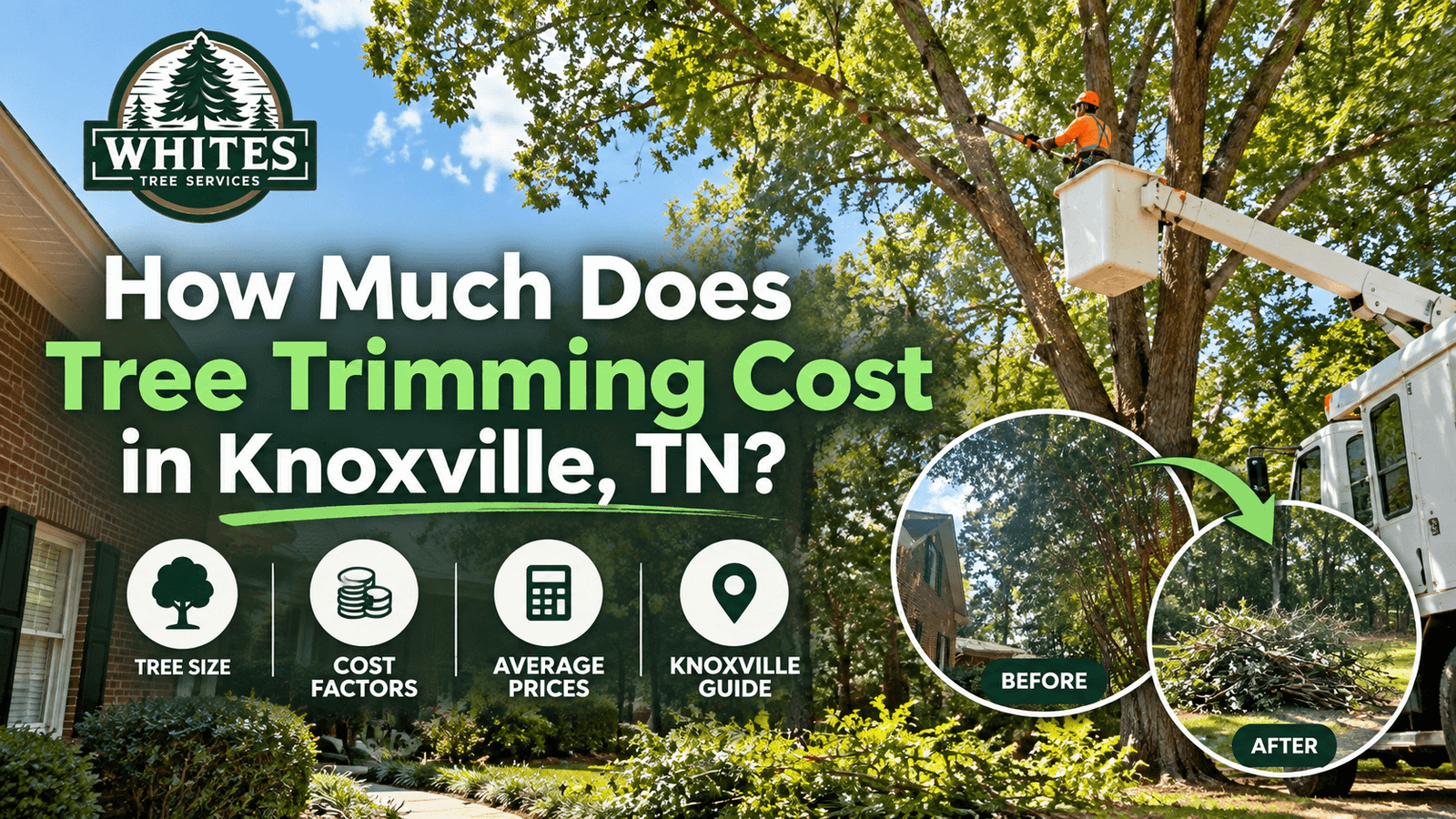
Most tree trimming in Knoxville costs between $300 and $1,600 per tree, with large shade trees running higher. The final price depends on the tree’s size, the kind of pruning it needs, and how easily a crew can reach it. This guide breaks down each factor.
Quick answer: typical tree trimming cost in Knoxville
- Small trees under 30 feet: $300 to $800
- Medium trees, 30 to 60 feet: $800 to $1,600
- Large trees, 60 to 80 feet: $1,600 to $3,000
- Very large or complex jobs: $3,000 and up
Ranges are per tree for typical residential work, including cleanup. Your quote depends on the specific tree, its condition, and access.
Tree Trimming Cost in Knoxville by Tree Size
Size is the single biggest driver of tree trimming cost in Knoxville. A taller tree takes more climbing or lift time, produces more brush to chip and haul, and carries more risk for the crew, and every one of those factors shows up in the price.
| Tree size | Common Knoxville examples | Typical cost per tree | What the visit usually involves |
|---|---|---|---|
| Small, under 30 ft | Dogwood, redbud, crepe myrtle, Japanese maple | $300 to $800 | Hand pruning or a short climb, cleanup in under a few hours |
| Medium, 30 to 60 ft | Red maple, river birch, young oak, Bradford pear | $800 to $1,600 | Climbing or a bucket truck, a half day or less for one tree |
| Large, 60 to 80 ft | Mature red oak, sugar maple, sweetgum | $1,600 to $3,000 | Full climb or lift work, rigging limbs over roofs and lawns |
| Very large or complex | Tall tulip poplar, white oak over a house, trees on steep or fenced lots | $3,000 and up | Advanced rigging, extra crew time, sometimes specialty equipment |
These ranges describe typical work on one healthy tree with reasonable access. A tree that sits beside a driveway with room for a bucket truck will land toward the low end of its tier. The same tree squeezed into a fenced backyard on a slope can land at the top of it, or move up a tier entirely.

What Is Usually Included
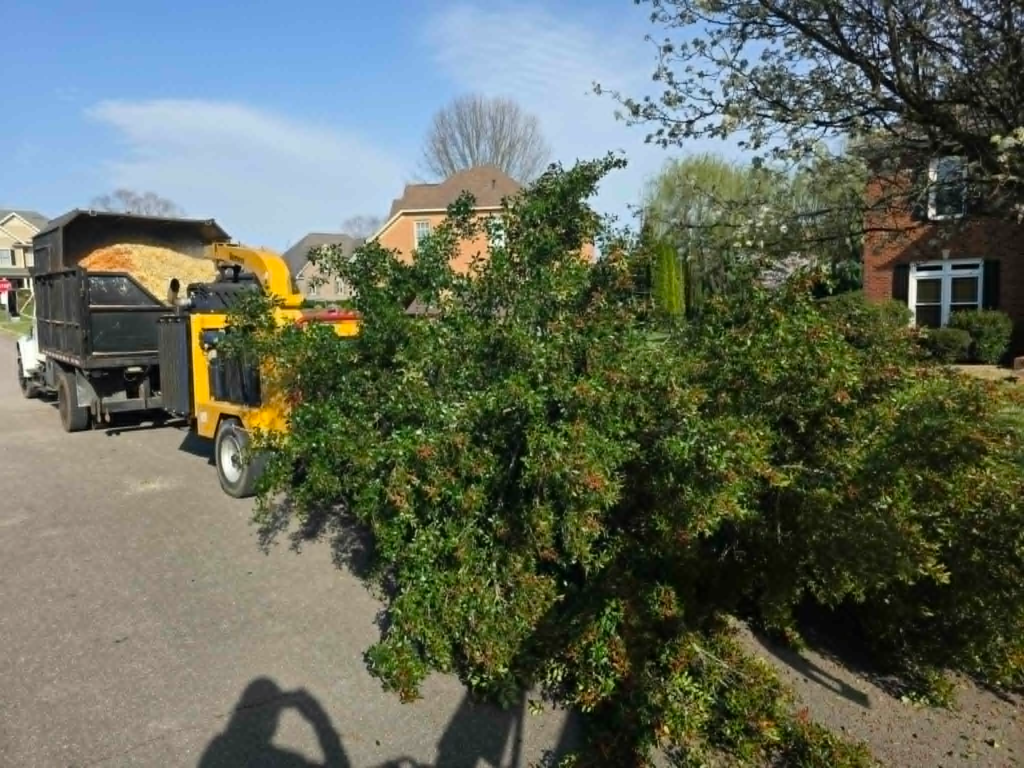
A reputable quote for tree trimming in Knoxville should include the climbing or lift work, the cuts themselves, chipping the brush, hauling away limbs and chips, and raking the work area. If a quote seems unusually low, check whether cleanup is part of the price. Leaving a homeowner with a yard full of branches is one of the oldest ways to make a bid look cheaper than it is.
Why Older Online Prices Look So Low
If you have searched for tree trimming prices before calling anyone, you have probably seen figures that look far lower than the quotes you get. Many of those national averages were gathered years ago, and the cost of running a tree crew has climbed sharply since then.
The increases are not abstract for a local company. Chris White, who owns Whites Tree Services, puts it plainly: “We can’t even touch a tree anymore for $150.” Diesel trucks and chippers burn more expensive fuel, and the parts that keep them running have climbed too. A single diesel fuel filter now runs around $150, most of the company’s trucks carry two, and they are changed about once a month. A new skid steer that cost roughly $60,000 about six years ago now costs around $95,000. Labor, insurance, mechanic bills, and disposal fees have all followed the same direction.
None of that changes what a good pruning job involves. It changes what it costs to show up with a trained crew, a bucket truck, a chipper, and full insurance. When a quote seems far above an online average, the age of the average is often the reason, and a current local estimate is the only reliable measure of your tree trimming cost.
A Real Example From a Knoxville-Area Job
To give a sense of current pricing, here is a recent job quoted by the Whites Tree Services crew this fall. A homeowner had a small ornamental cherry tree in the front lawn, beside the driveway and a few steps from the house. It stood about 20 feet tall with a crown roughly 16 to 20 feet across. The family wanted it gone and the stump removed as well, because they planned to plant a new tree in the same spot.
Chris visited the property the same day the homeowner reached out and sent a written quote by text: complete removal of the cherry tree, grinding the stump, and cleaning up the stump debris for $620. The homeowner accepted the next morning. Before any grinding started, the crew handled the call to Tennessee 811 so underground utility lines near the stump would be marked, since the company doing the digging is the one responsible for requesting the locate.
That was a removal, not a trim, but it shows where pricing sits today for even a modest tree in an easy front-yard spot. A crew, fuel, a chipper, a stump grinder, and cleanup are part of every visit, however small the tree.
What You Are Paying For: Cost by Type of Work
Two trees of the same height can carry a very different tree trimming cost because the work itself differs. “Trimming” covers several distinct jobs, and each one takes a different amount of time and skill. Understanding the terms also helps you compare bids, since two crews may describe the same work in different words.
| Type of work | What it means | Where it usually falls within a size tier | Typical frequency |
|---|---|---|---|
| Deadwood removal | Removing dead, dying, and broken limbs | Low end | As needed, often every few years |
| Crown raising | Removing lower limbs for clearance over lawns, walks, and driveways | Low to middle | Every few years as the tree grows |
| Roofline and structure clearance | Cutting back limbs that touch or overhang the roof, gutters, or siding | Middle | Every two to four years |
| Crown thinning | Selectively removing interior branches to reduce weight and wind resistance | Middle to high | Every three to five years |
| Crown reduction | Shortening the overall height or spread back to well-placed branches | High | Occasionally, when a tree has outgrown its space |
| Storm-damage cleanup | Removing broken or hanging limbs after wind or ice | Varies widely | After storms |
Deadwood Removal
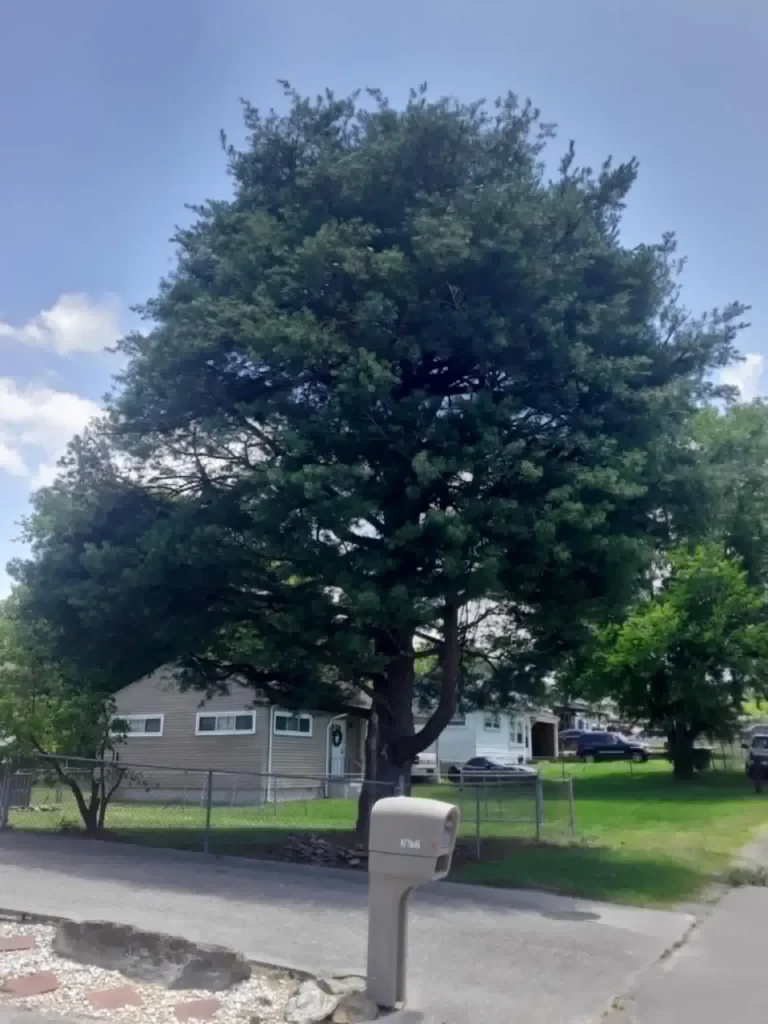
Removing dead and broken branches is the most common reason Knoxville homeowners call for trimming, and it is usually the least expensive kind of work for a given tree. The crew is not shaping anything. It is simply taking out wood that will eventually fall on its own. Deadwood can come out at any time of year, and it is the one job that should never wait for the “right” season when limbs hang over a roof, a driveway, or a play area.
Crown Raising
Crown raising lifts the lowest limbs so you can mow, walk, park, or see beneath a tree. Because those limbs are close to the ground, the work moves quickly. It becomes more involved when lower limbs are large enough to need roping down over a fence or a flower bed.
Roofline and Structure Clearance
Limbs that rub shingles, fill gutters, or give squirrels a bridge onto the roof cause steady, quiet damage. Clearance pruning cuts them back to a healthy junction so new growth heads away from the house. The cost rises with how many limbs overhang the structure, because each one has to be lowered carefully rather than dropped.
Crown Thinning
Thinning removes selected interior branches to let light and air through the canopy and reduce the weight a tree carries into a storm. Done properly, it is subtle: the tree should look natural afterward, not stripped. Thinning takes judgment and time aloft, so it typically costs more than raising or deadwood work on the same tree.
Crown Reduction
Reduction shortens a tree’s height or spread by cutting branches back to well-placed side branches that can take over. It is skilled work, often done on large trees near structures, and it is one of the more expensive kinds of pruning. It is also very different from topping, which chops limbs off at arbitrary points and leaves a tree weaker and more dangerous within a few years. Topping is not a cheaper version of reduction. It is a practice to avoid.
Storm-Damaged Limbs
Broken and hanging limbs after a windstorm or ice event are priced by the situation. A single cracked limb over open lawn is a quick job. A hanger caught in the canopy over a roof requires rigging and careful sequencing. Prompt attention usually costs less than waiting, because a hanging limb that finally drops can damage the house, the lawn, and the tree itself.
What Raises (or Lowers) the Price
Beyond size and type of work, several local conditions move a quote up or down. Knowing them in advance helps you understand why one neighbor’s tree trimming cost was so different from yours.
Access to the Tree
Access is the most underrated price factor in Knoxville. Many neighborhoods have narrow side yards, fenced backyards, retaining walls, and steep lots where a bucket truck simply cannot reach. When a lift can park beside the tree, the crew works quickly from the bucket. When it cannot, a climber has to ascend and move through the canopy on ropes, and every limb may need to be lowered by hand. That takes longer, and labor time is most of what you pay for.
Proximity to the House and Other Targets
Limbs over open grass can often be cut and dropped. Limbs over a roof, a deck, a fence, a pool, or a car have to be tied off and lowered in controlled sections. The more targets beneath a tree, the more rigging the job requires and the higher the quote.
Power Lines
Branches near energized lines are a special case. Utility line clearance should be handled by line-qualified crews, so if limbs are touching or growing into service lines, contact your utility first. Knoxville Utilities Board and other local utilities manage trimming around their own lines, and a regular tree crew should not be working within reach of them.
Tree Condition
Dead and decaying wood is brittle and unpredictable, which slows the work and increases risk. Ash trees killed or weakened by emerald ash borer are a common example around Knoxville: the wood dries and cracks quickly, and limbs can snap without warning. A tree with significant decay may cost more to trim than a healthy one of the same size, and it may also be a candidate for removal rather than trimming.
Number of Trees
Most of the cost of getting a crew and equipment to your property happens once, whether they trim one tree or five. Bundling several trees into one visit spreads that cost out, which is why the tree trimming cost per tree often drops on multiple-tree jobs.
Ground Conditions
East Tennessee clay holds water. After a wet stretch, a heavy bucket truck can rut a lawn badly, so a crew may choose to climb instead or schedule the work for firmer ground. That choice protects your yard, but climbing a tree that could have been reached from a lift can add time to the job.
Why Late Fall Through Winter Is the Smart Time to Trim
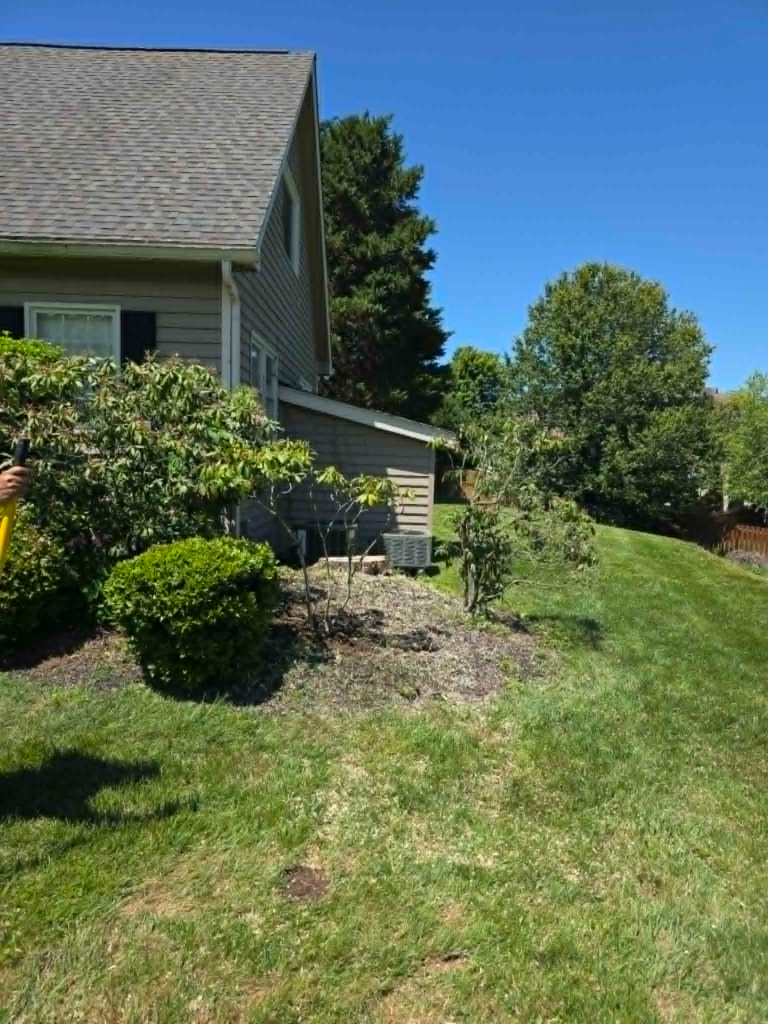
For most shade trees, the dormant season from late fall through winter is the best window for structural pruning. This is also the reason tree trimming cost questions spike in Knoxville as the leaves come down.
You Can See the Structure
Once the leaves drop, every limb, crossing branch, weak fork, and dead section is visible. A crew can make better decisions about what to remove, and you get more precise work for the same money.
Less Stress on the Tree
A dormant tree has stored its energy in the roots and trunk, so it is not trying to feed a full canopy while recovering from cuts. Wounds made in winter are ready to begin sealing over as soon as growth resumes in spring.
Oaks Have a Particular Reason to Wait
Oaks are the backbone of the Knoxville canopy, and they benefit most from winter pruning. Oak wilt, a serious fungal disease, can spread when sap-feeding beetles are drawn to fresh wounds during the growing season. That is why extension foresters recommend pruning oaks while they are dormant, as Michigan State University Extension explains. The simple habit for oak owners is to schedule routine pruning between late fall and late winter, and to avoid nonemergency oak cuts from spring through midsummer.
What About Maples?
Maples can be pruned during dormancy too, but they often “bleed” sap from fresh cuts in late winter as the sap begins to rise. It looks alarming, yet it generally does not harm a healthy tree. If the dripping bothers you, schedule maple work in early winter or wait until the leaves have fully emerged in spring.
When Not to Wait
A few situations do not follow the calendar. Dead, cracked, or hanging limbs over a structure should be handled whenever you notice them. Spring-flowering trees such as dogwoods and redbuds set their blooms the year before, so pruning them in winter removes this year’s flowers. For those, light pruning right after flowering is usually the better choice. The deeper reasons behind these timing rules come down to the difference between trimming for shape and pruning for structure, and knowing which one your tree needs helps you book the right work in the right season.
Is Winter Trimming Cheaper?
Your tree trimming cost depends mostly on the tree, not the month. What winter does offer is a quieter schedule for many crews, which can make it easier to book a convenient date, and better visibility that often makes the work more efficient. Plan ahead for late fall and winter and you are far more likely to get your preferred date than if you wait for spring storms, when demand for urgent work climbs.
How Often Should Trees Be Trimmed?
Frequency shapes your long-term tree trimming cost more than any single visit. A tree pruned lightly and regularly rarely needs expensive corrective work, while a tree ignored for a decade often needs a large, costly cleanup all at once.
| Tree | Typical trimming interval |
|---|---|
| Young trees, first 10 years after planting | Light structural pruning every 2 to 3 years |
| Mature shade trees such as oaks and maples | Every 3 to 5 years |
| Fast-growing or weak-wooded trees such as Bradford pear and silver maple | Every 2 to 3 years, with regular checks after storms |
| Trees overhanging the roof | Clearance every 2 to 4 years |
| Any tree after a major wind or ice storm | An inspection for broken and hanging limbs |
Training a young tree costs far less than corrective work later, and it prevents the weak forks and crowded limbs that become expensive problems later. If you have recently planted trees, early structural pruning is some of the best money you will spend on your landscape.
Trim or Remove? Running the Numbers
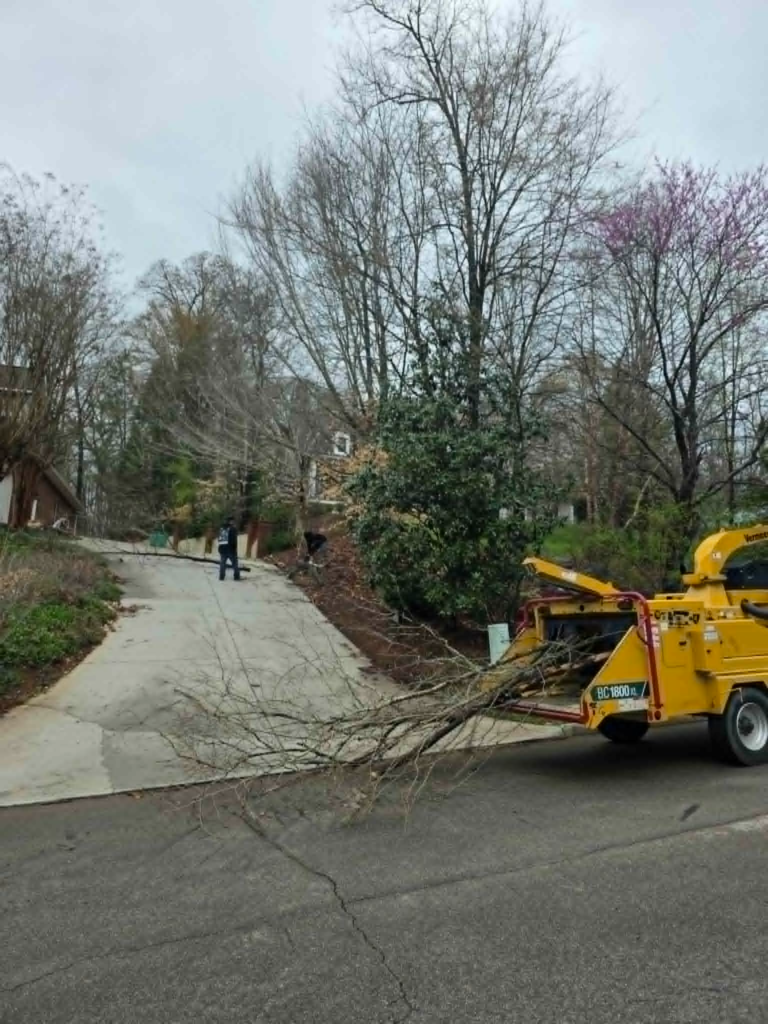
Sometimes the question is not the tree trimming cost itself but whether trimming is still worth it. Trimming is the right investment when a tree has a sound trunk, a stable root system, and problems confined to specific branches. Removal becomes the better choice when the defect is in the trunk or roots, or when the tree is declining past the point of recovery.
| Trimming usually makes sense when | Removal usually makes sense when |
|---|---|
| Dead wood is scattered but the crown is mostly healthy | More than about half the crown is dead or dying |
| One or two limbs threaten the roof or driveway | The trunk has major cracks, cavities, or decay |
| The tree is a valuable, long-lived species such as white oak | The tree has started leaning at a new angle after a storm |
| The tree has simply outgrown its clearance | The species fails repeatedly, as Bradford pears often do |
The long view matters here. For a large, healthy tree, trimming is usually far less expensive than removal. For a small tree, a thorough trim and a removal can cost about the same, which makes the decision more about the tree’s future than the price. Trimming is a recurring cost, while removal is a one-time expense. If a weak tree needs corrective trimming every couple of years and keeps dropping limbs anyway, the repeated bills can add up to more than removing and replacing it. Comparing those numbers side by side is easier with a look at what tree removal typically costs in Knoxville, since a removal quote is often the honest benchmark for whether a struggling tree is worth keeping.
On the other hand, removing a healthy mature oak because of a few dead branches is almost always a mistake. Large shade trees add real value to a property, cool the house in summer, and take decades to replace. When the tree is fundamentally sound, trimming is the better investment.
Hedges, Shrubs, and Small Ornamentals
Hedges and shrubs are usually priced differently from trees, often by the length and height of the hedge or by the time the job takes. A short boxwood border is a quick visit, while a long, overgrown privet or a tall laurel screen may take a crew several hours and generate a large volume of clippings.
Timing also differs from trees. Many hedges benefit from a light shaping more than once a year, and spring-blooming shrubs should be pruned after they flower. If your quote includes both trees and shrubs, it is worth understanding when Knoxville hedges and bushes should actually be cut back, since bundling the right work into one visit can save a second trip.
Three Typical Knoxville Trimming Scenarios
Price tiers make more sense when you see how the factors combine on real kinds of properties. The examples below are illustrations of how a tree trimming cost comes together, not quotes for any specific job.
A dogwood and a crepe myrtle in a front bed. Both trees are under 20 feet, easy to reach from the ground or a short ladder, and need deadwood removal plus light shaping. This is small-tier work at the low end, and trimming both in one visit costs less per tree than booking them separately.
A red maple over a driveway. The tree is about 45 feet tall in a typical West Knoxville subdivision, with a few limbs brushing the roof and low branches scraping car roofs. A bucket truck can park on the driveway, so the crew raises the crown and clears the roofline from the lift. This lands in the middle of the medium tier.
A large white oak behind a fenced backyard. The oak is around 70 feet tall, with heavy limbs over the house and a narrow gate that keeps equipment out. A climber handles the work on ropes, and limbs over the roof are lowered in sections. The crew removes deadwood and thins the crown to reduce storm weight. Access and rigging push this toward the upper part of the large tier, and adding crown reduction would move it higher still.
Notice that the oak’s price is driven as much by the fence and the roof as by the tree itself. That is why two trees of identical height can carry very different quotes.
Ways to Lower Your Tree Trimming Cost Without Cutting Corners
There are honest ways to keep your tree trimming cost down that do not involve hiring the cheapest crew or skipping necessary work.
- Bundle trees into one visit. Setup and travel happen once, so several trees trimmed together usually cost less per tree.
- Start young. Light structural pruning on a young tree costs far less than fixing a mature one, and it prevents the weak forks and crowded limbs that turn into costly corrective work later.
- Fix small problems early. A single dead limb is a quick job. The same limb after it cracks and hangs over the roof is a rigging job.
- Be flexible on timing. Booking dormant-season work ahead of time gives the crew room to schedule your job efficiently, often alongside other work nearby.
- Clear the way. Move vehicles, unlock gates, and point out sprinkler heads, septic lids, and fragile plantings before the crew arrives so no time is lost.
- Prioritize. If the budget is tight, handle safety first, such as dead limbs and roof clearance, and save cosmetic shaping for a later visit.
- Skip topping. It can look like a bargain, but topped trees regrow weak, crowded sprouts that need more frequent and more expensive work, and many decline afterward.
What You Can Safely Do Yourself
Some light pruning is reasonable for a homeowner. Small branches you can reach with hand pruners or a pole pruner while standing on the ground are fair game, especially on young trees and shrubs. Cut just outside the slightly swollen collar where a branch meets the trunk, not flush against it, and avoid leaving stubs.
Anything beyond that belongs with a professional crew. Working from a ladder with a chainsaw, cutting limbs heavier than you can control, or pruning anywhere near power lines or over the roof is where most serious tree-work injuries happen. The cost of a professional tree trimming service is modest compared with an emergency room bill or a damaged roof, and the crew carries insurance for exactly these risks.
How to Read a Tree Trimming Estimate
A good estimate tells you exactly what you are buying, which makes it easy to compare one bid against another. Look for these details in writing:
- Which trees and which limbs. “Trim the oak” is vague. “Remove deadwood over 2 inches and clear limbs off the roofline on the front oak” is specific.
- The type of work. Deadwood removal, raising, thinning, reduction, or clearance, so you know two bids describe the same job.
- Cleanup. Whether chipping, hauling, and raking are included.
- Equipment and access. Whether a lift will cross the lawn and how the crew plans to protect it.
- Proof of insurance. Liability coverage and workers’ compensation protect you if something goes wrong on your property.
- Pruning standards. Professional crews follow the ANSI A300 pruning standards, which call for cuts just outside the branch collar rather than flush against the trunk.
Red Flags in a Bid
Watch for any crew that offers to “top” a tree, plans to strip out most interior branches (a practice called lion-tailing), or uses climbing spikes on a tree that is being kept. Spikes wound the bark with every step and belong only on trees coming down. Ask how the crew will make each cut and how much of the canopy they plan to remove. A rule of thumb is that routine pruning should not take more than about a quarter of a mature tree’s live canopy in one season.
Getting an Accurate Estimate in Knoxville
The only way to know your exact tree trimming cost is to have someone look at the tree. National averages for tree trimming prices lump together big cities and rural towns, small ornamentals and towering oaks, and easy driveway jobs and fenced backyard climbs. A walkthrough of your property accounts for the size, condition, access, and targets that actually set the price.
When you schedule that walkthrough, have a short list ready: which trees concern you, what bothers you about each one, and whether you are aiming for clearance, safety, appearance, or all three. Walking the yard together usually takes less than half an hour and gives you a written number you can rely on. If you are gathering bids for tree trimming and pruning around Knoxville, ask each company to price the same scope so the comparison is fair.
Local experience matters as much as price. A crew that works in Knoxville neighborhoods every week knows how our clay soils behave after rain, which species tend to fail in ice storms, and how to work around the tight lots and steep yards common across Knox County. That is the kind of judgment a locally owned Knoxville tree service brings to an estimate, and it is what keeps a quote accurate once the work begins.
Frequently Asked Questions
How much does tree trimming cost in Knoxville?
Most residential trees cost between $300 and $1,600 to trim, depending on size, the type of pruning, and access. Large mature shade trees typically run $1,600 to $3,000, and very large or complex jobs start around $3,000. Quotes should include cleanup.
When is the best time to trim trees in Knoxville?
Late fall through winter is the best time for structural pruning on most shade trees, especially oaks. Dead or hanging limbs over a house should be handled right away, and spring-flowering trees like dogwoods are best pruned just after they bloom.
Is tree trimming cheaper than tree removal?
For large trees, usually yes, by a wide margin. For small trees the two can cost about the same. A declining tree that needs repeated corrective trimming can end up costing more over time than removing and replacing it.
How often should I have my trees trimmed?
Mature shade trees generally need trimming every three to five years. Young trees benefit from light structural pruning every two to three years, and fast-growing or weak-wooded species may need attention more often.
Do I need a permit to trim a tree in Knoxville?
Routine pruning on your own residential property generally does not require a permit. Work on trees in the public right-of-way, trees protected under local rules, or properties governed by an HOA may need approval, so check before work begins.
Can a crew trim branches near power lines?
Not if the branches are near energized lines. Contact your utility first, since line clearance must be done by line-qualified crews. A regular tree crew can work on the rest of the tree once the lines are safe.
Plan Your Winter Trimming Now
Tree trimming cost in Knoxville comes down to a handful of things you can see from your own yard: how big the tree is, what kind of work it needs, how easily a crew can reach it, and what sits beneath it. Use the ranges above as a starting point, schedule structural work for the dormant season, and get a written estimate that spells out exactly which limbs come off and how the cleanup is handled.
If you would like a clear number for the trees on your property, the team at Whites Tree Services offers free estimates throughout Knoxville and the surrounding area, and a winter walkthrough is the easiest way to book your pruning before spring.