What to Know Before You Clearing a Lot in Knoxville (Homeowners & Builders Guide)
A homeowner in Powell calls on a Tuesday. He’s bought three wooded acres off Emory Road, lined up a builder, and now has to figure out how to turn standing timber into a buildable homesite before his construction window closes. His first question is the one almost everyone asks: how hard can this be?
Harder than it looks, usually. Clearing a lot in Knoxville is more than dropping trees and pushing dirt. It’s a sequence of surveys, permits, utility calls, erosion controls, and ground conditions that have derailed more projects than most people realize. East Tennessee has its own quirks that generic online advice tends to miss: hilly terrain, karst limestone, red clay that holds water, and ordinances that behave differently depending on whether your lot sits inside the Knoxville city limits or out in unincorporated Knox County.
This is a plain-English walkthrough of what to know before you clear a lot in Knoxville, written for homeowners planning a build and for small builders handling residential sites. Every project is different, but the basic process is the same, and the mistakes are predictable enough to prepare for. The honest first step on nearly every job is a free on-site assessment of the property so you know what you’re actually dealing with before the paperwork starts.
What Clearing a Lot Actually Involves in East Tennessee
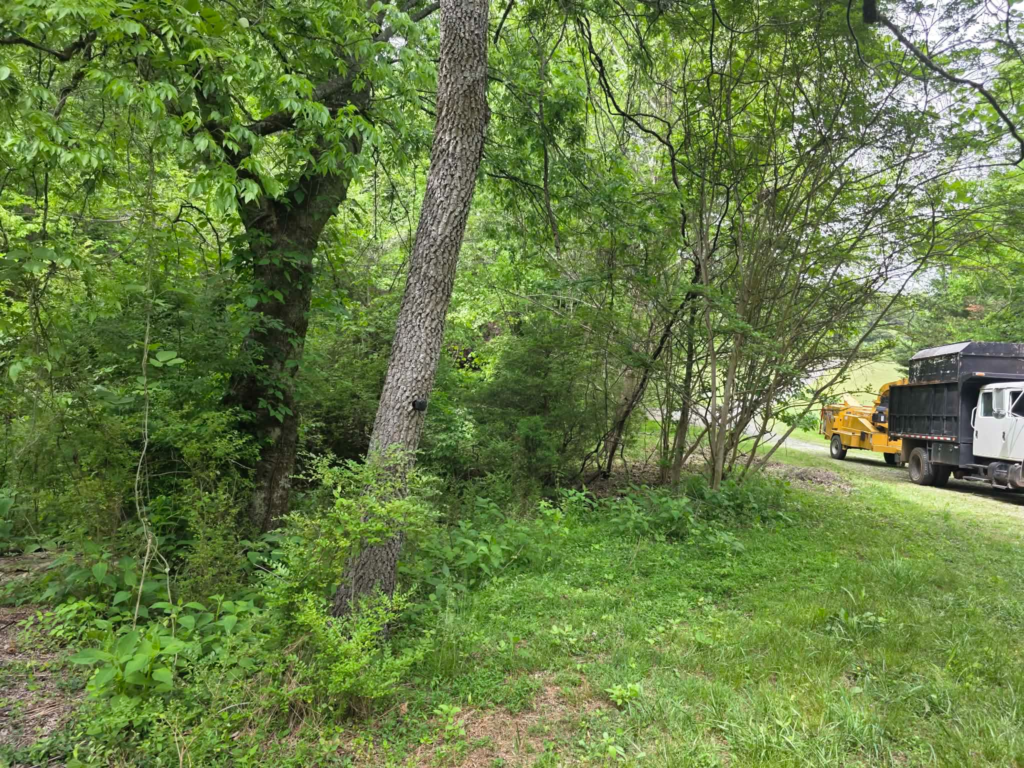
Lot clearing is one of those phrases that means different things to different people. A tract that’s been under pasture for twenty years takes an entirely different crew and timeline than a half-acre of mature tulip poplars inside a subdivision. Before anyone writes a quote, the scope has to be defined.
Full clearing removes everything down to bare ground: trees, stumps, roots, brush, understory. This is what builders need under a house footprint, a driveway, a septic field, and anywhere a foundation or compacted base is going. Stumps have to come out, not just get ground down, because wood left in the ground rots and leaves voids under slabs and footings over the following years.
Selective clearing keeps the trees you want and removes the ones you don’t. It’s slower and more expensive per tree, but it protects mature hardwoods that would take forty years to replace. Most Knoxville homesites use selective clearing around the building envelope and full clearing where the house, drive, and utilities actually go.
Underbrush work handles the mid-layer that chokes a wooded lot: privet, honeysuckle, bramble, saplings, vines. Clearing heavy underbrush and invasive growth is often the first phase on a lot that’s been let go for years, and it exposes what else is actually there before any heavy equipment is called in.
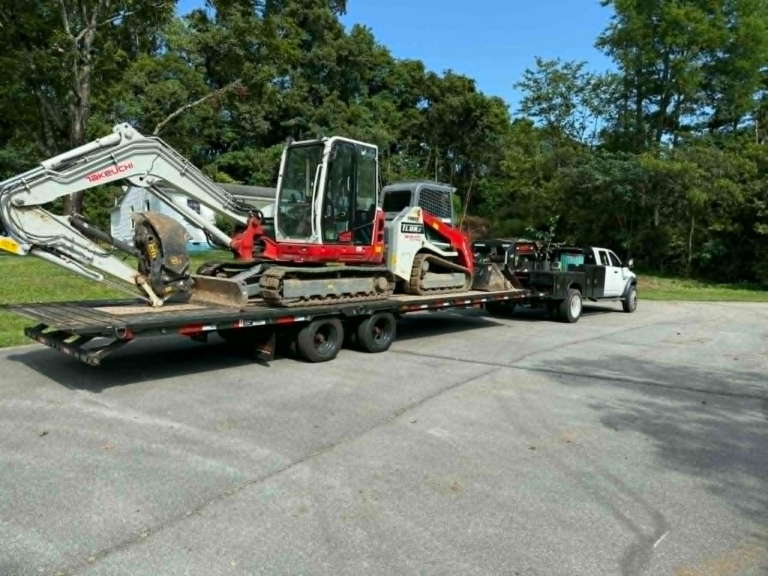
Then there’s the method question. Conventional clearing uses chainsaws, excavators, and dozers to fell trees, pull stumps, and push debris into burn piles or load it onto trucks. Forestry mulching uses a single machine with a rotating drum to grind standing vegetation into mulch that stays on the ground as a protective layer. Both have their place, and the right choice depends on what you’re building and what the finished site needs to look like. Our breakdown of the differences between forestry mulching and traditional clearing walks through when each one makes sense.
Build-ready is the term that matters most to anyone preparing to pour footings. A build-ready lot has been cleared, grubbed, rough-graded, drained, and stabilized to the point where a foundation crew can show up and start work. That usually means stumps out, major rock dealt with, the pad roughed in, drainage set, and erosion controls holding.
The Complete Process Before Any Equipment Arrives
This is where projects fall apart. The clearing itself takes days. The preparation takes weeks, and if any of it gets skipped, the whole timeline suffers.
Survey and Site Assessment
Start with a current survey. Property corners move in people’s heads over the years, and old fencing almost never follows the real line. A fresh survey confirms boundaries, setbacks, easements, and right-of-way, and it keeps you from clearing trees that technically belong to your neighbor. On wooded or complicated lots a surveyor may have to cut sight lines before pins can be set, which is a small job but one that needs scheduling.
An honest site walk comes next. Someone who has cleared dozens of East Tennessee lots can tell you within minutes which trees are hazards, which are keepers, where the natural drainage runs, where rock is likely to surface, and where the driveway should actually enter. This is also where realistic access gets figured out: can a chip truck make it in, can an excavator reach the back of the lot, where does the debris pile go.
Utility Locates Through Tennessee 811
Tennessee law requires calling 811 at least three working days before any excavation, including stump grinding. The call is free, and the markings cover electric, gas, water, sewer, and telecommunications lines that belong to utility companies. What 811 does not mark is private underground infrastructure: irrigation lines, invisible dog fence, propane feeds past the meter, old septic drains, anything a previous owner buried without a record. Mention everything you know about to the crew before the first blade touches the ground.
Permits and Land Disturbance Rules
Most tree removal on an occupied single-family lot does not require a city permit in Knoxville. What triggers permits is earth disturbance. In Knox County, a grading permit is generally required once land disturbance reaches one acre, or sooner on sites with significant cut and fill or large planned impervious areas. At one acre, Tennessee’s Construction General Permit also applies through the state, which means a Stormwater Pollution Prevention Plan has to be filed before any dirt moves.
Vacant lots, historic overlay districts, right-of-way trees, and sites undergoing building or grading permits each sit under a different set of rules. If a tree is in the public right-of-way (the strip between the sidewalk and the street), it belongs to the city, not to you. Our deep dive on the full set of local permit requirements covers the ordinance language and the exceptions in detail, and it’s worth skimming before you make assumptions about what applies to your lot.
Defining the Building Envelope
Builders think in rectangles. A building envelope is the actual footprint the house, garage, driveway, septic, well, and setback buffers will occupy. Marking it on the ground, with ribbon or lath, is what turns a vague “clear the front half” into a concrete scope the crew can work from. Keeper trees get flagged separately, usually with a different color ribbon or trunk tape, so no one guesses.
This step is also where you coordinate with the builder on grade. Clearing to a finished grade that doesn’t match what the foundation plan assumes is one of the most expensive mistakes on the list, because it forces re-grading or fill after the fact.
Erosion Controls Before the First Cut
Erosion and sediment control is not optional. Silt fence, construction entrance, inlet protection, and on bigger sites sediment traps or basins all go in before any grading starts. On sites over 10,000 square feet of disturbance, the city generally wants an Erosion Prevention and Sediment Control plan signed off before clearing. These controls stay in place through construction and get maintained after every heavy rain.
The second money-page link belongs here, because this is the step that separates professional lot clearing that leaves the site build-ready from a crew that drops trees and leaves. A serious contractor includes erosion controls in the base scope, not as an upcharge after the fact.
Realistic Cost Factors in the Knoxville Area
The cost to clear a lot in Knoxville TN varies more than most homeowners expect, and anyone quoting a flat per-acre number without seeing the property is guessing. Here’s what actually drives the price.
Density and tree size. A pasture with scattered small trees clears cheap. A quarter-acre of 60-foot tulip poplars with heavy understory can cost more per acre than three acres of light brush. Big trees mean bigger equipment, more debris, and longer removal time.
Stump handling. Grinding a stump below grade is cheap. Pulling the full root ball out for a foundation footprint is a different job entirely and takes an excavator. If you’re building, confirm your contract specifies full stump and root removal in the house pad and the driveway path, not just surface grinding.
Debris disposal. Chipping on site is cheapest. Hauling everything to a construction and demolition facility is the most expensive. Forestry mulching keeps the material on site as ground cover and skips the haul entirely, which is why it often prices out favorably on larger acreage.
Slope and access. A level lot with road frontage and open access is simple. A sloped backyard behind a narrow gate requires smaller equipment, more time, and more hand work. Steep lots in South Knox and the hollows out toward Seymour routinely cost more because of what the terrain forces.
Rock. Much of Knox County sits on limestone, and hitting bedrock a few feet down is common. If grading hits rock that has to be broken, the budget changes fast.
Finish condition. Rough clearing is one price. Clearing plus grubbing plus rough grading plus erosion controls plus a graveled driveway cut is another. Spell out the finish condition in the scope so there’s no confusion about where the crew’s work ends and the foundation crew’s begins.
For properties where most of the budget sits in large individual tree removal rather than clearing, typical pricing for tree work in the area is laid out separately on our tree removal cost page. The economics are different enough that treating them as the same job usually produces a bad quote.
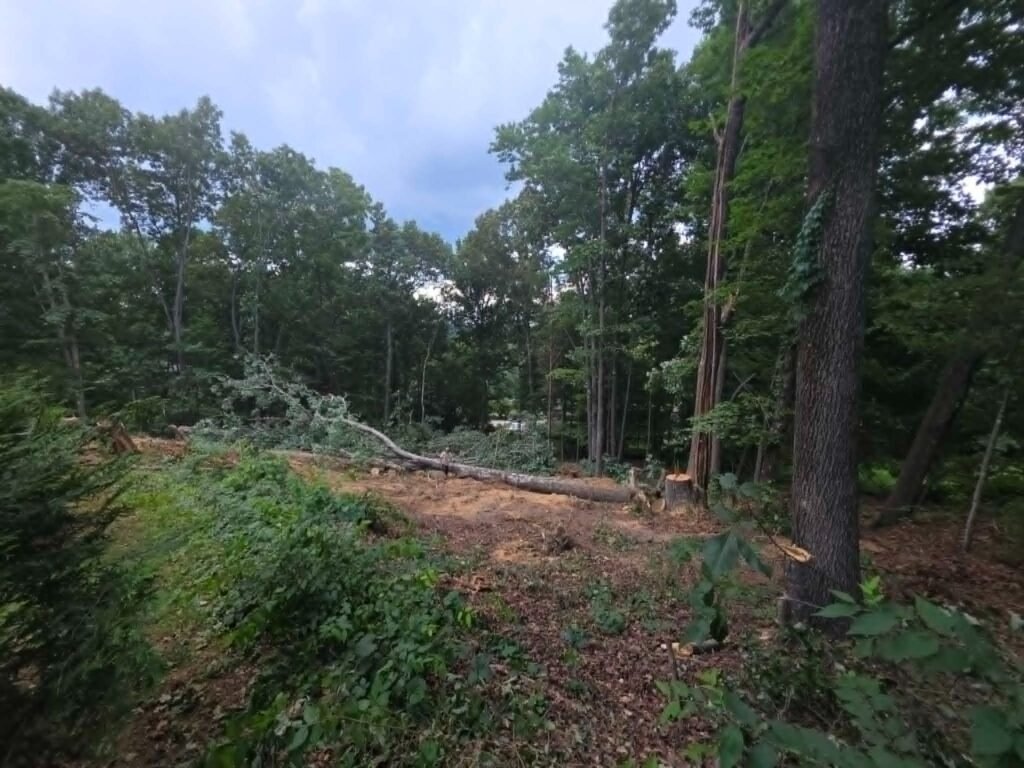
Common Mistakes That Delay Projects and Raise Costs
A short list of common mistakes when clearing land shows up on nearly every job that runs late or over budget.
Clearing before the survey is done. Property pins drift in memory. Clear the wrong side of a line and you’re paying for replacement plantings, buffer restorations, or worse.
Skipping the 811 call. Three days of waiting saves you from cutting a buried line and taking out power to the neighborhood or losing your gas service.
Clearing more than you need. The 25% rule for undeveloped lots inside the Knoxville city limits is real, and once you cross it without approval, enforcement is reactive and inconvenient. Even outside the city, over-clearing destroys the privacy and shade that made the lot attractive in the first place.
Clearing without an erosion plan. The first heavy rain after a bare lot sits open sends sediment down the slope and into the storm drain. That’s a fine from the stormwater office, not just an inconvenience.
Not coordinating with the builder on grade. Clearing to the wrong finished elevation forces the foundation crew to re-grade or add fill, which costs real money and delays the pour.
Trusting a flat per-acre quote. The lot is specific. The quote has to be too. Flat numbers from someone who hasn’t walked the property almost always get adjusted upward once the work starts.
Leaving stumps where a foundation is going. Wood rots. Voids open under slabs. Catch this on the scope sheet before the crew leaves.
Burning without a permit. Tennessee requires a free burn permit from the Division of Forestry during the October 15 to May 15 fire season. Fines are real, and a brush fire that gets away is a much larger problem.
How to Choose the Right Crew
The quality of the crew matters more than the brand of equipment on the truck. A good lot clearing company in Knoxville knows the local rules, carries current insurance, communicates clearly, and shows up with a written scope that spells out exactly what’s included.
Look for a local tree service company experienced with both residential lots and building sites. Crews that only do yard work rarely understand foundation-ready site prep, and crews that only do large commercial clearing can be oversized for a half-acre residential project. The sweet spot is a local operator who routinely handles both.
Verify insurance before scheduling anything. General liability covers damage to your property, your neighbor’s property, and anything else that goes wrong. Workers’ compensation covers injuries on your site. Ask for a Certificate of Insurance sent directly from the insurer, not a photocopy from the crew. If the company resists, that’s your answer.
Get the scope in writing. A real quote identifies the area being cleared, how stumps are handled, where debris goes, whether erosion controls are included, what the finish condition looks like, and the total price with any change-order process spelled out. Verbal numbers are not quotes.
For the full checklist on vetting any tree, land, or clearing contractor, see our guide on what to look for when hiring any tree or land crew. The criteria are the same across the industry, and the half hour spent verifying before signing almost always pays off.
Timing, Terrain, and Local Conditions
The best time to clear land in Knoxville is late fall through early spring, roughly October through March. Three reasons: the ground is firmer, deciduous trees are easier to drop with the leaves off, and bird nesting season (roughly April through July) hasn’t started.
Summer clearing works too, but equipment ruts clay soil fast after a rain, and July and August bring heat that slows a crew down. Spring is often the worst because the ground stays soft from months of rain and heavy equipment turns a lawn into a track.
Local terrain matters as much as timing. Three site conditions show up constantly on East Tennessee lots:
Clay soil. Knox County’s red clay compacts hard when dry and turns to mud when wet. Rutting is unavoidable on soft ground, which is why ground protection mats and dry-weather windows matter. Clay also drains slowly, so drainage planning around the house pad is not optional.
Karst and sinkholes. Much of the county sits over limestone, and sinkholes do open on cleared lots. If your property has visible depressions, old collapses, or any indication of karst activity, a geotechnical review before major grading is cheap insurance.
Slopes and runoff. Hillside lots in Seymour, South Knox, parts of West Knoxville, and most of the ridges around Loudon County bring real drainage challenges. Clearing without planning for how water will move after the trees are gone leads to erosion and settling that take years to fix.
Riparian areas (near creeks, streams, or wetlands) carry extra restrictions. Buffers are typically required and clearing inside them is restricted or prohibited. If a stream runs through or next to your lot, treat the buffer zone as off-limits until you’ve confirmed the rules.
Practical Checklist Before You Break Ground
A short list to run through before any crew mobilizes:
- Current property survey with pins visible
- Zoning, setbacks, and easements confirmed
- Tennessee 811 call placed at least three working days out
- Any required grading, stormwater, or tree permits in hand
- Building envelope marked on the ground
- Keeper trees flagged with ribbon
- Erosion controls specified in the scope
- Private utilities (irrigation, septic, propane, invisible fence) identified
- Debris disposal plan agreed (haul, chip on site, mulch, burn)
- Finish condition defined (rough cleared, grubbed, rough graded, pad roughed in)
- Written scope and total price signed
- Certificate of insurance on file
- Burn permit confirmed if any debris will be burned on site
- Neighbors notified of timing and access
If any of these aren’t done, the project isn’t ready for equipment yet.
FAQs
Do I need a permit to clear a lot in Knoxville?
In most cases, clearing trees on your own single-family residential property does not require a city permit in Knoxville. What triggers permits is earth disturbance. Knox County requires a grading permit for land disturbance of one acre or more, and the state requires a Construction General Permit at the same threshold. Vacant lots, historic overlay districts, right-of-way trees, and development sites all follow separate rules.
How much does it cost to clear a lot in Knoxville TN?
Costs vary widely based on tree density, slope, access, and stump handling. Light brush and underbrush typically run lower per acre than heavily wooded lots with large hardwoods requiring full stump removal. A build-ready wooded homesite usually involves clearing, grubbing, rough grading, and erosion controls, and should be quoted after an on-site walk, not from a satellite view.
What’s the difference between forestry mulching and conventional clearing?
Forestry mulching uses a single machine to grind standing vegetation into mulch that stays on the ground as a protective layer. It’s fast, leaves the root mat intact, and skips the debris haul. Conventional clearing uses chainsaws, excavators, and dozers to fell trees, pull stumps, and remove debris. Mulching works well for trails, view corridors, and selective thinning. Conventional clearing is required where stumps and roots have to come out for foundations, driveways, or utilities.
How long does it take to clear a lot in Knoxville?
A simple half-acre of light brush can be done in a day. A heavily wooded one-acre homesite requiring full clearing, grubbing, and rough grading typically runs three to five working days. Larger tracts scale from there. Weather, access, and debris handling all affect the timeline more than raw acreage does.
What’s the best time of year to clear land in East Tennessee?
Late fall through early spring is generally best. The ground is firmer, deciduous trees are easier to work with leaves off, and bird nesting season is over. Spring is the hardest window because of saturated ground, and summer heat slows a crew down. Any season works for the right lot, but timing can affect both cost and the condition the ground is left in.
Can I burn the debris on my property?
Open burning in Tennessee requires a free permit from the Division of Forestry during the October 15 to May 15 fire season. Knox County may impose additional restrictions during drought conditions. Confirm current rules before piling and lighting anything. Many lots use chipping or haul-off instead, which avoids both the fire risk and the paperwork.
Who’s responsible for coordinating with KUB if trees are near power lines?
A good tree or clearing contractor handles this before scheduling. Trees within roughly ten feet of a primary distribution line require KUB coordination, and in some cases KUB will remove the tree themselves or de-energize the circuit so the private crew can work safely. Trees already down on live lines are always a KUB call first, at (865) 524-2911, not a contractor call.
The Honest Last Word
Lot clearing before building in Knoxville is not complicated once you understand the sequence, but it does reward preparation. The projects that run smoothly share the same pattern: a survey done early, permits in hand before dirt moves, a scope that specifies the finish condition, erosion controls planned from the start, and a crew that knows the local ground.
The projects that run late and over budget share the opposite pattern—rushed decisions, flat per-acre quotes from crews that never walked the property, and clearing that got ahead of the paperwork.
Early planning is the single biggest difference-maker on an East Tennessee lot. Walk the property, get the survey, pull the permits, and define the scope before the chainsaws start. Everything else is details.
If you would like a second set of eyes on your specific lot, Whites Tree Services is a local, owner-operated crew that handles residential and building-site clearing across Knoxville, Knox County, and the surrounding area. We are happy to walk the property with you and give a clear, written assessment of what the job actually requires.