Tree Trimming vs Tree Pruning: What Knoxville Homeowners Need to Know
Most homeowners use the words trimming and pruning like they mean the same thing. In casual conversation, that is fine. When you are hiring a crew to climb a 70-foot oak in your backyard, the difference between those two words matters quite a bit.
Tree trimming and tree pruning involve different goals, different tools, different timing, and different outcomes. Understanding which one your trees actually need can save you money, keep your property safer during storms, and add decades to the life of the trees you love most.
Finding reliable tree services in Knoxville means working with crews who understand both the cosmetic and the structural side of tree care, and know when each one is the right call. The trees in our part of East Tennessee deal with humid summers, ice storms, heavy clay soil, and weather patterns that can flip in an afternoon. None of that gets better when a tree is cared for the wrong way.
This guide walks through everything a Knoxville homeowner should know about both services, from the science behind the cuts to the specific challenges of caring for Water Oaks, Silver Maples, and Loblolly Pines. We will cover when to do each one, what each one costs, when to call a professional, and how to know if your trees need more serious attention than a routine trim.
Here is the most important thing we can tell you: not every tree needs every service every year. A good arborist makes the case for the work that actually benefits your tree and your property. A bad one sells you whatever they want to sell. By the end of this guide, you will know enough to tell the difference and make the right call for your yard.
The Fundamental Difference Between Trimming and Pruning
The conversation around tree trimming vs pruning often gets muddled because the two terms overlap in everyday language. From an arboricultural standpoint, they are distinct disciplines with different goals.
Tree trimming is about appearance. Tree pruning is about health and safety.
That single distinction explains why a homeowner might pay $200 for a trimming job and $1,200 for a pruning job on the same tree. The work looks similar from the ground, but the science behind each cut is completely different.
The simplest way to think about the difference between trimming and pruning is to compare it to personal grooming. Trimming is the haircut: it shapes, it tidies, and it removes what has grown too long. Pruning is more like minor surgery, removing diseased or damaged tissue to keep the body healthy. Both belong in regular care, but one is mostly cosmetic and the other affects survival.
| Quick Reference: Trimming vs. Pruning at a GlanceGoal: Trimming improves appearance and clears obstructions. Pruning improves health, structure, and safety. Tools: Trimming uses hedge shears, pole pruners, and small saws. Pruning uses chainsaws, climbing rigs, and bucket trucks. Frequency: Trimming once or twice a year for most landscapes. Pruning every 3 to 5 years for shade trees, more often for fruit trees. Cost range in Knoxville: Trimming: $150 to $500. Pruning: $400 to $2,000+ depending on size and complexity. Best season: Trimming works year-round. Major pruning belongs in late winter dormancy. |
What is Tree Trimming? (Aesthetics and Shape)
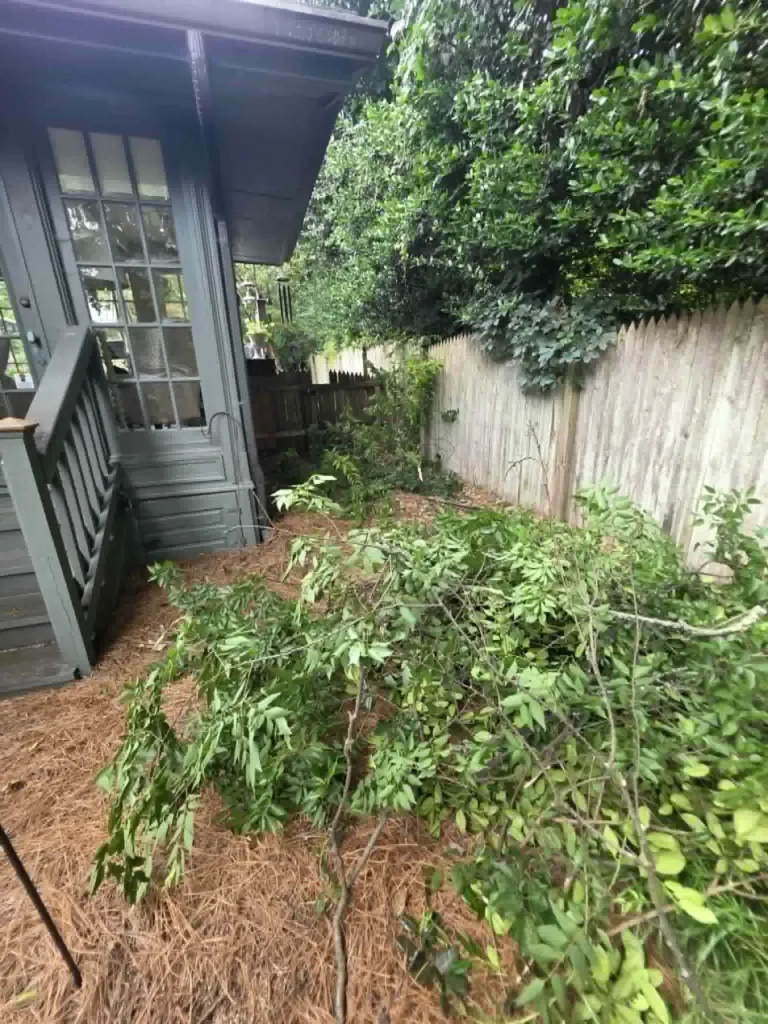
Tree trimming focuses on the outside of the tree. The look, the shape, the boundaries.
A trim might mean removing branches that have grown over a driveway or sidewalk. It might mean shaping a row of hedges so they have clean lines. It could mean opening up sightlines through a yard or letting more sun reach a garden bed.
The tools tend to be smaller. Pole pruners, hand shears, hedge trimmers, and small pruning saws do most of the work. The cuts are typically light, and they do not change the long-term structure of the plant.
While heavy canopy work requires chainsaws and climbing rigs, our seasonal hedge and bush trimming focuses on maintaining the manicured perimeter of your property using gas-powered shears and careful hand cuts. The result is clean lines around walkways, neat boundaries between yards, and a property that signals to anyone walking by that it is well maintained.
Trimming generally happens more often than pruning. Most properties benefit from a trim once or twice a year. Hedges, ornamentals, and small landscape trees stay healthier and look better with regular attention.
There is nothing wrong with hiring a crew for purely aesthetic reasons. A well-trimmed property looks cared for, sells faster, and feels good to live in. Just understand that you are paying for appearance, not arboriculture.
What is Tree Pruning? (Health, Structure, and Safety)
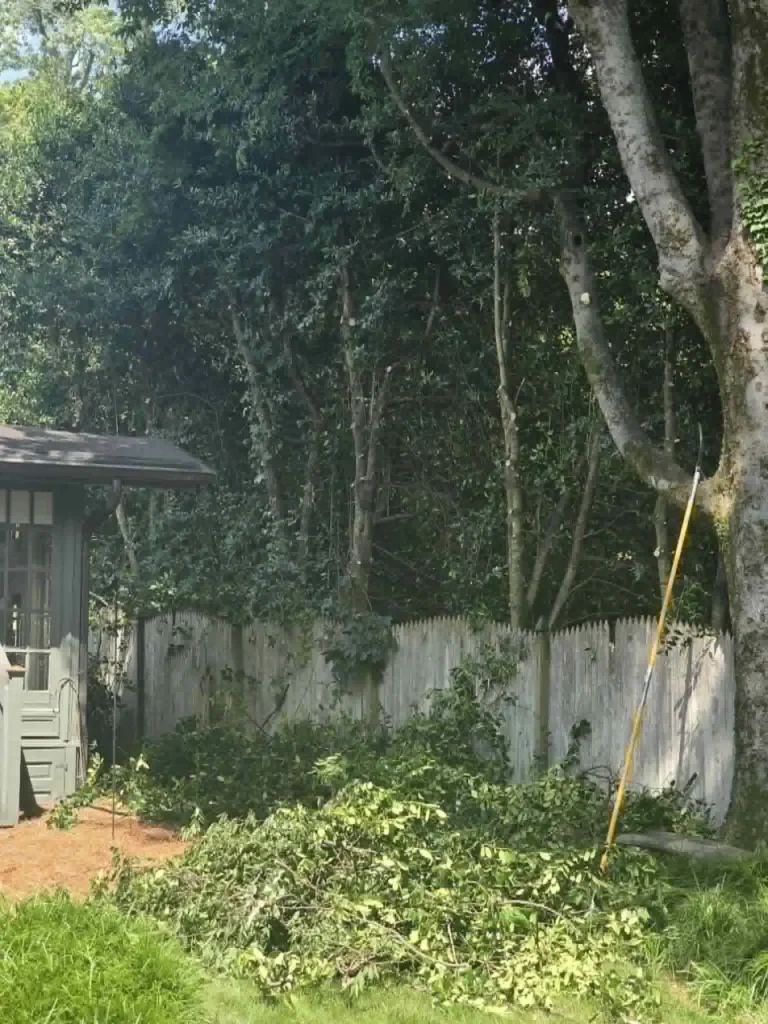
Pruning is the side of tree care that actually keeps your tree alive longer.
A skilled pruner is looking for problems most homeowners would never notice. Branches with poor attachment angles. Deadwood hidden inside the dense interior canopy. Weak unions where the tree might split in a storm. Diseased limbs that need to come off before infection spreads to the rest of the tree.
This is where the science gets specific. Trees grow branches from a structure called the branch collar, a slightly swollen ring of tissue at the base of every limb. When you cut a branch correctly, just outside the collar but never flush with the trunk, the tree forms callus tissue and seals the wound. When you cut wrong, you create an open door for fungus, rot, and decay that the tree may never fully recover from.
Pruning also addresses structural concerns that can save a tree from failing. The classic example is the V-joint. When two main branches grow upward in a tight V-shape, bark gets pinched between them. As the tree grows, the joint weakens. One ice storm, one gust of summer wind, and the entire tree can split right down the middle.
A proper U-joint, where two branches diverge with healthy space between them, is far stronger. A trained eye can spot the difference quickly and remove the weaker limb while it is still small enough to make the cut without stress on the tree.
Pruning also targets deadwood. Dead branches do not just look bad. They become projectiles in high wind. They invite carpenter ants and wood-boring beetles. They shelter diseases that spread to healthy parts of the tree. Removing them protects everything below, and everything the tree might otherwise become.
Arborists often refer to the “5 D’s” when explaining what should come off a tree during pruning: Dead, Dying, Diseased, Damaged, and Deformed. Any branch that fits one of those categories is a candidate for removal, no matter what time of year it is. The 5 D’s are the universal pruning rule. Everything else depends on the tree, the season, and the goal.
The result of good pruning is not always obvious right away. Sometimes a properly pruned tree looks slightly thinner from the ground. The real payoff shows up over years: stronger limbs, better resistance to wind damage, fewer diseases, and a tree that holds its shape gracefully as it matures into something the next generation gets to enjoy.
Why Tree Pruning in Knoxville, TN Requires Local Expertise
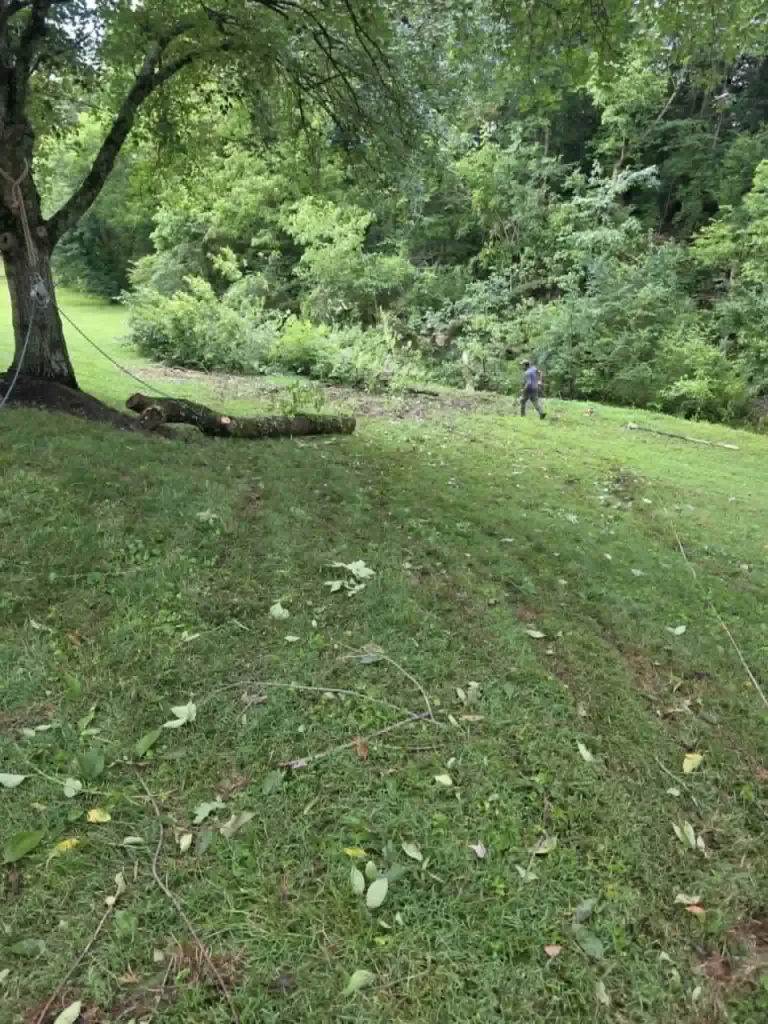
The advice you read in a national gardening blog might be accurate for someone in Vermont or California, but trees in East Tennessee live in a different world. Executing proper tree pruning Knoxville TN homeowners can rely on requires an understanding of how our heavy clay soils impact root stability during wet seasons, how our humidity affects disease pressure, and how our specific mix of native and ornamental species responds to different cutting strategies.
A crew that knows our area understands these factors instinctively. A crew that treats every job the same way misses the things that matter most.
Dealing with East Tennessee Clay Soil and Root Health
If you have ever tried to dig a hole in a Knoxville yard, you already know what we are working with. The soil across most of Knox County, Loudon County, and Blount County is heavy red clay. Dense, slow to drain, and low in oxygen compared to the looser soils you find further west or in higher elevations.
Clay soil compacts easily. Foot traffic, lawn mowers, parked vehicles, and any kind of construction equipment all squeeze the soil tight. Compacted soil starves roots of the oxygen they need to function. A tree with compromised roots cannot support a heavy canopy through a windy spring.
This is why canopy weight reduction matters so much for trees in our area. A properly pruned tree puts less stress on its root system. The lighter, more balanced crown lets the roots do their job during heavy spring rains, when saturated clay turns into something closer to wet sand and the root grip on the soil loosens dramatically.
Untreated heavy canopies on trees in clay soil are one of the most common reasons we see otherwise healthy trees fail during storms across Knoxville. The roots simply cannot hold the wind load through saturated soil. Strategic pruning solves the problem at its source by reducing what the roots are asked to hold up.
We also see significant root damage from construction projects across our service area. New home builds, driveway expansions, fence installations, even underground cable runs. Any digging within the drip line of a tree can sever critical roots. A tree that lost roots two years ago might look fine today, but it is living on borrowed structural support. The right pruning can compensate by reducing the load on the remaining roots and buying that tree more years of stable growth.
Common Local Tree Species and Their Specific Needs
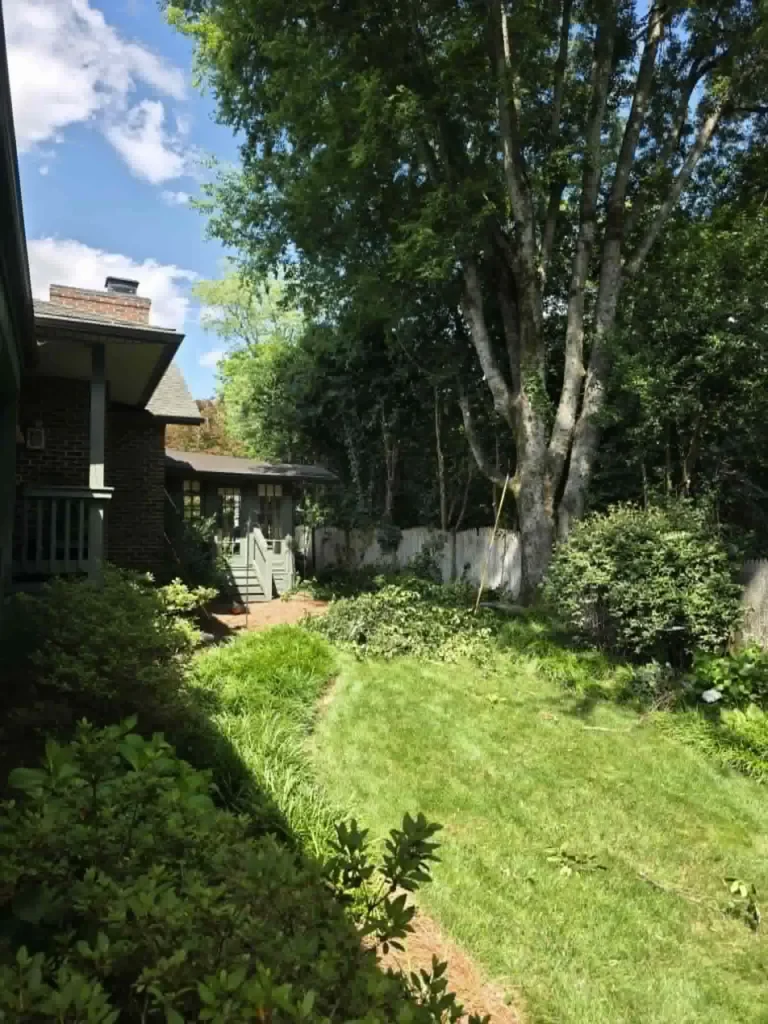
Knoxville landscapes lean heavily on a handful of species. Each one has its own quirks when it comes to pruning, and treating them all the same way is a quick path to damaged trees.
Water Oaks (Quercus nigra) grow fast and provide excellent shade, which is why so many of them tower over older neighborhoods like Bearden, Fountain City, and Sequoyah Hills. They are also prone to internal decay and weak branch unions. Their soft, water-holding wood encourages rot in places you cannot see from the ground. A Water Oak older than 60 years often needs careful structural pruning to remove failing limbs before the next storm makes the decision for you.
Silver Maples (Acer saccharinum) might be the most overplanted tree in East Tennessee. They grow fast, which homeowners love. They produce dense shade, which homeowners love. They split apart in storms, which homeowners then hate. The wood is brittle. The branch attachments are notoriously weak. Pruning Silver Maples is less about looks and more about damage control: removing the worst branch unions before they let go on a stormy night and end up in someone’s living room.
Loblolly Pines (Pinus taeda) stretch high above many Knoxville properties. They reach impressive heights quickly but shed their lower branches naturally as they age. Pruning Loblollies is tricky because cutting too aggressively in the wrong season invites pine bark beetles, which are a serious pest across our region. The right approach focuses on dead branch removal and avoids any cuts during the active beetle season, typically late spring through early fall.
Then there are the smaller staples. Flowering Dogwoods (our state tree), Eastern Redbuds, Crepe Myrtles, and the troubled Bradford Pears. Each has its own pruning rhythm and its own list of common mistakes. Bradford Pears in particular need attention well before their notoriously weak crotches give way. We have removed countless Bradford Pears across Knox County that split during what most homeowners would call a routine spring storm.
Knowing the species changes the approach. A blanket “trim everything” policy does not work in Knoxville. The right cuts on the right tree at the right time of year can extend a tree’s useful life by decades. The wrong cuts can shorten it by just as much.
Seasonal Guide: When to Prune Trees in Tennessee
Timing matters more in tree care than almost any other aspect of the work. The same cut, made on the same branch, can heal beautifully in one season and rot disastrously in another. Knowing when to prune trees Tennessee homeowners count on is the difference between work that helps the tree and work that hurts it.
For most of our area, the tree-care calendar follows a predictable pattern. Heavy structural work in winter. Light maintenance in late spring. Careful selective cuts in summer when absolutely necessary. And almost nothing in fall except deadwood removal as a safety priority.
| The Knoxville Pruning CalendarJanuary to February: Peak structural pruning season. Trees fully dormant, no leaves blocking your view, faster healing in spring. Late March to early April: Last call for dormant pruning before bud break. Avoid heavy oak work past mid-April. May to July: Strict no-oak-pruning zone. Light touch-ups only for other species. Watch for Oak Wilt. August to September: Light corrective pruning only. Avoid heavy cuts on stressed trees. October to November: Deadwood removal and storm preparation. Avoid major cuts as trees enter dormancy. Year-round: Any of the 5 D’s can be removed at any time. Storm damage requires immediate response. |
The Dangers of Summer Pruning
Summer is the worst time for major pruning on most species in Knoxville, and the reason has a name: Oak Wilt.
Oak Wilt is a vascular disease caused by the fungus Bretziella fagacearum. It is lethal to oak trees in our region, particularly red oaks. The disease spreads two ways: through interconnected root systems between nearby oaks, and through sap-feeding beetles that visit fresh tree wounds.
Those beetles, called Nitidulids, are most active from spring through midsummer. They are drawn to the smell of fresh tree sap. When they land on an open oak wound, they can transfer Oak Wilt spores from infected trees they visited earlier. A clean pruning cut in June becomes an infection site within hours. Once Oak Wilt establishes in a red oak, the tree typically dies within a single growing season.
The University of Tennessee Extension and most major arboricultural organizations now strongly recommend avoiding any pruning of oak trees between April and July. If an emergency cut becomes necessary during that window, professional crews seal the wound immediately with tree paint to block beetle access. This is one of the few times sealing a cut actually helps the tree.
Summer pruning also stresses trees in other ways. The heat and humidity of a Knoxville July make it harder for wounds to seal. Trees are actively photosynthesizing and pushing growth, which leaves them less reserve energy to direct toward healing. Insects and disease pressure peak in summer, raising the risk of secondary infection in any open cut.
There are exceptions to every rule. Cherries, Bradford Pears, and a few other species actually do better with light summer pruning. Dead branch removal can happen any time. Storm damage requires immediate response regardless of season. But major structural cuts on most species should wait for the dormant window.
Winter Dormancy: The Optimal Time for Structural Cuts
Late November through early March is the gold standard for serious pruning work in East Tennessee.
In dormancy, the tree’s metabolic activity slows dramatically. Sap flow drops to minimal levels. Insect activity hits its annual low. Disease pressure drops along with the temperature. Most importantly, the tree’s leaves are gone, which means a trained arborist can see the actual branch structure clearly. Problems hidden by summer foliage become obvious in winter, when the tree is essentially showing you its bones.
Winter cuts heal differently than summer cuts. When spring arrives, the tree’s first major growth push goes toward sealing the wounds. Callus tissue forms quickly. Within a single growing season, a well-made winter cut can be completely closed and protected.
The other major advantage of winter pruning is access. Frozen or hard-packed soil supports heavy equipment without leaving the ruts you would see in spring mud. Crews can position bucket trucks and chippers close to the work. Cleanup is easier without active growth getting in the way.
For Knoxville homeowners, the dormant season also happens to be the best time to schedule. Tree services across our area book up fast once the first warm days of March arrive. Getting on the calendar in January or February usually means faster service, more flexible scheduling, and sometimes better pricing as crews work to fill their winter schedule.
Late Spring Frost Cycles and Disease Prevention
Spring in East Tennessee is famously unpredictable. We can hit 80 degrees in late March and drop back to a hard freeze a week later. That stretch around April when the dogwoods bloom and the temperatures swing wildly has a name old-timers still use: Dogwood Winter.
These freeze-thaw cycles are tough on trees. New growth that emerged during a warm spell can be damaged or killed by a late frost. Existing branch damage from winter ice loads becomes apparent as the canopy fills in and reveals what survived the season.
Before the sap begins to flow heavily, running through a comprehensive spring tree care checklist ensures your landscape is prepared for the growing season ahead. Light deadwood removal, soil amendment, and selective pruning of damaged limbs all happen best in early spring before full leaf-out, when you can still see what needs attention and the tree has the energy reserves to heal properly.
Some species actually need to wait. Maples and Birches “bleed” heavily if pruned in late winter just before sap rises. The sap loss is rarely fatal but is unsightly and somewhat stressful to the tree. Waiting until the leaves have fully emerged prevents the bleeding without harming the tree. Walnuts behave similarly.
The right time depends on the species, the goal, and the year’s weather. Generic advice falls short here. A crew that knows the trees and the season can make cuts that work for both.
Evaluating Tree Trimming Cost vs. Long-Term Property Value
Money is always the question that decides whether the work actually gets done. Homeowners often find that routine tree trimming cost is a fraction of the price of emergency roof repairs or insurance deductibles, but the up-front number can still feel steep without context.
Let us break down what actually goes into the cost of a tree trimming or pruning job in the Knoxville area, and why some jobs run much higher than others on what looks like a similar tree.
Factors That Influence the Price of Canopy Maintenance
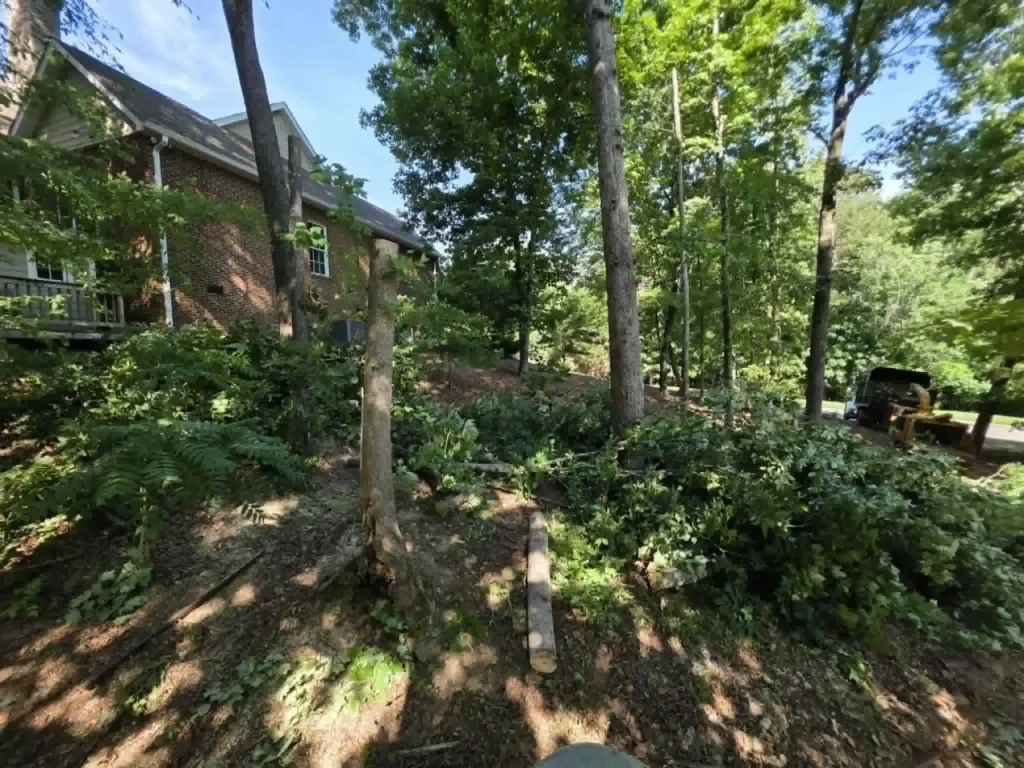
Tree size is the biggest single factor. A small ornamental tree might cost $150 to $400 to trim properly. A medium shade tree (30 to 60 feet tall) typically runs $400 to $800. Large trees over 60 feet often start at $800 and can exceed $2,000 for complex work on a single tree.
Equipment requirements drive a significant portion of cost. A tree that can be worked from the ground or a small ladder costs less than one requiring a bucket truck. Some trees, especially those in tight backyards with no truck access, require climbers and rigging, which means more crew members, more time, and higher labor cost. A tree at the back of a fenced yard with no gate access might cost twice as much as the same tree in the front yard.
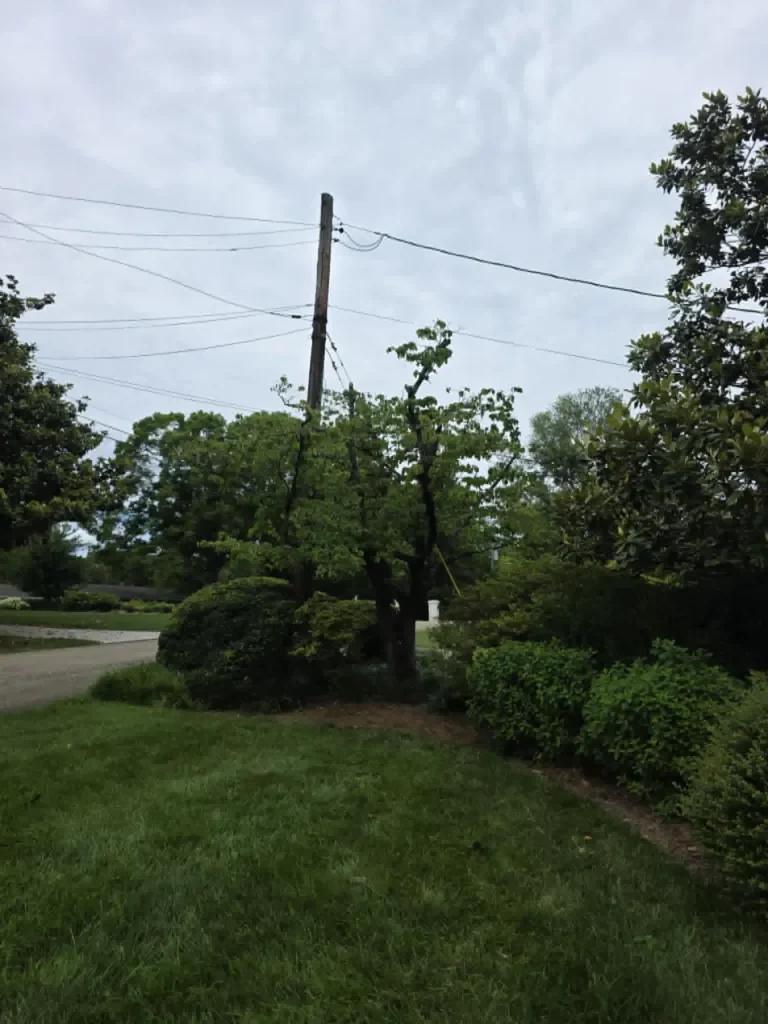
Proximity to power lines adds substantially to the price. Working around energized lines requires additional safety protocols, sometimes coordination with KUB (Knoxville Utilities Board) to de-energize the section, and crew members with specific line-clearance training. A simple trim becomes a complex job when there are utility lines threaded through the canopy.
The location of the tree on the property matters in other ways too. Front yard trees with clear truck access are cheaper than backyard trees that require carrying debris through gates, around fences, and across the lawn. Slope adds difficulty, since heavy equipment cannot operate safely on steep grades. Knoxville’s rolling terrain means a lot of properties have at least one challenging access situation.
Debris hauling fees are sometimes bundled and sometimes separate. A reputable crew should include cleanup in the base price, including chipping or hauling away the cut material. For a deeper dive into pricing for actual removals (which run higher than trimming), our Knoxville tree removal cost guide breaks down the numbers by tree size, location, and complexity. Trimming generally costs 30 to 60 percent less than removal of the same tree, since the work is lighter and considerably less hazardous.
The Hidden Cost of Neglect (Storm Damage)
Skipping routine tree maintenance is one of those decisions that feels harmless until it really, really is not.
Consider the math. A mature oak in the backyard might cost $700 to prune properly every three or four years. That same oak, neglected for a decade, can drop a major limb during a routine summer thunderstorm. The repair bill for a damaged roof, gutters, and siding routinely runs $5,000 to $15,000, plus the cost of emergency tree removal, plus the homeowner’s deductible. Now add the temporary lodging cost if the damage makes part of the house unusable.
We see this scenario every storm season across Knoxville. The trees that fail are almost never the ones that have been maintained. They are the ones nobody touched for years, where deadwood accumulated, weak branches grew too long, and the canopy became dangerously top-heavy. The owners always tell us they meant to get to it eventually.
Insurance companies have started pushing back on storm damage claims when there is clear evidence of neglect. A photograph of a damaged tree showing obvious dead branches, deep bark fissures, or visible fungal conks tells the adjuster that the failure was preventable. Some claims get reduced. Some get denied entirely. Either way, the homeowner ends up paying more than the cost of routine pruning would have been over the same period.
There is a third hidden cost that does not show up on any spreadsheet. A mature shade tree adds significant value to a Knoxville property. Real estate analysts estimate that healthy, well-maintained landscape trees can add 5 to 15 percent to a home’s appraised value. A neglected tree that has to be removed leaves a gap that takes decades to fill, and the property feels noticeably less complete in the meantime.
Routine pruning is not an expense. It is an investment in the tree, the property, and the homeowner’s peace of mind during storm season. Knoxville sees enough severe weather every year to make that investment pay for itself quickly.
Diagnostics: How to Tell What Your Tree Actually Needs
Now that we have covered the science and the cost, let us get practical. How do you actually look at the trees in your own yard and figure out what they need?
The best arborists in Knoxville started by learning to read trees. The good news is that you can pick up the basics in an afternoon of careful observation. You will not catch everything a trained eye would, but you will catch enough to know when to call for help.
Identifying Overgrowth vs. Deadwood and Disease
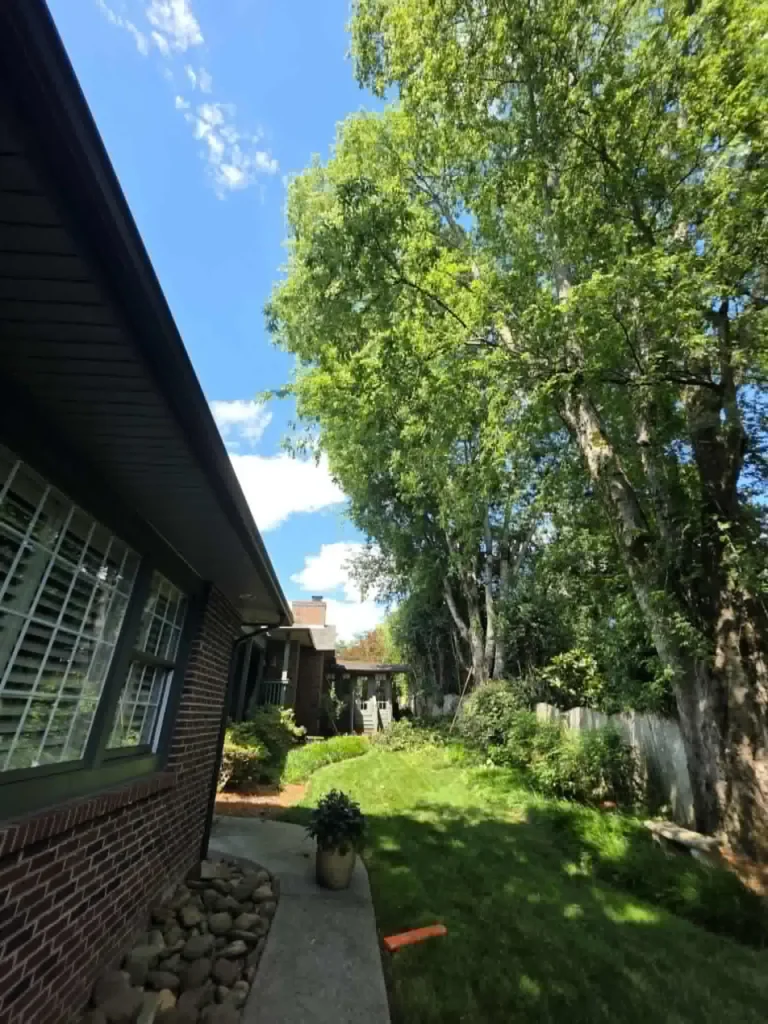
Walk slowly around each significant tree on your property, looking up into the canopy. Take your time. Spring or early summer is ideal for this kind of survey, since the leaves will tell you a lot about the tree’s health.
Overgrowth shows itself in a few common ways. Branches reaching out beyond the natural shape of the tree, often hanging low over driveways, sidewalks, or rooflines. Dense interior growth where light can no longer reach the inner canopy. Suckers, which are small vertical shoots, growing from the base of the trunk or along major limbs.
Overgrowth is usually a trimming issue, not an emergency. Schedule a crew for routine work when the season is right and the budget allows.
Deadwood is the next thing to look for. Dead branches typically lack leaves entirely (in summer) or have brittle, dry-looking bark that flakes off easily. Snap a small twig at the end of a suspect branch. If it bends, the branch is alive. If it breaks crisply with no give, the branch is dead and needs to come out.
Small dead branches scattered through a healthy canopy are normal. Trees shed inner branches naturally as they grow. Large dead limbs, especially those over driveways, decks, or paths people regularly walk, need to come out before they fall. Dead limbs do not pick a convenient time to drop.
Disease shows up in several ways. Brown or black spots spreading across leaves. Yellowing canopy that does not match the season. Premature leaf drop in late summer. Bark that is peeling, splitting unexpectedly, or showing fungal growth.
Pay particular attention to fungal conks, the hard, shelf-like growths that appear on trunks. A conk is the fruiting body of a fungus that has already established itself inside the tree. By the time you can see a conk, internal decay is usually well advanced. The visible mushroom is just the tip of the problem.
If you spot deep bark fissures or fungal conks, we highly recommend scheduling professional tree assessments before making any cosmetic cuts. The structural integrity of the tree may be compromised in ways that are not visible from the ground, and the wrong cut could accelerate failure. A proper assessment uses tools and techniques (sometimes including sonic tomography) to evaluate what is actually happening inside the trunk.
When Pruning is No Longer Enough
There is a point in every tree’s life when pruning becomes inadequate. Recognizing that point can save you money and prevent serious property damage.
Severe core rot is one of the clearest signs. If a tree has hollowed out internally, often visible through cavities at the base of the trunk or through small openings higher up, the structural strength of the tree is gone. No amount of pruning will restore it. The tree might stand for another few years, or it might fail in the next windstorm. There is no way to predict which.
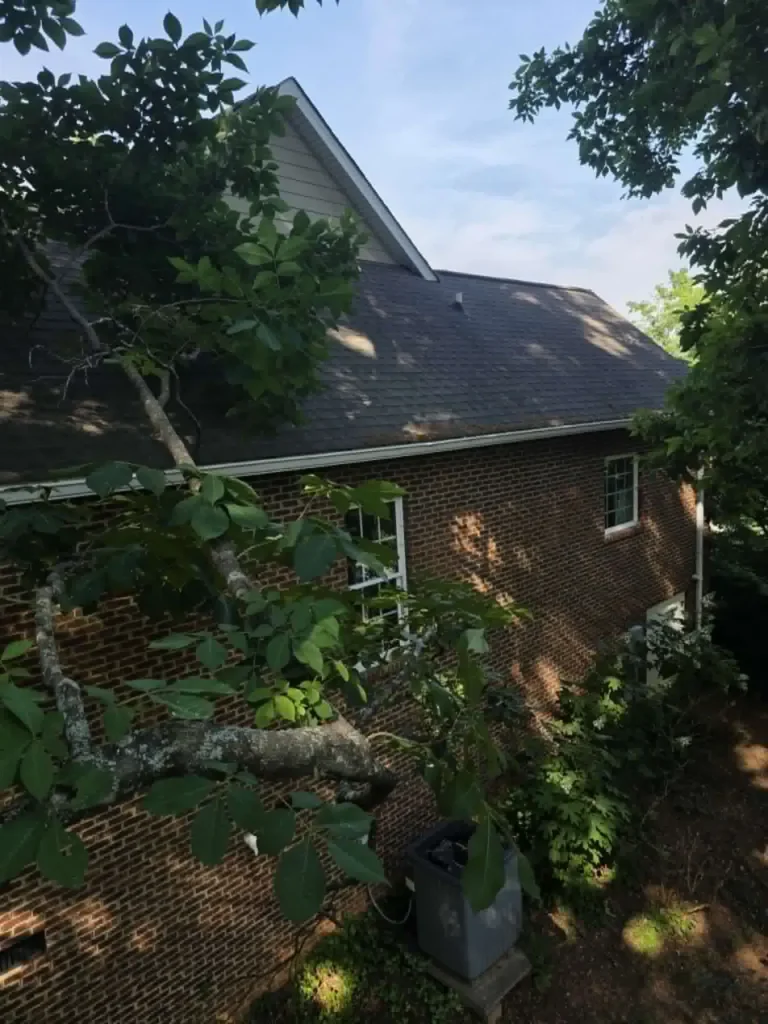
Heavy lean toward a structure is another red flag. Some trees have always grown at an angle, and a longstanding lean is not necessarily dangerous. A new lean, especially one that has gotten visibly worse in the past year, indicates root failure on one side of the tree. If the tree is leaning toward your house, the choice is straightforward. It needs to come out.
Visible root damage near the surface, especially circling the trunk or showing significant decay, can indicate problems below ground that will not get better with time. Trees with serious root issues often fail without warning, going from “looks fine” to “on the roof” in a single afternoon.
Major storm damage that compromises a substantial portion of the canopy is sometimes irreparable. If half the major limbs are gone or damaged, the tree usually cannot recover its photosynthetic capacity and slowly declines over the following years.
If the trunk is hollowed out by pests, you must recognize the signs your tree needs removal before the next major storm hits the valley. Ignoring obvious removal signs is one of the more common ways homeowners end up paying for both emergency tree service and major home repair after a storm rolls through.
The honest conversation with a good arborist sometimes ends with “this tree needs to come out, not be trimmed.” That is a hard call, especially for a tree someone has loved for years. It is the right call when the alternative is greater damage to the property and risk to the people living there.
DIY vs. Hiring a Professional Arborist
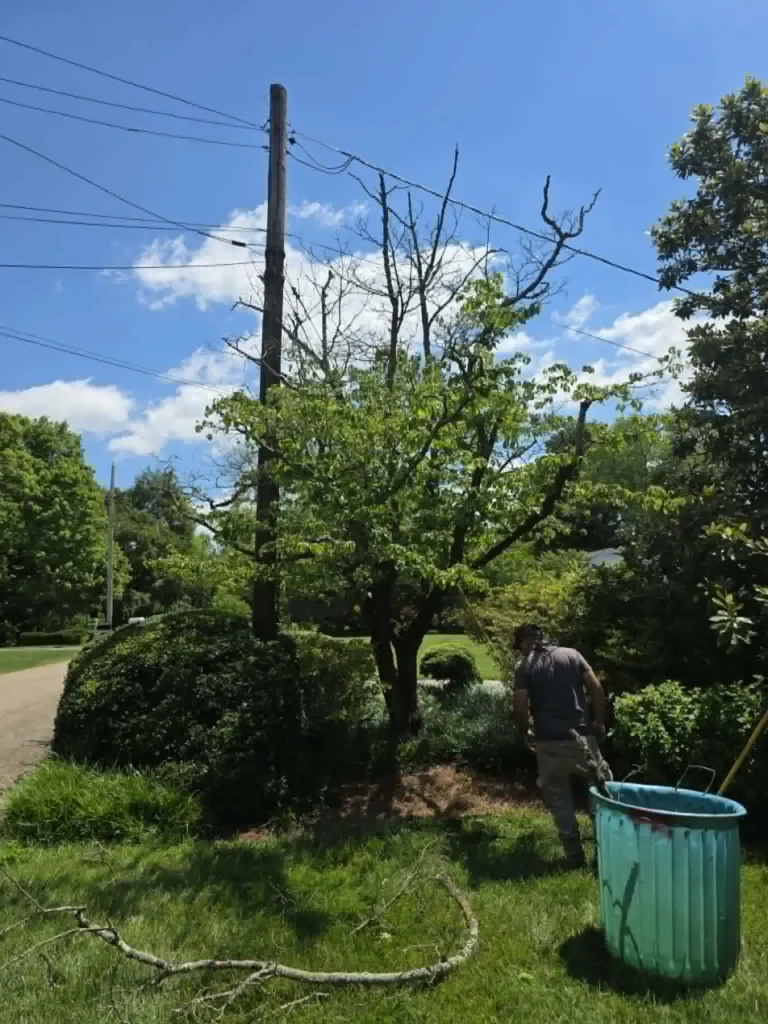
The internet is full of weekend warriors who have decided that tree care is something they can handle with a chainsaw and a ladder. Some of those weekend warriors end up in the emergency room. A few end up worse.
There is a reason tree work consistently ranks among the most dangerous occupations in the United States. The Bureau of Labor Statistics tracks fatality rates by industry, and tree care is reliably near the top, right alongside logging and commercial fishing.
Safety Risks and Equipment Limitations
Chainsaw kickback alone causes thousands of injuries each year. A chainsaw catching wrong on a knot can throw the blade back toward the operator’s face in a fraction of a second. Professional crews wear specific protective gear for exactly this reason: helmets with face shields, chainsaw chaps that stop the chain on contact, reinforced gloves and boots designed to handle a runaway saw.
Working from a ladder with a saw is dangerous in ways that are not obvious until something goes wrong. A ladder placed against a flexible branch can shift unexpectedly when you cut. A limb that has just been cut free can swing in the direction of the ladder, knocking it out from under you. Vibration from a running saw destabilizes balance over time. Most homeowner tree injuries happen during cleanup, not during cutting, because by then the homeowner is tired and stops paying attention to where limbs are falling.
Branches under tension are unpredictable. A limb that looks like it just needs one clean cut can release stored energy violently when cut, snapping back at the cutter or swinging into an unexpected direction. Professional climbers learn to read tension and plan their cuts to release it safely. That skill takes years to develop.
The Science of Proper Branch Collar Cuts
Beyond the safety question, there is a technical question. Most homeowners cutting their own trees make cuts that actively harm the tree, even when the work goes smoothly otherwise.
The most common mistake is the flush cut, where someone removes a branch right against the trunk, leaving a smooth surface flush with the bark. It looks neat. It is also the worst possible cut for the tree.
Every branch has a branch collar at its base, a slightly swollen ring of tissue that contains specific cells responsible for sealing wounds. When you cut just outside the collar, leaving the swollen ring intact, the tree forms callus tissue and seals over the wound naturally. The protection grows from the edges inward until the cut is fully closed over.
A flush cut destroys the collar. Without those specialized cells, the tree cannot seal the wound properly. The cut stays open, sometimes for years. Rot enters. Insects move in. The tree slowly declines from that single bad cut, and the owner often blames the season, the weather, or simple bad luck.
Professional pruners are trained to identify the branch collar on every species and make cuts that respect it. It is a small detail that makes a generational difference in tree health.
Protecting Your Knoxville Property: Next Steps
If you are searching for reliable tree pruning services near your neighborhood, whether you are in Farragut, Bearden, or North Knoxville, the right next step is a conversation, not a guess.
The certified arborists at Whites Tree Services have been working across East Tennessee since 2014. We have pruned, trimmed, and assessed thousands of trees across Knox, Loudon, and Blount County, and we understand the specific challenges of caring for landscapes in our region. Heavy clay soil. Severe storm cycles. Specific local species like Water Oaks, Silver Maples, and Loblolly Pines that each need different care.
A free property walkthrough takes about 30 minutes. We will look at every significant tree on your property, identify any structural concerns, recommend what work makes sense (and just as importantly, what does not), and give you a written estimate before any work begins. No pressure, no upsell, just honest assessments from a crew that does this every day.
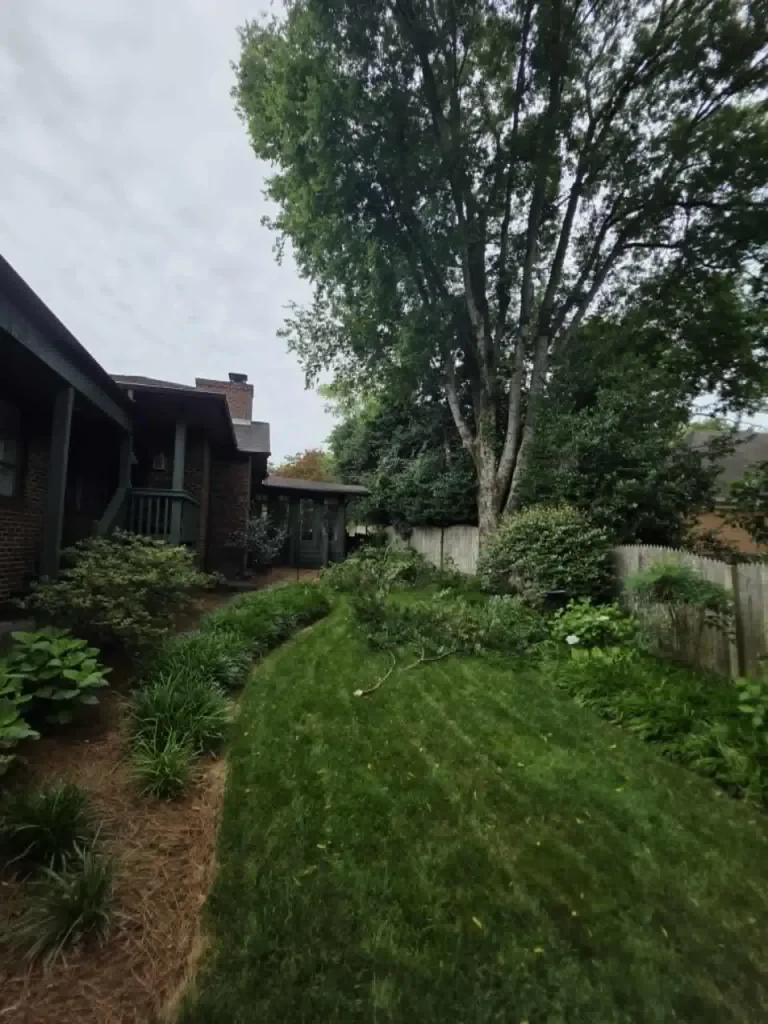
If you are ready to take the next step, book a consultation online or call us directly at (423) 519-7484. Storm season comes every year in East Tennessee. The trees on your property are either ready for it or they are not. Let’s make sure they are.