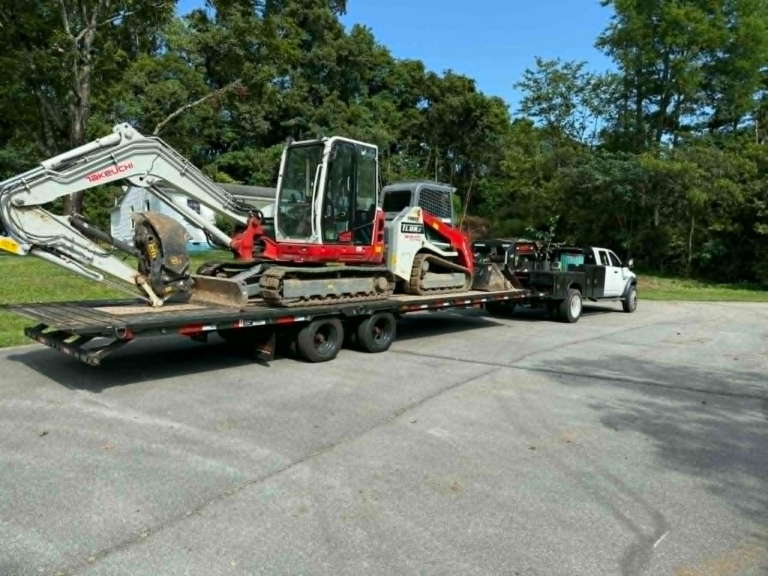
Forestry Mulching vs Lot Clearing: Which Method Fits Your Knox County Property?
Two crews can show up to the same overgrown two-acre parcel in Knox County and leave behind completely different properties. One leaves a park-like wooded lot with a soft brown carpet under mature oaks and clear sightlines to the back fence. The other leaves bare dirt, graded flat and ready for concrete. Both did the job correctly. They just did different jobs.
When you start weighing forestry mulching vs lot clearing, the decision comes down to a question that has nothing to do with equipment: what is this land going to become? Answer that honestly and the method picks itself. Get it wrong and you either pay for demolition you never needed, or you pay twice when mulched ground turns out to be useless for the foundation you wanted.
Our team at Whites Tree Services has run both methods across Knox County, Loudon County, and Blount County since 2014. This guide covers what each approach actually delivers, what it costs in this market, how our terrain changes the math, and how to decide without guessing.
The Core Difference in One Sentence
Forestry mulching grinds vegetation into a protective ground layer and leaves the roots in place. Traditional lot clearing strips the land down to bare dirt and pulls the roots out with it.
Every other difference in this guide flows from that one distinction. Mulching preserves soil structure. Clearing resets it to zero. Choosing correctly depends entirely on whether you want to preserve your soil or prepare for immediate construction.
| The Fast Decision Rule Building soon? You need traditional lot clearing. You cannot pour concrete, install septic, or grade a driveway over stumps and roots.Reclaiming overgrown land, opening trails, managing brush, or improving access with no construction planned? Forestry mulching is faster, cheaper, and better for your soil.Doing both eventually? A mixed approach almost always costs less than either method applied across the whole parcel. |
What Forestry Mulching in Knoxville, TN Actually Does
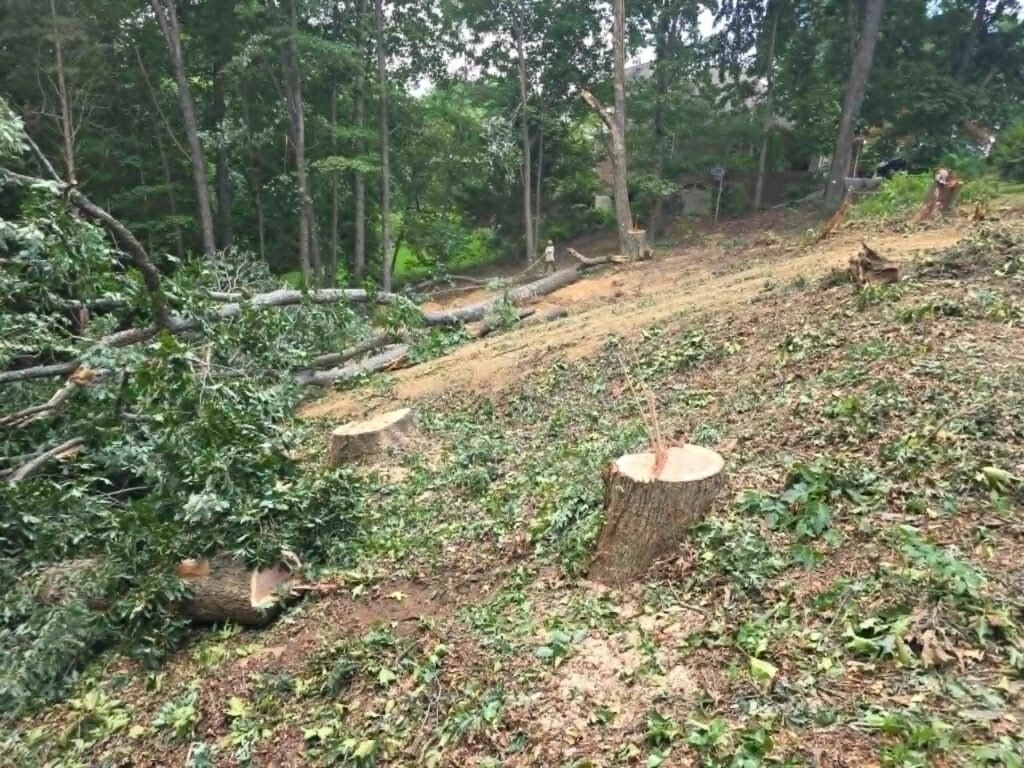
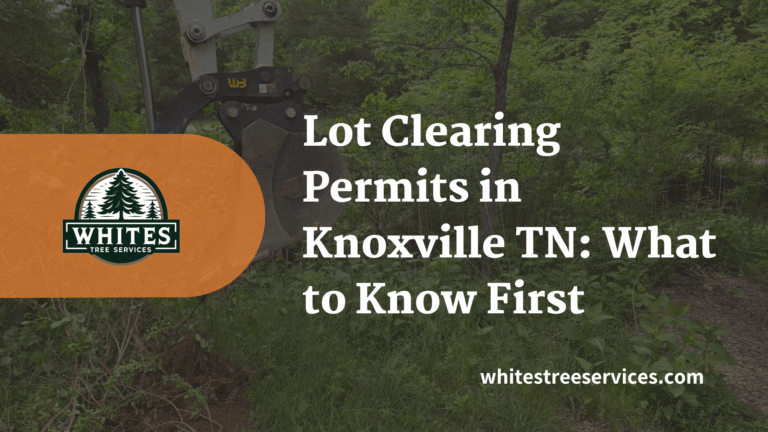
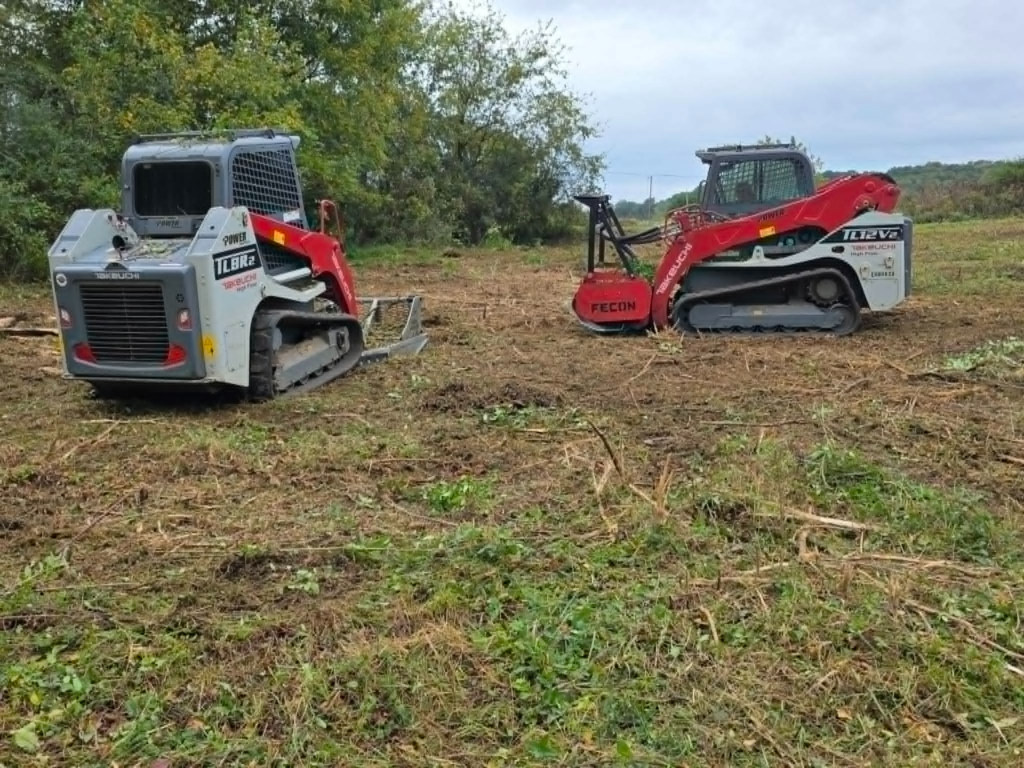
The process uses a single machine fitted with a high-speed shredding drum to chew through underbrush, saplings, and trees where they stand. For most property owners, watching forestry mulching in Knoxville, TN for the first time is a little surprising. Brush, briars, vines, and small trees go in as growing material and come out as mulch spread across the ground in one pass. No chainsaw crew. No dozer piling debris. No burn pile. No dump trucks.
Best Uses
- Land reclamation on overgrown acreage
- Trail creation for walking, ATVs, or hunting lanes
- Fence line clearing and property boundary maintenance
- Routine brush management
- Invasive species control
- Creating park-like wooded spaces while keeping mature trees
- Improving wildlife habitat
The Key Benefit
Mulching prevents soil erosion by leaving a thick, nutrient-rich layer behind. That layer is not leftover debris. It stabilizes the ground, holds moisture, moderates soil temperature, suppresses weed regrowth, and enriches the soil as it decomposes.
On the hilly, sloping terrain that defines much of Knox County, that erosion protection is a genuine advantage, not a marketing line.
The Main Drawback
It leaves root systems intact. That makes it unsuitable for any area needing immediate excavation. Stumps get ground to the surface, but everything below grade stays where it is.
Speed
A skid steer mulcher can typically clear one to three acres per day depending on density. Because clearing and debris processing happen in a single operation, mulching runs roughly two to three times faster than a multi-step traditional approach.
What Traditional Lot Clearing Actually Does
Traditional clearing brings in heavy equipment, bulldozers, excavators, and haul trucks, to completely uproot trees, pull out stumps and roots, and strip the topsoil. Debris gets piled, then hauled off or burned. The site is then raked and graded.
The result is a completely bare, flat, shovel-ready canvas.
Best Uses
- Building foundations
- Driveway construction
- Septic field installation
- Utility trenching corridors
- Commercial development
- Large-scale agricultural or pasture conversion
The Key Benefit
It allows for major earthmoving, leveling, and grading. If your parcel has knolls, dips, or a slope that has to be flattened to create a usable build envelope, only traditional clearing gets you there.
The Main Drawback
It strips the land of organic matter and leaves soil highly vulnerable to erosion. It also requires burning or hauling away tons of debris, which drives up cost. Without proper follow-up landscaping and erosion control, bare ground on an East Tennessee slope moves fast during a spring storm.
Land Clearing Comparison for Knox County: Side by Side
Here is the practical land clearing comparison for Knox County owners, factor by factor.
| Factor | Forestry Mulching | Traditional Lot Clearing |
| Process | One machine grinds vegetation into mulch on site | Multiple machines cut, uproot, haul, and grade |
| Soil impact | Stabilizes soil, preserves topsoil, reduces erosion | Leaves soil bare and vulnerable to erosion |
| Root systems | Left intact in the ground | Uprooted and removed below grade |
| Site finish | Protective nutrient-rich mulch layer | Bare soil requiring grading or seeding |
| Debris | Recycled on site, no disposal fees | Hauled or burned, adds real cost |
| Speed | One to three acres per day, single pass | Multiple steps over multiple days |
| Terrain | Effective on slopes and uneven ground | Best on manageable, workable terrain |
| Cost | More economical, fewer machines | Higher, due to equipment and hauling |
| Build ready | No | Yes |
Brush Mulching vs Tree Removal: A Narrower Question
People often lump two separate decisions together. The brush mulching vs tree removal question is really about material size and what you are trying to accomplish, not about which service sounds more thorough.
What Brush Mulching Targets
Thick underbrush and small to medium-sized trees. The machine processes volume in a single pass and leaves protective mulch behind. If your problem is that you cannot walk through the property, brush mulching solves it quickly and affordably.
What Tree Removal Targets
Trees of all sizes, including large, mature, or hazardous specimens that are simply too big for a mulcher to process efficiently. Professional crews can safely take down storm-damaged trees near structures, which is work no mulching head is designed to handle. Once a trunk gets past roughly ten inches in diameter, dedicated tree service Knoxville crews using proper felling and rigging techniques become the more efficient option.
Stump Handling Differs Too
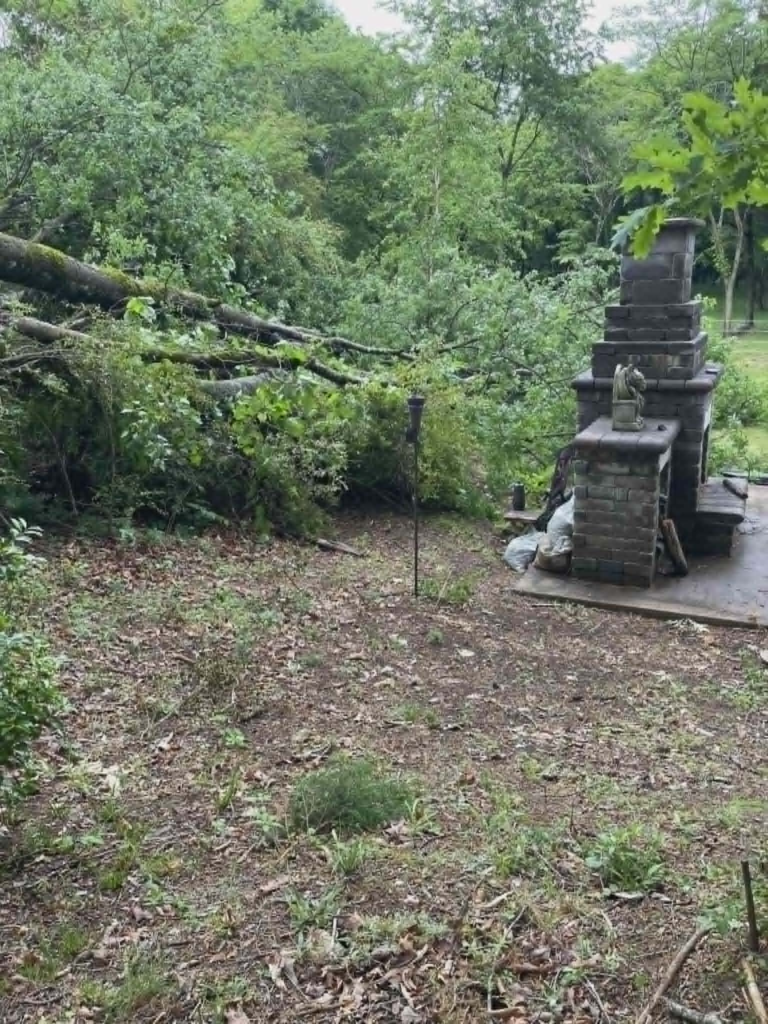
With brush mulching, stumps are typically ground to the ground surface and root systems stay put. With tree removal as part of a clearing operation, stumps and roots are usually uprooted and removed from the soil entirely.
Most Real Jobs Need Both
On a typical overgrown Knox County parcel, the right answer is brush mulching for the understory and selective removal for the handful of large or hazardous trees mixed in. Treating it as either-or usually means overpaying or leaving half the job undone.
Why Mulching Suits Lot Clearing Methods in East Tennessee
Local terrain changes the recommendation more than most national comparisons account for. When you evaluate lot clearing methods in East Tennessee, you are not working the flat farmland that generic advice assumes. Knox County is ridge-and-valley country, and that shapes what actually works on the ground.
Slopes and Uneven Terrain
Mulching equipment is effective on uneven terrain, steep slopes, and sensitive ecosystems where traditional clearing struggles. Tracked machines exert far less ground pressure than wheeled dozers and can reach ground that heavier equipment cannot safely work.
On a steep bank in South Knoxville, mulching is often not just the cheaper option. It is the only safe one.
Erosion Risk on Hilly Ground
The mulch layer left behind binds to the soil surface, absorbs rainfall impact, and holds ground in place. That matters enormously on the sloping terrain common across Knox County, where bare dirt during a heavy spring rain will end up in a creek or on a neighbor’s lot.
Preserving Mature Trees
Most Knox County properties have something worth keeping. Mature oaks, hickories, or poplars buried under twenty years of privet and honeysuckle. A mulcher can work around tagged keeper trees and clear the understory without damaging shallow root zones. A dozer cannot make that distinction.
Where Each Method Fits Locally
If you are planning a new home or a large concrete driveway near the Ten Mile Creek or Holston River areas, you will likely need traditional clearing to accommodate the foundation work. If you own an overgrown multi-acre plot out toward Hardin Valley or Gibbs and want to improve accessibility, appearance, and soil health, forestry mulching is the stronger fit.
Why Traditional Clearing Is Required for Construction
There is a persistent idea that mulching can substitute for clearing on a build site if you just mulch aggressively enough. It cannot, and understanding why prevents an expensive mistake.
The Foundation Problem
Forestry mulching is not ideal for building sites because the remaining mulch can harm foundations as it decays, and the process leaves terrain uneven. Buried stumps and root balls break down over time, and the ground above them settles. Under a slab, that shows up as cracks. Under a driveway, as depressions. Under a septic drain field, as a failed system.
The Grading Problem
Mulching does not change the contour of the land at all. It removes vegetation and leaves topography exactly as it was. If leveling is part of the plan, you need excavators and dozers moving actual dirt.
The Utility Problem
Trenching for water, power, gas, or septic requires digging through ground that root systems have not colonized. Root wads in a trench line slow everything down and increase excavation cost. If your project is headed toward a foundation or septic system in the next few months, lot clearing services Knoxville with full stump extraction and rough grading is the correct starting point.
For a full walkthrough of what site prep involves before a build, see our guide on how to prepare land for construction, which covers sequencing from initial clearing through final grading.
Cost and Speed in the East Tennessee Market
Pricing varies with density, terrain, and access. Here are realistic ranges for this market.
Forestry Mulching
- Light to moderate brush: roughly $400 to $800 per acre
- Light to moderate brush, broader range: $400 to $1,500 per acre depending on conditions
- High-density clearing: can reach $2,000 per acre
- Hourly rate: $125 to $300 per hour
- Daily rate, mulcher with operator: $1,000 to $2,500
Traditional Lot Clearing
Full clearing typically costs more per acre because it uses multiple machines, adds stump removal, and requires debris hauling or burning. Stump removal alone runs $100 to $400 per stump depending on size.
Local contractors consistently note that traditional clearing plus hauling can nearly double project cost compared to mulching the same ground.
Where the Difference Comes From
- No hauling or disposal fees. Mulching eliminates the need for multiple contractors, trucking, and dump fees entirely.
- One machine instead of a fleet. Every additional machine on a traditional job is another mobilization charge.
- Less follow-up erosion work. Bare soil requires silt fence, seeding, and stabilization. Mulch provides that protection automatically.
Permits, Stormwater, and Regulatory Friction
This is a practical advantage of mulching that rarely appears in national comparisons but matters here.
Why Mulching Sees Less Regulatory Friction
Because mulching disturbs less soil, it often reduces the regulatory burden compared to traditional clearing. You are not scraping topsoil, not changing grade, and not creating large areas of exposed dirt.
Where the One-Acre Rule Still Applies
Mulching is not a permanent bypass. In Knoxville, any land clearing that disturbs more than one acre requires a land disturbance permit and a Stormwater Pollution Prevention Plan regardless of method. Tree removal within a clearing project over one acre also triggers a Tree Protection Plan. Our full guide to lot clearing permits Knoxville walks through the thresholds, the two permit tiers, and what happens if you skip the process.
Traditional clearing is more disruptive and more likely to trigger stricter erosion control and stormwater requirements, particularly near streams or sensitive areas, because bare dirt erodes easily.
Debris Rules Knox County Property Owners Should Know
What happens to the material after clearing is regulated separately, and there is one detail that catches Knoxville homeowners regularly.
| The Contractor Debris Rule City of Knoxville crews will not collect brush, trees, or branches left behind by a contractor providing tree services.Contractors are responsible for removing all materials from the owner’s property.The city will not pick up stumps, or branches larger than twelve inches in diameter, even from homeowner piles.Confirm in writing who is hauling the debris before work begins. |
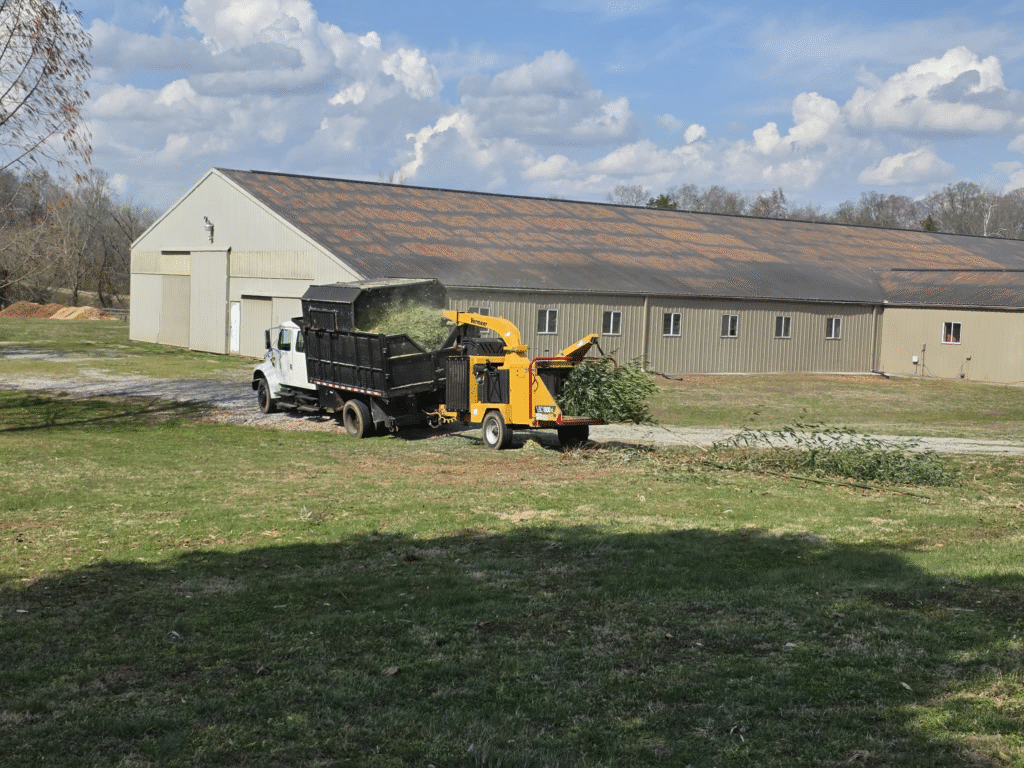
Mulching sidesteps this entire issue since nothing needs hauling. For jobs where material does have to come out, our brush clearing Knoxville crews handle removal and disposal as part of the scope rather than leaving a pile for someone else to solve.
The Hybrid Approach That Usually Costs Less
On real Knox County parcels, the answer is rarely one method for the entire property. The strongest outcomes come from zoning the land by end use.
How It Works
- Traditional clearing only in the build envelope: house footprint, driveway path, septic field, utility corridors
- Forestry mulching everywhere else: buffers, back acreage, slopes, trail corridors, areas around keeper trees
- Selective tree removal for the individual large trees that conflict with the plan
Why It Saves Money
You pay premium clearing rates only on the acreage that genuinely needs bare ground. On a three-acre parcel with a one-acre build envelope, clearing that acre properly and mulching the other two typically lands well below full traditional clearing across everything.
You also keep more mature canopy, which protects long-term property value, and you leave the slopes protected instead of stripping them and paying for erosion control afterward.
Which Land Clearing Method Is Right for Your Goal?
Figuring out which land clearing method is right comes down to matching the approach to what the land is becoming. Find your situation below.
Choose Forestry Mulching If You Are
- Reclaiming overgrown acreage
- Creating walking trails or recreational paths
- Clearing fence lines or maintaining property boundaries
- Managing invasive plants
- Improving property aesthetics and accessibility
- Thinning dense woods while keeping topsoil healthy
- Reducing fire fuel on rural or semi-rural land
- Working on slopes where erosion is the primary concern
- Preserving mature trees while removing the understory
Choose Traditional Lot Clearing If You Are
- Pouring concrete or digging a basement
- Building a home, garage, barn, or commercial structure
- Installing a septic system or drain field
- Constructing a driveway
- Altering the grade of the land
- Converting land to pasture where stumps must come out
- Clearing ground dominated by mature hardwoods
The simple rule: if you are planning structures, pads, roads, or driveways soon, you will eventually need full clearing for that footprint, because you cannot grade or pour over stumps and roots. If you want to manage overgrowth, open access, and keep mature trees, mulching is the smarter and cheaper first move.
The Stump Question People Ask Too Late
Stump handling is where the two methods diverge most sharply, and where the most expensive misunderstandings happen.
Mulching grinds stumps to the ground surface. The visible stump disappears. Everything below grade remains. Traditional clearing pulls the whole root wad out with an excavator.
When Leaving Roots Is Fine
If the land is becoming pasture, lawn, trail, wildlife habitat, or open wooded space, leaving roots is completely acceptable and arguably better. They hold soil, decay naturally over several years, and add organic matter as they break down.
When Leaving Roots Is a Problem
Anywhere you plan to pour concrete, install septic, run utility trenches, or build. Also worth knowing: ground with decaying roots underneath develops soft spots and ruts if you park vehicles or store equipment on it regularly.
The Middle Option
Grinding four to six inches below the soil line is a reasonable compromise for lawn or trail areas where you want mowable ground without full excavation. It costs less than root wad extraction and solves the mower hazard. Individual stump removal generally runs $100 to $400 depending on size.
What Mulching Does Not Solve
An honest comparison covers the limitations.
Large Trees Get Inefficient
Mulching handles small to medium material well. Once trees get past roughly ten inches in diameter, time per tree climbs sharply and so does the bill. Conventional felling becomes the cheaper path.
The Ground Stays Uneven
Mulching does not change contour. Ruts, dips, old roadbeds, and uneven surface are all still there under the mulch afterward.
Aggressive Species Come Back
Roots left in the ground on species like Chinese privet and tree-of-heaven will resprout. Serious invasive management means mulching plus targeted cut-stump herbicide treatment, plus a follow-up pass the next season.
It Is Not a Construction Shortcut
Worth repeating because people try it every year: you cannot pour a slab over mulched ground. If someone tells you otherwise, get a second opinion from a contractor who will still be around when the slab cracks.
Questions to Ask Before You Hire
Whichever method you land on, these questions separate contractors who do it right from contractors who leave problems behind.
- Which method do you recommend for my specific goal, and why?
- Will you preserve the trees I tag, and how do you protect their root zones?
- Is stump handling included, and at what depth?
- Will debris be mulched on site or hauled off, and is disposal included in the price?
- Do you provide grading, or is that a separate contractor?
- Are permits required for this scope, and who is pulling them?
- What erosion controls are included, and when do they get installed?
- Can you show me photos of similar jobs on comparable terrain?
- Are you licensed and insured, and can I get a certificate from your carrier?
Get at least two on-site quotes with line-item bids. A single lump-sum number gives you no way to compare scope, and scope is where the real differences hide.

Frequently Asked Questions
Is forestry mulching cheaper than lot clearing?
In most cases, yes. Comparing forestry mulching vs lot clearing on cost, mulching eliminates hauling and disposal fees, combines clearing and processing into one operation, and uses one machine instead of a fleet. The tradeoff is that stumps and roots remain and the ground is not build-ready.
How many acres can a forestry mulcher clear in a day?
A skid steer mulcher typically covers one to three acres per day depending on vegetation density and terrain. Light brush on accessible ground moves fast. Dense material on a slope with keeper trees to work around moves slower.
Does forestry mulching in Knoxville, TN remove tree roots?
No. Forestry mulching in Knoxville, TN grinds vegetation at and slightly above the soil surface. Root systems stay intact underground, where they continue holding soil until they decay naturally. That is why it is not suitable on its own for foundation work.
Which land clearing method is right for a building site?
Traditional lot clearing. You need stumps and roots extracted and the ground graded and compacted before pouring anything. Deciding which land clearing method is right for the rest of the parcel is where mulching usually comes back in, since buffers and back acreage rarely need bare soil.
Can I use a forestry mulcher for all my land clearing?
Only if you are not building. Mulching handles brush, saplings, and small to medium trees well. It cannot remove stumps below grade, cannot regrade terrain, and leaves an organic layer that is not suitable under a foundation.
Is wooded or cleared land worth more?
It depends on the buyer and the intended use. Build-ready cleared land commands a premium with developers. Selectively mulched land with mature canopy preserved often appeals more to residential buyers, since mature trees add measurable property value and take decades to replace.
What is the cheapest method of clearing land?
Forestry mulching, in most scenarios, because it eliminates disposal costs and uses a single machine. Rates commonly run $400 to $800 per acre for light to moderate brush, with hourly pricing of $125 to $300 and daily rates of $1,000 to $2,500 with an operator.
How do lot clearing methods in East Tennessee handle steep terrain?
Forestry mulching handles slopes considerably better. Tracked machines work uneven ground that wheeled equipment cannot safely reach, and the mulch layer provides immediate erosion protection on terrain that would otherwise wash badly during a Knox County downpour.
Making the Call for Your Property
Three questions settle it.
- What is the end use for each area of the lot? Build zone, pasture, trails, buffer, habitat. Different zones can get different treatment.
- What is your construction timeline? Building within a few months means traditional clearing in the build envelope. Building someday means mulching now is genuinely cheaper.
- What is the terrain, and what are you protecting? Slopes, streams, and mature trees push toward mulching. Flat ground with nothing worth saving leans traditional.
Our crew walks properties across Knoxville, Knox County, Loudon County, Blount County, Lenoir City, Farragut, and Maryville, and gives honest recommendations, including telling people when the cheaper method is the right one. As an east Tennessee tree service running both operations, we have no reason to push you toward the more expensive option when it will not serve your goal.
Call (423) 519-7484 for a free site assessment. Bring your questions about acreage, slope, and what you want the land to become. We will tell you which method fits and what it realistically costs.