Spring Tree Care Checklist for Knoxville Homeowners: What to Do Before Storm Season
Every spring in East Tennessee brings a familiar pattern: warm afternoons, blooming dogwoods, and the first round of severe thunderstorms rolling through the valley. For Knoxville homeowners, having a solid spring tree care checklist is not just about keeping your yard looking good. It is about protecting your home, your family, and your property from the unpredictable weather that defines our storm season.
Between April and late May, Knox County regularly sees 60+ mph wind gusts, heavy downpours, and saturated clay soil that turns healthy-looking trees into falling hazards. The trees that survive these storms without incident are almost always the ones that received attention before the weather turned.
Our crew at Whites Tree Services handles storm damage calls across the Knoxville area every year, and the same story repeats itself: homeowners who prepped their trees had minor cleanup, while those who skipped maintenance ended up with branches through their roof.
This guide walks you through every step of spring tree maintenance, tailored specifically to Knoxville’s climate, soil, and the tree species that grow in our neighborhoods.
Why Spring Tree Care Matters in Knoxville
Knoxville sits in USDA Hardiness Zone 7a with a humid subtropical climate. That means mild winters, hot summers, and over 50 inches of annual rainfall. While that climate grows beautiful trees, it also creates the perfect conditions for rapid decline when problems go unchecked.
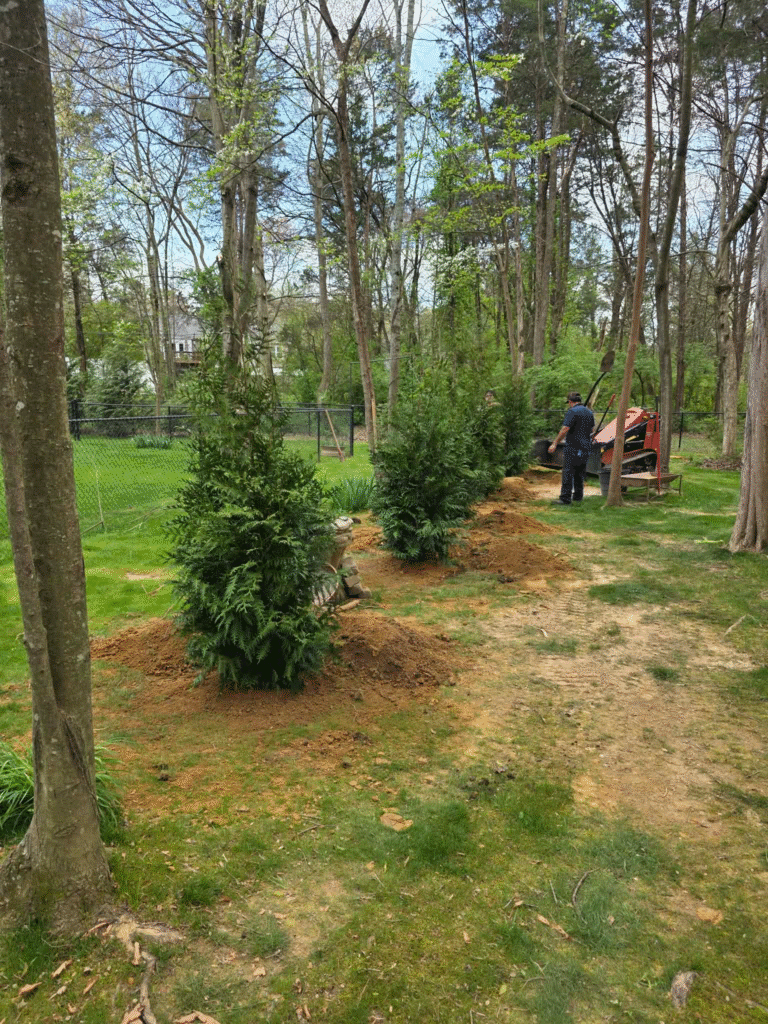
Trees that survived winter may look fine from a distance. But freezing temperatures, ice buildup, and wind stress can leave behind cracked branches, weakened root systems, and internal damage that is invisible until the first big spring storm exposes it.
Ignoring tree maintenance in spring can lead to falling limbs during storms, trees uprooting in saturated soil, roof and fence damage, and emergency removal costs that run two to three times higher than a planned job. Taking action now helps prevent expensive problems later.
Step 1: Conduct a Post-Winter Visual Inspection
Before the leaves fully emerge, you have a unique window to see the bare structure of your trees. Walk your entire property and examine each tree carefully from multiple angles.
What to Look For
- Cracked or split branches that could snap under weight or wind.
- Dead limbs with no buds, brittle bark, or a gray, lifeless appearance.
- Trunk cracks or deep vertical splits in the bark, which can signal internal structural failure.
- Heaving soil around the base of the tree, which means the root plate may be shifting. This is a major red flag for blowdowns during storms.
- Fungal growth such as mushrooms or shelf fungi at the base of the trunk. Visible fungi often indicate advanced internal decay.
- Leaning trees that have shifted position since fall. A new lean, especially with cracked soil on the opposite side, signals root failure.
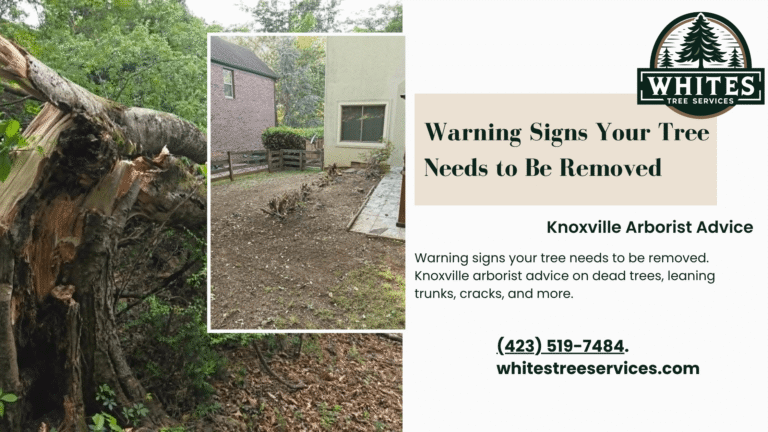
Do this inspection before leaf-out when you can see the skeleton of the tree clearly. If you spot anything concerning, especially large cracks, heavy leans, or fungus at the base, schedule a professional tree assessment before the problem gets worse.
Step 2: Prune Dead, Damaged, and Hazardous Branches
Deadwood is one of the biggest hazards during storm season. Dry, brittle branches can snap under strong winds, heavy rain, or even the added weight of new spring leaf growth.
Focus your spring pruning on branches that are clearly dead (no buds, peeling bark), broken or cracked from winter storms, diseased with visible cankers, discoloration, or oozing sap, and branches that rub or cross against other limbs, creating weak points.
The 3 C’s of Pruning
A simple rule to remember: remove anything that is Crossed, Cracked, or Cankered. These are the branches most likely to fail when the wind picks up.
For small branches you can reach from the ground with a pole pruner, this is a reasonable DIY task. Anything requiring a ladder, a chainsaw, or climbing should be left to a professional crew.
When to Prune in Knoxville
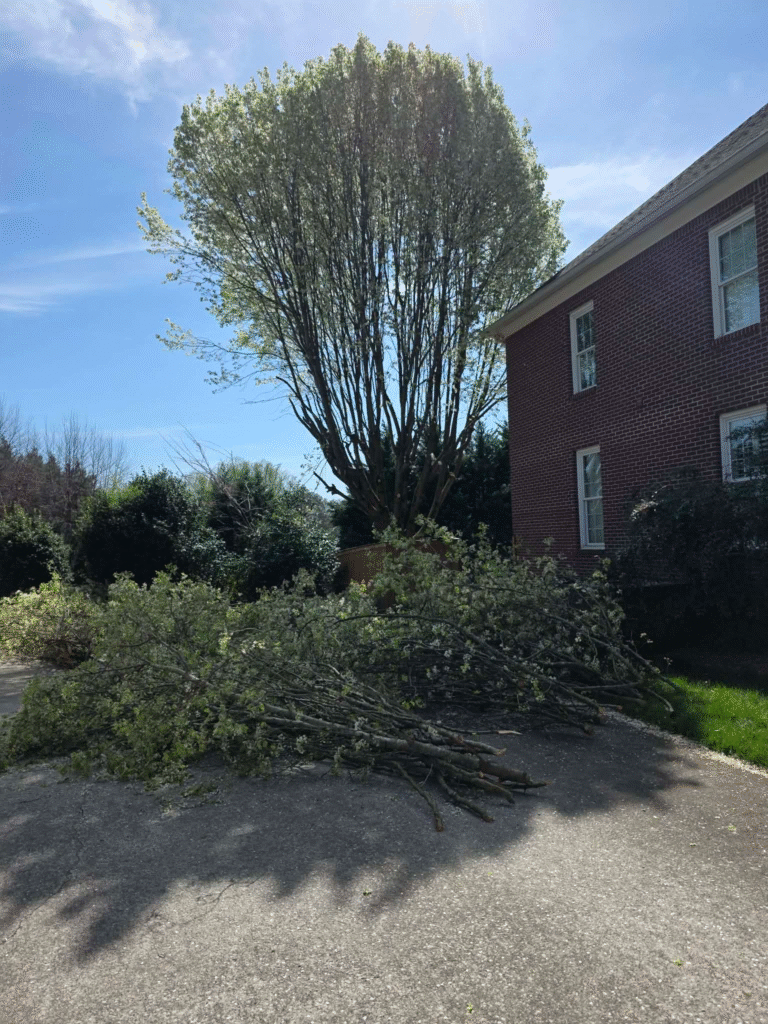
For most shade trees in East Tennessee, late winter through early spring (February to April) is the ideal pruning window while trees are still dormant. The one exception: spring-blooming trees like dogwoods should be pruned right after they finish flowering to avoid cutting off next year’s buds.
Step 3: Thin Dense Canopies for Wind Resistance
Many homeowners skip this step because the tree looks healthy and full. But a dense, unpruned canopy acts like a giant sail during high winds. Instead of letting wind pass through, the tree catches it, creating enormous stress on the trunk and root system.
The Sail Effect
Strategic canopy thinning removes select interior branches to allow wind to flow through the tree rather than push against it. This dramatically reduces the chance of branch breakage or the entire tree blowing over.
The 25% Rule
Never remove more than 25% of a tree’s living canopy in a single season. Over-pruning stresses the tree and triggers a flush of weak “sucker” growth that breaks easily in the next storm. Professional tree trimming services know exactly how much to remove to improve wind resistance without harming the tree’s health.
Targeting Weak V-Crotches
Branches that grow in a tight V-shape (codominant stems) are structurally weak and prone to splitting. Identifying these early and either pruning one of the competing leaders or installing a cable brace can save a mature tree from catastrophic failure.
Step 4: Trim Trees Away from Your Home and Power Lines
One of the most overlooked risks is branches growing too close to your home. During a storm, even a healthy branch can break and hit your roof, damage siding or gutters, or knock out power lines.
Maintain at least 10 feet of clearance between tree branches and your roofline. Clear branches away from driveways, fences, and any utility lines that cross your property.
If branches are already touching your home, do not wait. This is a high-risk situation that should be addressed before storm season begins.
For branches near power lines, never attempt to trim them yourself. Contact KUB (Knoxville Utilities Board) for utility line clearing, or hire a licensed crew that is trained to work near energized lines. If your hedges or shrubs are also crowding the house, we offer hedge and bush trimming to keep everything at a safe distance.
Step 5: Soil Health, Fertilization, and Root Care
Knoxville’s clay-heavy soil can become compacted over the winter, suffocating tree roots and limiting their ability to absorb water and nutrients. Spring is the ideal time to address this.
Slow-Release Fertilization
Avoid high-nitrogen “quick-green” fertilizer spikes. These push rapid leaf growth at the expense of structural strength. Instead, use a balanced, slow-release formula that supports root development and overall tree health.
Soil Testing
If your dogwoods look pale, your oaks are stunted, or your maples are underperforming, a quick soil test from the UT Extension office (Knox County) can tell you whether your pH is off or critical nutrients are missing. This is a free or low-cost resource that many homeowners overlook.
Improve Drainage
Check that downspouts and drainage paths are not dumping water directly at tree bases. Standing water around roots creates the perfect conditions for root rot, especially in our clay soil. Clear debris from the root zone and ensure water drains away from the trunk.
Step 6: Mulch the Right Way (Avoid the Mulch Volcano)
Mulching is one of the best things you can do for your trees. It retains moisture, moderates soil temperature, suppresses weeds, and protects roots during Knoxville’s variable spring weather.
The 3-3-3 Rule
Apply mulch 3 inches deep, in a 3-foot radius around the trunk, keeping it 3 inches away from the bark. This is the gold standard for proper mulching.
Why Mulch Volcanoes Kill Trees
Piling mulch against the bark (the “mulch volcano” you see everywhere) traps moisture against the trunk, invites rot, and attracts wood-boring insects. It is one of the most common tree care mistakes in our area, and it slowly kills the very tree you are trying to help.
Step 7: Deep Watering for Root Resilience
While Knoxville gets plenty of spring rain, we often hit dry spells in late May that stress trees right before peak storm season.
Shallow sprinkling encourages roots to stay near the surface, making trees more vulnerable to blowdowns. Deep, slow soaking (using a soaker hose for 30 to 45 minutes) encourages roots to grow deeper into the soil, providing stronger anchoring during severe storms.
Young or recently planted trees need extra attention. Aim for about one inch of water per week if rain is not providing it. Established trees are more forgiving, but they still benefit from deep watering during extended dry periods.
Step 8: Watch for Spring Pests and Diseases in East Tennessee
The warm, damp Tennessee spring is a breeding ground for specific tree health issues. Catching these early can save you thousands in removal costs down the road.
Anthracnose (Maples, Oaks, Dogwoods)
Brown, curled, or “scorched” looking leaves early in the season often indicate anthracnose. While rarely fatal to mature trees, it weakens them significantly before storm season. Raking up old leaves and improving airflow through pruning are the best defenses.
Emerald Ash Borer (EAB)
EAB is widespread across Knox County and the surrounding area. If you have an ash tree that is thinning at the top or shows D-shaped exit holes in the bark, it is likely infested. These trees become extremely brittle and hazardous very quickly. Early identification is critical, and you can learn more in our detailed guide on emerald ash borer identification and treatment (coming soon).
Bacterial Leaf Scorch
Common in Knoxville’s Red Oaks, this disease causes a halo of yellow around the leaf margins. It slowly starves the tree, making it a prime candidate for limb failure during summer thunderstorms.
Powdery Mildew
Our state tree, the Flowering Dogwood, is particularly susceptible to powdery mildew. If you are planting new dogwoods, look for disease-resistant varieties like “Appalachian Spring.” Ensure existing dogwoods are not sitting in standing water and have adequate airflow around the canopy.
Species-Specific Care for Knoxville Trees
Flowering Dogwoods
Susceptible to powdery mildew and spot anthracnose. Plant disease-resistant varieties and avoid overwatering. Prune right after flowering, not before.
Red Maples
Known for shallow root systems. Be extra vigilant about heaving soil around maples, as they are among the most common trees to topple in high winds. Avoid piling soil or mulch over surface roots.
White Oaks
Slow-growing and sturdy, but they hate root disturbance. If you are doing any spring landscaping or construction, keep heavy equipment away from their drip line. Compacting the soil over White Oak roots can kill them slowly over several years.
Bradford Pears
Notoriously weak branch structure with tight V-crotches that split apart under wind, ice, or their own weight. Tennessee has moved to ban their sale because they are invasive. If you have Bradford pears on your property, monitor them closely and consider whether they are worth keeping. If you want to understand the full cost picture, our tree removal costs in Knoxville guide covers pricing for every tree size.
Storm-Proofing: Preparing for Peak Wind Season
Tennessee’s peak tornado and severe storm window typically runs from March through May. Beyond tree care, these additional steps help reduce storm damage across your entire property.
- Remove lawn furniture, bird feeders, and trash cans that could become projectiles in high winds.
- Clear fallen limbs and brush from the yard promptly. Loose debris becomes missile hazards during storms.
- Consider cabling or bracing for mature trees with a natural lean or weak branch unions.
- Secure or relocate anything stored near large trees that could be crushed if a limb breaks.
If you have large amounts of brush or debris from a heavy pruning session, do not let it sit in the yard. Loose wood can become dangerous during the next round of weather. Getting it cleared promptly keeps your property safe.
When to Call a Professional Tree Service
While homeowners can handle mulching, light ground-level pruning, and basic cleanup, certain tasks absolutely require a certified professional.
- Any work requiring a ladder, climbing, or a chainsaw above shoulder height.
- Trees within 15 feet of power lines.
- Major structural cracks, large hanging limbs, or “widowmakers” in the canopy.
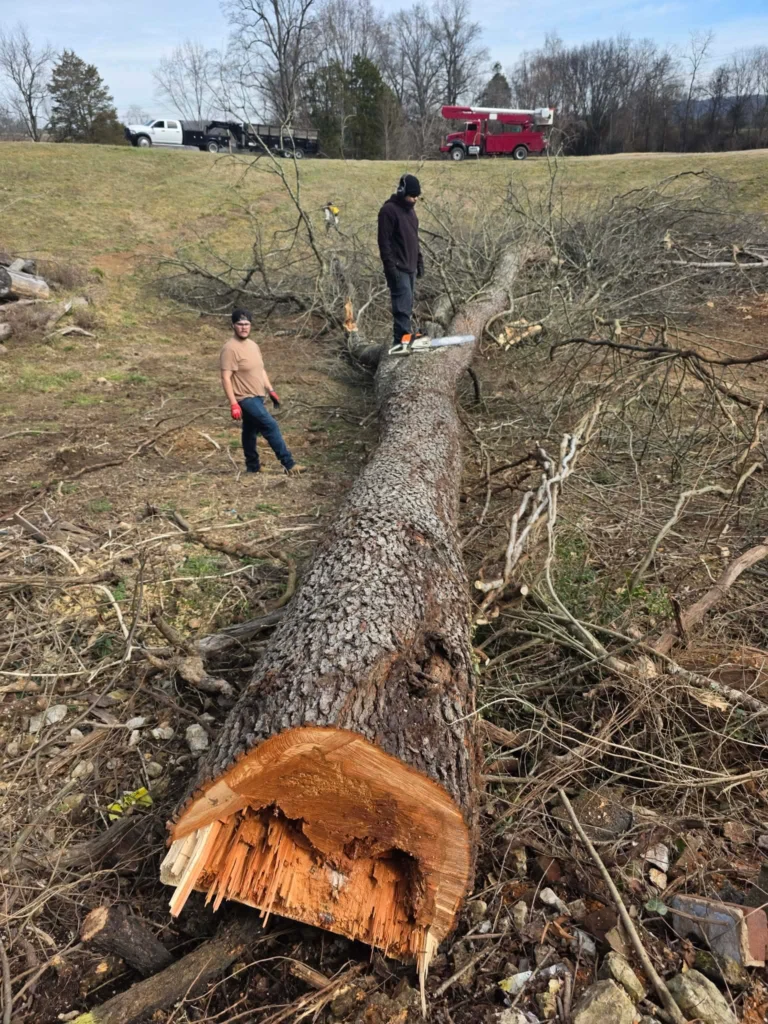
- Post-storm debris removal where trees are tangled, split, or under tension.
- Any tree showing signs your tree needs to be removed such as a sudden lean, hollow trunk, or more than 50% canopy loss.
Hiring a licensed, insured tree service in Knoxville TN protects you from liability and ensures the work is done safely. Verify ISA certification and ask for proof of insurance before letting anyone climb your trees.
Your Spring Action Plan
Here is the condensed version you can print and follow this weekend:
- Walk your property and inspect every tree before leaves fill in.
- Mark dead, broken, crossing, or overhanging branches.
- Prune only dead or clearly unsafe wood (or hire a pro for bigger jobs).
- Thin dense canopies to reduce the sail effect in wind.
- Clear branches within 10 feet of your roofline.
- Test and amend soil if trees look stressed.
- Apply mulch correctly using the 3-3-3 rule.
- Deep water during dry spells.
- Watch for signs of anthracnose, EAB, or other pests.
- Secure loose yard items before storm season.
- Schedule a professional inspection for anything you are unsure about.
A little effort in the calm days of April can prevent a major disaster on a stormy night in May. If you want a professional set of eyes on your property before storms hit, contact us for a free estimate and we will walk your property with you.
We serve Knoxville, Knox County, Lenoir City, Loudon County, Maryville, and Blount County with complete tree care, including trimming, removal, assessments, and 24/7 emergency response. Call us at (423) 519-7484.