Commercial Tree Service in Knoxville: A Complete Guide for Business Property Managers
The tree in your parking lot is not just landscaping. It is a liability sitting on your balance sheet, and if you manage commercial property in Knoxville, that liability has been growing quietly for years. One dropped limb during a summer thunderstorm, one tripped shopper on a lifted sidewalk, one dead ash falling through a tenant’s leased space, and suddenly the commercial tree service Knoxville TN line item on next year’s budget looks a lot different than the one you just skipped.
This guide is for the property managers, HOA boards, retail center owners, and asset managers who need real answers, not marketing brochures. It walks through what commercial tree care actually involves in East Tennessee, the local ordinances that apply to your property, the maintenance cadence that keeps insurance carriers happy, and how to hire a contractor without ending up in a lawsuit. Our team at Whites Tree Services has serviced commercial properties across Knoxville, Lenoir City, Farragut, Maryville, and the surrounding metro since 2014. What follows is what we wish more managers knew before they called us.
None of this is theoretical. Every point in this guide traces back to a specific job, a specific mistake, or a specific savings a Knoxville property has actually seen. Read the parts that apply to your portfolio and skip the rest. Or read the whole thing and become the person on the leadership team who actually understands the trees on your properties.
Why Commercial Tree Care Is Different From Residential
A homeowner with a dead tree in the backyard has a problem. A retail plaza with a dead tree in the parking lot has a lawsuit waiting to happen. The math is genuinely different, and treating commercial tree care like an oversized residential job is one of the most expensive mistakes property managers make.
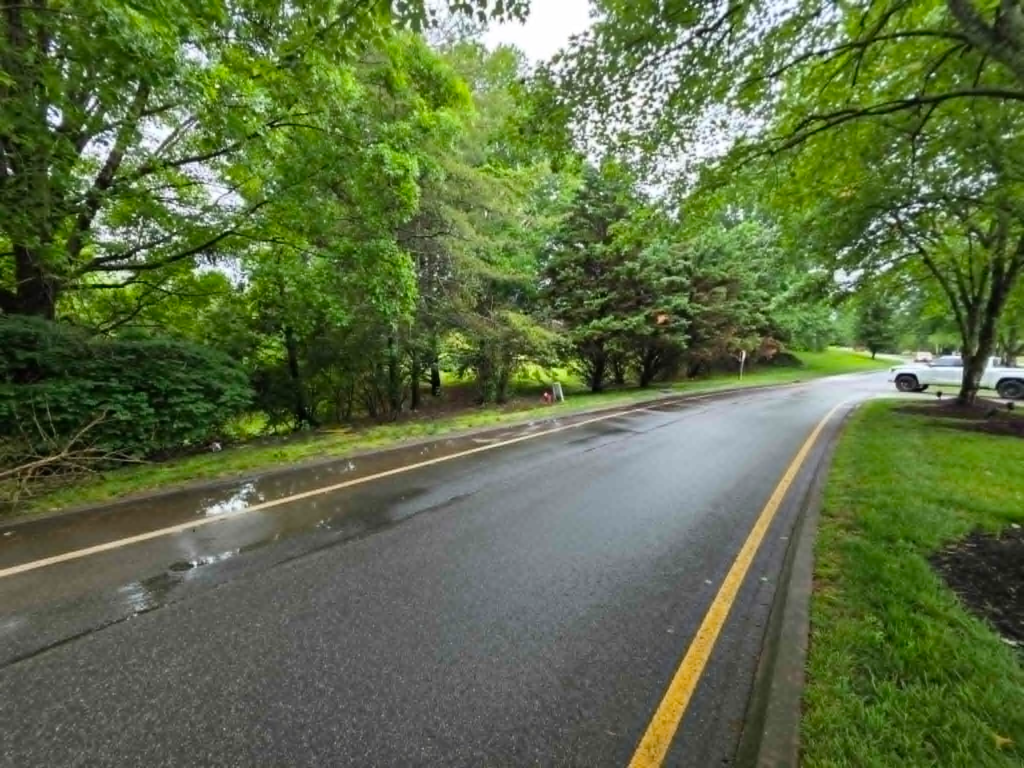
The differences come down to four factors: exposure, scale, compliance, and coordination.
Public Exposure Multiplies the Risk
A residential yard sees maybe a dozen people a day. A shopping center in West Knoxville sees thousands. Every one of those people is a potential injured party if a limb drops. Every parked car is a potential comprehensive claim. Every tenant is a potential breach-of-lease complaint if the landscaping starts to look neglected.
Insurance companies know this. They price commercial policies based on the assumption that your trees are being professionally maintained. When something fails and the maintenance records do not exist, coverage gets complicated fast.
Scale Changes the Equipment Requirements
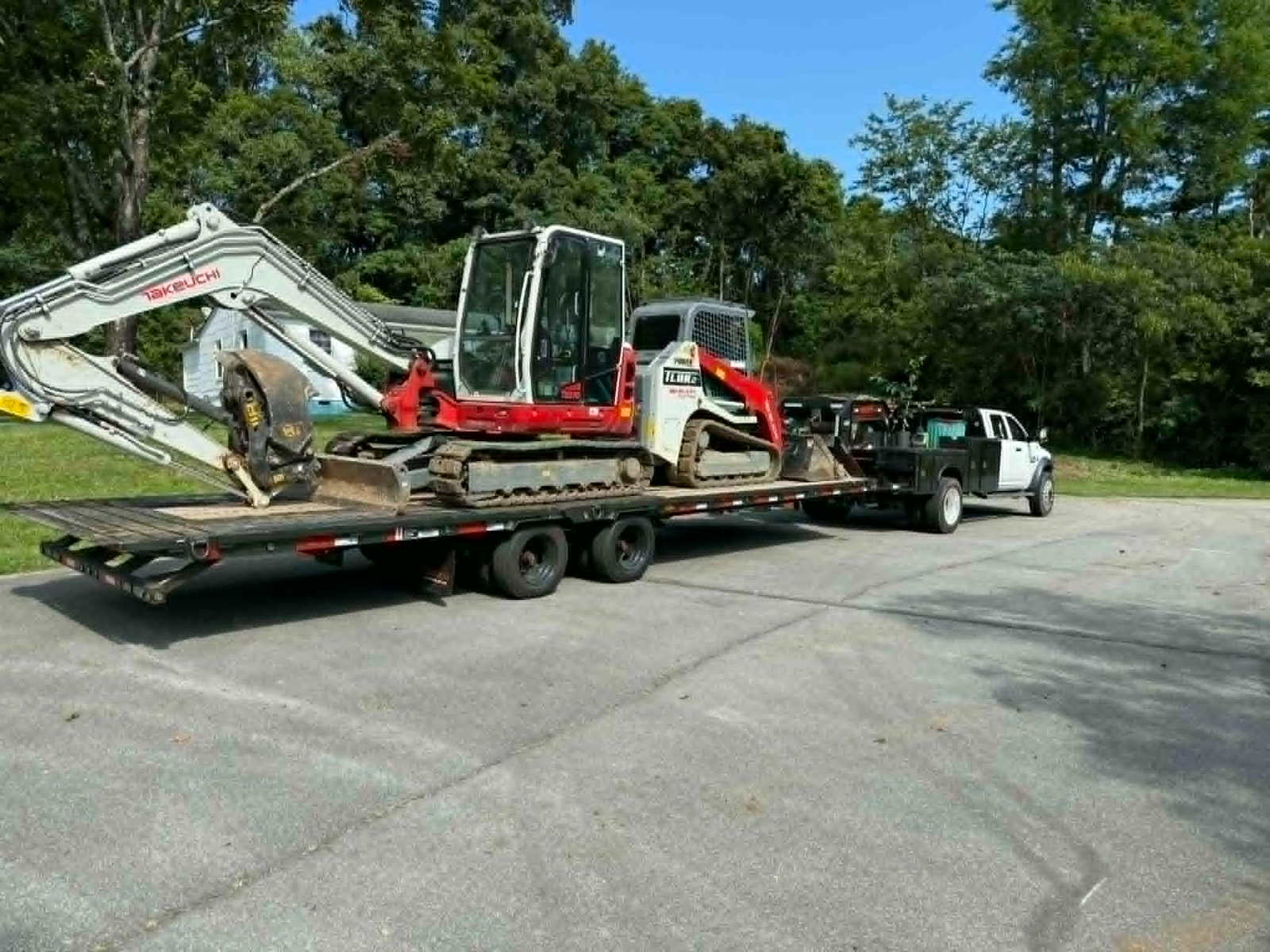
A backyard tree comes down with a small crew, a truck, and a chainsaw. A 60-foot oak leaning over a hotel entrance requires a crane, traffic control, a bucket truck, a chipper large enough to feed the debris straight through, and a crew big enough to work quickly during whatever service window the property manager can give. That equipment is not cheap, which is why commercial-focused providers charge accordingly.
Compliance Layers Up Fast
Residential properties in Knoxville generally have very few restrictions on tree work. Commercial properties are a different world. The City of Knoxville Tree Protection Ordinance applies to nearly all commercial, industrial, and multifamily properties. That means removals require documentation, mitigation may be required, and unauthorized cutting can carry meaningful penalties.
Coordination Complexity
Nobody has to schedule around retail hours in a homeowner’s driveway. Commercial work does. Your tree service needs to coordinate around tenant deliveries, foot traffic peaks, event schedules, and sometimes special events like graduations or trade shows. Good commercial contractors treat this as normal. Bad ones treat it as an inconvenience and disrupt your operations doing the work.
The Full Menu of Commercial Tree Services
Most property managers know they need “tree work” without necessarily knowing which specific services apply to their situation. Here is what a competent commercial tree care provider should offer, and what each service actually accomplishes.
Risk Assessments and Documented Inspections
This is the service that saves you money and legal exposure. An ISA-Certified Arborist walks your property, evaluates every significant tree, and produces a written report categorizing each one as retain, monitor, or remove. That report is your paper trail. It becomes exhibit A in your defense if anything ever fails and someone tries to argue your property was negligently maintained.
For any commercial property with mature trees, an annual documented inspection is not optional. It is the cheapest insurance you can buy. Expect to pay $200 to $600 for a written assessment on most commercial properties, depending on tree count and complexity.
Structural Pruning and Canopy Management
This is the routine maintenance that prevents emergencies. Selective removal of dead limbs, weak branch unions, and low-hanging obstructions keeps trees safe and your property looking cared for. Professional tree trimming services in Knoxville also include canopy elevation, which lifts lower branches away from delivery trucks, security cameras, parking lot lighting, and building signage.
Frequency depends on species. Fast-growing shade trees like Silver Maples and Willow Oaks need attention every 2 to 3 years. Slower species like White Oaks can go 4 to 5 years between structural prunes.
Tree Removal (Planned and Emergency)
Sometimes a tree has to come out. Whether it is a diseased ash, a Bradford Pear that has finally split, or a Silver Maple whose roots are destroying a parking lot, removal is a normal part of commercial tree management. What separates a professional operation from an amateur one is how the removal is handled: proper permits pulled where required, coordination with utilities if lines are nearby, minimal disruption to the property, and complete cleanup afterward.
Emergency response is a subset of removal. After major East Tennessee storms, commercial properties often need overnight or same-day response to clear fallen trees blocking access. Not every tree service can offer this. The ones that can will typically build priority-service agreements with regular commercial clients so those clients get first response after weather events.
Stump Grinding
Whatever tree comes down leaves a stump. On commercial property, stumps are trip hazards, pest harborage, and eyesores. Professional grinding takes the stump down to 6 to 12 inches below grade so the area can be sodded, mulched, or replanted.
Lot Clearing and Site Preparation
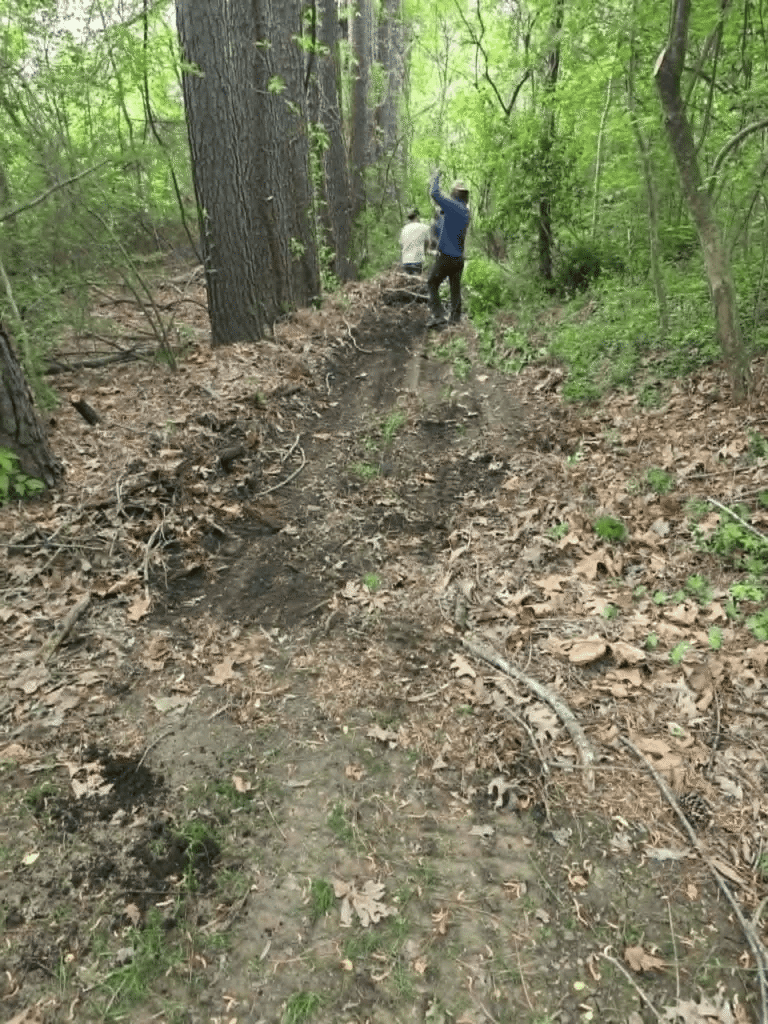
For new construction, expansions, or major renovations, lot clearing in Knoxville is often the first phase of a project. This involves selective or full removal of trees and vegetation from a defined area, chipping or hauling debris, and preparing the ground for the next construction step. Good lot clearing contractors coordinate with your general contractor and any required city inspections.
Plant Health Care (PHC)
The proactive side of the practice. Fertilization, pest management, disease treatment, and soil care all fall under PHC. For high-value specimen trees or properties where mature landscaping is part of the leasing pitch, ongoing PHC programs make sense. For basic parking lot shade trees, PHC is usually overkill.
Cabling and Bracing
For mature trees with structural weaknesses that are otherwise healthy and worth keeping, professional cabling and bracing can extend their useful life by decades. A steel cable installed at the right height in the canopy can prevent codominant stems from splitting even in severe wind. This is specialized work that requires an ISA-Certified Arborist to design and install properly.
Knoxville Tree Regulations Every Property Manager Should Know
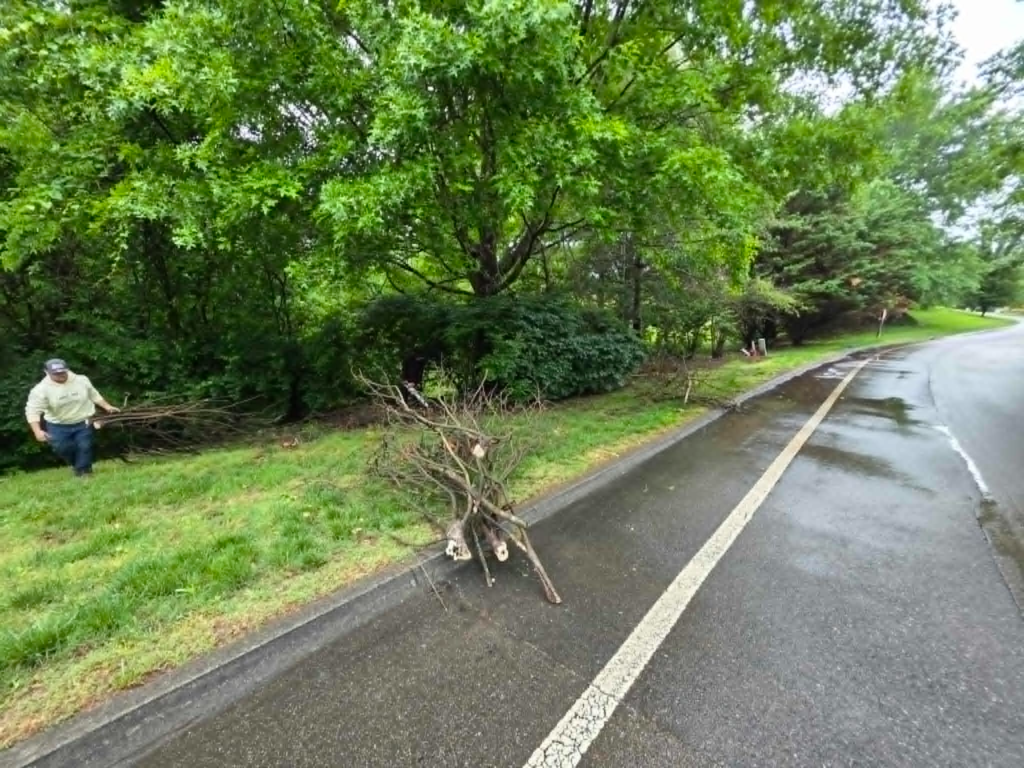
This is the section most out-of-town property managers get blindsided by. Knoxville has real tree regulations that apply to commercial property, and “I did not know” is not a legal defense when the fine notice arrives.
The Tree Protection Ordinance
The City of Knoxville Tree Protection Ordinance applies to nearly every commercial, industrial, multifamily, and subdivision property in city limits. For any development, grading, or significant site alteration, the ordinance requires a specific canopy density: typically six to eight trees per acre retained or planted.
What that means practically: you cannot just clear-cut a wooded parcel to build a shopping center. You either preserve enough of the existing canopy to meet the requirement, plant new trees to replace what came down, or pay into the city’s Tree Mitigation Bank instead. The city updated the ordinance in recent years specifically to strengthen enforcement, and the Urban Forester’s office reviews commercial site plans as part of the permitting process.
The Tree Mitigation Bank
For downtown or highly dense commercial properties where physically fitting the required trees is impossible, Knoxville created a mitigation bank. Property owners can pay a fee, and the city’s Urban Forestry team plants the required trees elsewhere in the same watershed. This is often the only realistic option for tight urban infill projects, but the fees are real and should be built into project budgets from the start.
KUB Utility Easements
Knoxville Utilities Board holds easements along most streets and many property lines. Trees within those easements are effectively under KUB’s control when it comes to line clearance. Never authorize a private crew to trim trees near active KUB power lines. KUB manages line-clearance work directly through their approved contractors, and unauthorized work in the wire zone creates liability exposure for both the property and the tree service.
The right move: if a tree on your property is close to KUB lines, contact KUB first. Their vegetation management team will handle the line-clearance portion, often at no cost to the property owner. Your private tree service can then handle any additional work outside the immediate wire zone.
Protected and Heritage Trees
Knoxville has specific protections for heritage trees and certain species in downtown zoning districts. Removing a protected tree without a permit can result in fines and mandatory replacement plantings. Any commercial property in a designated historic district or with unusually large or old trees should have the tree species and status documented before any work is authorized.
| The Compliance Cost of Getting This Wrong Unauthorized removal of a protected tree: $500 to $10,000 in fines depending on size and species.Failing to meet post-construction canopy requirements: Certificate of Occupancy delays, sometimes lasting months.Unpermitted work in KUB easement: shared liability if utility or property damage results.The right process (permits, mitigation, professional documentation) is always cheaper than the fine. |
Building a Proactive Maintenance Program That Actually Saves Money
The single biggest lever a commercial property manager has over long-term tree costs is committing to a proactive maintenance cadence instead of reacting to emergencies. The math on this is not close.
A planned pruning cycle on a healthy mature tree runs $400 to $1,200 depending on size. Emergency removal of that same tree after it fails during a storm runs $1,500 to $5,000, plus whatever it damaged, plus tenant complaints, plus insurance implications. Multiply that across a portfolio of properties, and the case for a maintenance program writes itself.
The Three-Tier Approach
A good commercial tree program has three tiers of activity, running on different schedules.
Tier 1: Annual documented risk assessment. An ISA-Certified Arborist walks the property once a year and produces a written report. Every mature tree gets categorized. High-risk trees get flagged for immediate action. Trees needing routine work get scheduled. This is the paper trail.
Tier 2: Scheduled pruning cycles. Fast-growing species (Silver Maples, Bradford Pears, Willow Oaks, Loblolly Pines) get attention every 2 to 3 years. Slower species (White Oaks, Sugar Maples, Sourwoods) get attention every 4 to 5 years. Ornamentals and hedge material get lighter, more frequent trimming as needed.
Tier 3: Emergency response agreement. Your primary tree service maintains a priority-service arrangement so your properties get first response after major storms. In East Tennessee, this matters most from March through August when severe weather peaks.
Timing Matters as Much as Frequency
Winter dormant pruning (December through February) is the sweet spot for most structural work. Trees are leafless, so arborists can see the actual branch architecture. Sap flow is minimal, disease pressure is low, and cuts heal faster in spring.
Summer pruning should be minimal on most species and completely avoided on oaks. Oak Wilt, a fatal fungal disease spread by sap-feeding beetles, is active in Knox County from April through July. Fresh cuts made on oaks during that window can invite fatal infection. UT Extension has published guidance on this repeatedly, and any commercial arborist who prunes your oaks in June without a compelling reason is not paying attention.
Documentation Is Not Optional
Every visit should generate paperwork. What was done, on which trees, when, by whom, and what was recommended for the future. This becomes your maintenance record for insurance purposes, for defending against liability claims, and for tracking long-term costs across your portfolio. Providers who cannot produce a written service report after each visit are not commercial-grade, whatever their marketing says.
The Threats Your Trees Are Facing in Knox County Right Now
Commercial trees in Knoxville live in a specific environmental context. Knowing the local threat landscape helps you spot problems early and plan removals before they become emergencies.
Emerald Ash Borer (EAB)
If your property has ash trees, they are on borrowed time unless treated. EAB was confirmed in Knox County in 2010 and has spread relentlessly since. Untreated ash trees typically die within 2 to 4 years of infestation. Dead ash wood becomes brittle within months, making removal increasingly dangerous the longer you wait. Our detailed guide on the emerald ash borer in Knoxville covers identification, treatment options, and when removal becomes the only responsible choice.
Bradford Pear Structural Failure
Bradford Pears are banned for sale in Tennessee as of the past few years, but existing trees are everywhere. Their notoriously weak branch unions cause predictable structural failure, usually in spring storms. If your property has Bradford Pears older than 15 years, consider proactive removal before they fail on their own timeline.
Bacterial Leaf Scorch
Common on Red Oaks and Pin Oaks in our region. The disease moves slowly through the vascular system, causing leaves to develop yellow halos around dead margins. There is no cure, but affected trees can be managed for years before removal becomes necessary.
Root Compaction
A slower-acting problem, but one that eventually kills trees on commercial properties. Foot traffic, delivery vehicles, parked cars, and mowing equipment all compact soil around root zones over time. Compacted soil suffocates the fine feeder roots that keep trees alive. The symptoms show up years later as canopy thinning and dieback, and by then the damage is often irreversible.
Storm Damage
Knox County averages several severe thunderstorm warnings every spring. Mature commercial trees that have not been structurally pruned are the ones that fail first. Trees with weak V-crotches split. Trees with long horizontal branches shed limbs. Trees with saturated root systems in Knoxville’s clay soil sometimes uproot entirely.
How to Vet a Commercial Tree Service Provider (Without Getting Burned)
Not every tree company that advertises commercial services is actually equipped to do the work correctly. Here is how to separate the professionals from the operations that are going to leave you with problems.
Verify Certifications and Insurance Independently
Ask for a Certificate of Insurance (COI) naming your property or management company as an additional insured. Then call the insurance carrier directly to verify it is current. A shocking number of tree services carry expired coverage or work uninsured entirely, and if one of their crew members is injured on your property, the liability lands on you.
Look for ISA (International Society of Arboriculture) Certified Arborists on staff. Look for TCIA (Tree Care Industry Association) accreditation if you can find it. These certifications require ongoing continuing education and confirm the person diagnosing your trees actually understands tree biology.
Ask for a Written, Itemized Estimate
Every commercial bid should break out labor, equipment, permits, cleanup, disposal, and any subcontracted work as separate line items. Vague single-number bids are how contractors hide missing pieces of the scope. If cleanup is not itemized, cleanup might not be included. If permits are not itemized, you might discover after the fact that pulling the permit is your responsibility.
Confirm Local Commercial Experience
Ask for references from other Knoxville-area commercial properties. Actually call two of them. Ask specifically about scheduling reliability, cleanup quality, communication during the job, and whether the invoice matched the bid. A tree service that has done good commercial work will have references who will vouch for them without hesitation.
Watch for These Red Flags
- Door-to-door sales after storms (usually out-of-town operators looking for cash).
- Pressure to sign contracts immediately.
- Cash-only payment demands, especially large upfront deposits.
- No local physical address or verifiable business license.
- Refusal to provide insurance certificates directly from the carrier.
- Bids dramatically lower than others (usually means missing scope or uninsured labor).
Property-Type Playbook: Retail, HOA, Office Park, Industrial
Different commercial properties have different tree care priorities. Here is the shortened playbook for each type.
Retail Centers and Shopping Plazas
Priorities: signage visibility, parking lot safety, entrance impression. The core work is regular canopy elevation to keep signs visible from the road, parking lot tree maintenance to prevent limb drops on customer vehicles, and entrance-area landscaping upkeep. Storm response speed matters more here than in most other property types because closed parking access equals lost sales.
Multifamily Apartments and Condos
Priorities: resident safety, lease appeal, walkability. Focus on trees near playgrounds, pool areas, and pedestrian walkways. Every dead limb over a pool or a leased balcony is a lawsuit waiting for the right circumstances. Regular hedge and shrub trimming around building perimeters is also usually included in these programs.
Office Parks and Corporate Campuses
Priorities: professional appearance, tenant retention, low-disruption work windows. Office parks typically want work scheduled outside business hours (early mornings, weekends) to avoid disrupting tenants. Aesthetic consistency across the property matters. Higher-end campuses often include plant health care programs for signature trees at entrances and executive parking areas.
Industrial Properties and Warehouses
Priorities: access clearance, utility line safety, minimal ongoing cost. Industrial sites usually have fewer trees to maintain but often deal with utility easements, security camera sightlines, and truck route clearance. Work here tends to be less frequent but larger in scope when it happens.
HOAs and Community Associations
Priorities: budget predictability, board accountability, resident communication. HOAs need contractors who can provide multi-year budgets, standardized reporting for board meetings, and clear communication with residents whose trees are being worked on. The best HOA relationships include an annual walk-through with the property manager and board president to align on priorities for the coming year.
What Commercial Tree Work Actually Costs in the Knoxville Market
Nobody publishes real commercial tree pricing because every job is different. But you can plan against realistic ranges.
Typical Cost Ranges for Commercial Work
- Written risk assessment (small property): $200 to $400
- Written risk assessment (larger property): $400 to $800
- Routine pruning per mature tree: $400 to $1,200
- Removal of medium tree (30 to 60 feet): $700 to $2,500
- Removal of large tree with crane required: $2,000 to $6,000+
- Stump grinding per stump: $150 to $500 depending on size
- Emergency response premium: 30 to 50% over standard rates
- Multi-property annual contract: Often 10 to 20% below per-job rates
Our companion guide on tree removal costs in Knoxville gets deeper into the residential side of pricing, which shares many of the same cost drivers. Commercial work typically runs 20 to 40% higher than comparable residential due to insurance costs, coordination complexity, and equipment demands.
Why the Cheapest Bid Is Usually the Wrong Choice
On a $5,000 removal job, a $3,500 bid looks like a bargain. It rarely is. The savings almost always come from cut corners: reduced insurance coverage, unlicensed crew, no permits, incomplete cleanup, or work done at hours that will require additional cleanup by your regular property staff.
Get three written bids from providers who can produce complete insurance documentation. Compare the middle bid to the low bid line by line, and ask the low bidder to explain the price difference. The answer will usually tell you why the low bid is not actually the same job.
The Insurance Trap Nobody Warns You About
This is the section commercial property managers wish they had read five years ago.
Standard commercial property insurance covers tree damage from covered perils. What it typically does not cover is damage from trees that showed obvious signs of decline before failure. Insurers have grown more aggressive about denying these claims, and the language they use is “failure to maintain.”
Here is how it plays out. A tree drops a limb on a tenant’s vehicle. The claim gets filed. The adjuster visits the property, walks around the remaining tree, sees clear signs of decay: fungal conks, deadwood, obvious cracks. They ask for maintenance records. If you have none, you have a much harder claim to defend.
| How to Protect Your Insurance Position Schedule and document an annual professional tree assessment on every commercial property.Save the written reports in your property management system for at least seven years.Act on the arborist’s recommendations, or document why you chose not to.Photograph major work before, during, and after.Keep invoices and itemized descriptions of every tree service visit.This paper trail is what separates a defensible position from a denied claim. |
Frequently Asked Questions
How often should commercial trees be inspected?
Annually at minimum for any property with mature trees. Properties in high-traffic zones or with a history of storm damage benefit from semi-annual inspections. Newly acquired properties should always get a baseline assessment within the first 90 days of ownership or management transition.
Do I need permits for commercial tree removal in Knoxville?
Usually yes, especially in city limits. The Tree Protection Ordinance requires documentation for most commercial removals, and heritage or protected species require specific permits. A competent commercial tree service will handle permit pulling as part of the job. Confirm this in writing before work begins.
What happens if my neighbor’s commercial tree damages my property?
In Tennessee, the general rule is that damage from a healthy tree during a storm is your own insurance issue. Damage from a clearly diseased or neglected tree can create liability for the tree owner, especially if you provided prior written notice that the tree was in decline. Property managers should send written notice (email is fine) any time a neighboring commercial tree shows visible signs of failure risk.
Can I bundle tree service across multiple properties?
Yes, and you should. Multi-property portfolios often qualify for 10 to 20% discounts on annual contracts. It also simplifies vendor management, invoicing, and standardizes reporting across your portfolio. Ask specifically about portfolio pricing when soliciting bids.
How fast can a commercial tree service respond after a storm?
With a priority-service agreement in place, same-day or next-day response is standard. Without an agreement, you compete with everyone else calling after the same storm. During major weather events in Knoxville, response times can stretch to 3 to 5 days for non-emergency work. This is why the priority-service arrangement matters.
What is the difference between an arborist and a landscaper?
A landscaper manages lawns, hedges, and general landscaping. An arborist specializes in tree biology, structural pruning, and hazard assessment. Many landscapers offer tree work, but few employ ISA-Certified Arborists. For high-value trees and liability-sensitive properties, insist on arborist-led work, not landscaper-led work.
Can I use my existing landscape company for tree work?
Only if they have certified arborists on staff, appropriate equipment, and commercial-grade insurance. Most landscape companies do not have the specialized equipment (bucket trucks, cranes, large chippers) to handle mature commercial trees safely. Cross-check their credentials before assuming they can handle everything.
Your Next Steps
If you are managing commercial property in Knoxville and any of this hit close to home, the actionable next steps are straightforward.
- Schedule an annual documented risk assessment for every property in your portfolio.
- Verify the insurance and certifications of your current tree service (or find one who has them).
- Establish a written maintenance cadence for each property based on tree species and site conditions.
- Set up priority-service agreements for storm response on your highest-exposure properties.
- Build the tree work paper trail that will protect you if something ever fails.
Our team handles commercial tree services Knoxville TN property managers can actually rely on: fully insured, ISA-informed, written assessments included, priority-service arrangements for portfolio clients, and honest bids that break out every line item. We serve retail centers, HOAs, office parks, apartment communities, and industrial properties across Knox County, Loudon County, and Blount County.
See examples of our commercial and residential work in our upcoming Knoxville tree service projects case study series, and browse before-and-after documentation in our tree service photo gallery .
For a free property walkthrough and written bid, call (423) 519-7484 or visit our contact page. We will meet you on-site, look at every tree, and give you the honest scope your property actually needs. The trees on your commercial property are either an asset or a liability. Which one they are depends entirely on how they are managed.