Lot Clearing Permits in Knoxville, TN: What You Must Know Before You Clear
There is a specific phone call nobody wants to make. It happens after the machines are already on site, half the lot is stripped, and a city inspector has just handed the crew a stop-work order. The project freezes, the contractor sits idle, and the property owner is suddenly looking at civil penalties plus the cost of an after-the-fact permit that could have been pulled for a fraction of the price two weeks earlier.
That situation is completely avoidable. Most people start this process searching for how to get a tree removal permit in Knoxville, TN, and they usually discover something that changes their whole plan: taking down trees on your own residential lot generally does not require a permit at all. What actually triggers the paperwork is disturbing the ground. Grading, stripping vegetation across a wide footprint, changing natural drainage, or preparing a site for construction. Those activities live under an entirely different set of rules.
This guide explains when you need a permit, which agency has jurisdiction over your parcel, what documents you will need, and where the real penalties live. Our crew at Whites Tree Services has worked land clearing projects across Knox County, Loudon County, and Blount County since 2014. We have watched this process go smoothly for owners who prepared, and go badly for owners who assumed nobody would notice.
Read the sections that match your property. Skip the rest. Either way, spend twenty minutes here before anyone starts a chainsaw.
Do You Need a Permit to Clear Land in TN?
The short answer is yes, the moment you start disturbing soil at any real scale. Cutting down a single tree might be exempt. Clearing a lot for construction is heavily regulated.
Tennessee does not have one statewide permit covering every parcel. The rules stack in layers instead. Local government handles grading and site development. The state, through TDEC, handles stormwater once your disturbance crosses a certain size. Federal rules apply near streams and wetlands.
So when someone asks whether you need a permit to clear land in TN, the honest answer depends on three things: how much ground you are disturbing, which jurisdiction the parcel sits in, and what you plan to do afterward.
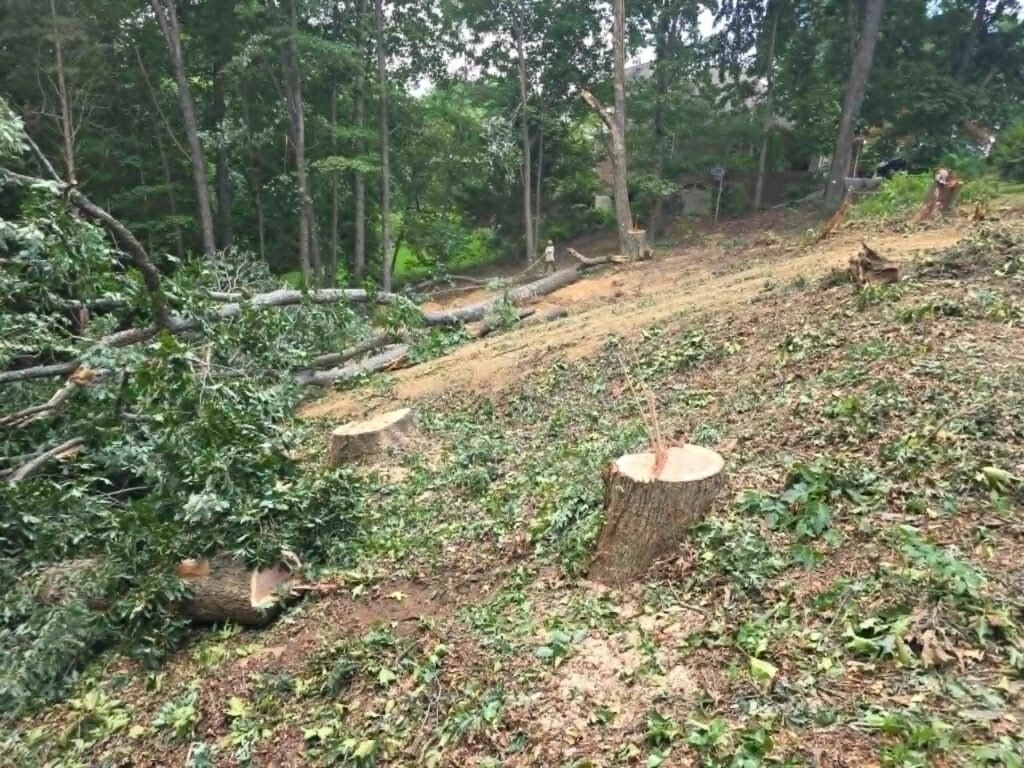
You Likely Need a Permit If Your Project Includes
- Clearing trees to make room for a new home
- Preparing land for commercial development
- Grading or excavating soil
- Installing driveways or utility runs
- Removing vegetation across large areas
- Changing natural drainage patterns
You Likely Do Not Need One For
- Removing small brush around an existing home
- Light landscaping work
- Clearing small areas without grading
- Routine property maintenance
- Taking down dead or hazardous trees, depending on location
Those exemptions are not absolute. Requirements shift based on property location, zoning, environmental restrictions, utility easements, and floodplain status. When you are not certain, verify before you start.
The Distinction That Catches Property Owners Off Guard
Knoxville does not regulate the act of cutting a tree on private residential property. It regulates land disturbance. That one distinction explains nearly everything else in this guide.
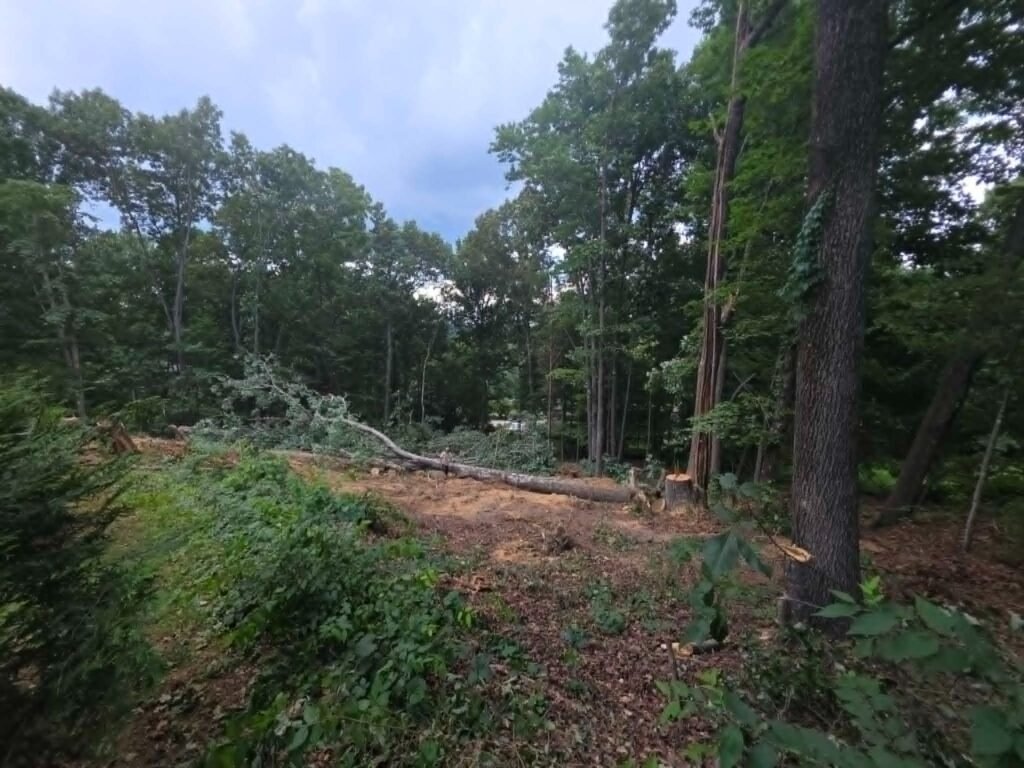
A homeowner who wants three oaks removed from a backyard can hire a crew, get it done, and never touch a permit application. The same homeowner decides to clear the entire back half of a two-acre lot and grade it flat for a shop building, and now they are firmly in permit territory. The trees were never really the issue.
What the City Counts as Land Disturbance
The City of Knoxville Engineering Development Services Division takes a broad view. Their guidance states that all work which disturbs or changes the land requires a site development permit. In practice that captures:
- Grading land
- Excavating
- Placing fill material
- Altering natural topography
- Removing vegetation, unless specifically exempt
- Beginning any land disturbance activity
Notice that placing fill counts. Simply hauling in dirt to level a low spot can qualify. The trigger is not what you take away. It is whether you changed the ground.
Where Tree Work Crosses the Line
Straightforward tree removal Knoxville TN homeowners schedule for a hazardous or unwanted tree is maintenance, and it rarely needs a permit. Clearing a wooded parcel so equipment can start a foundation is development, and it almost always does. The work looks similar from the road. The regulatory treatment is not close.
The Two Permit Categories in Knoxville
Knoxville separates land clearing work into two tiers. Knowing which applies determines your fee, your paperwork, and your review timeline.
| Permit Type | Typical Use |
| Rough Grading | Land disturbance under 10,000 square feet with no infrastructure involved |
| Site Development | Disturbance of 10,000 square feet or more, or any project involving infrastructure |
Ten thousand square feet works out to roughly a quarter acre. Below that line, with no driveways, utilities, or drainage structures involved, you are usually looking at the lighter rough grading tier.
Site Development Permit Requirements
The heavier tier requires a real submission package. Expect to provide an engineered site plan showing existing and proposed grades, an erosion prevention and sediment control plan, a stormwater management plan if you are increasing impervious area, and proof of ownership or owner authorization.
Larger commercial and subdivision projects typically require engineered site plans prepared by a licensed professional.
Review Timelines
Simple plans often clear review in five to ten business days. Engineered submissions, projects needing multiple department signoffs, or anything with environmental complications take considerably longer. Build permit time into your schedule from the start. Crews book out, weather windows close, and a two-week review delay in March can push a project into the wet season.
The One-Acre Threshold and Stormwater Requirements
Here is the number that changes the project. Once heavy machinery rolls onto the site to grade or strip vegetation, you are no longer just cutting wood. Whether you are building inside the city limits or working a rural acreage, securing the proper land clearing permits in East Tennessee is what keeps inspectors satisfied and your schedule intact.
Knoxville requires a land disturbance permit for clearing activities that disturb more than one acre, or that are part of a larger common plan which will ultimately disturb more than one acre.
What You File at One Acre
- Stormwater Pollution Prevention Plan (SWPPP): shows erosion controls, sediment measures, drainage routing, and the limits of disturbance
- Notice of Intent (NOI): filed before work begins
- Erosion and sediment control measures: installed and maintained through the life of the project
The Phased-Project Trap
This is where owners get caught. Clear half an acre this spring and another half acre next fall as part of the same development plan, and the state looks at the total, not the individual phases. You crossed one acre, and you needed coverage from the start.
Measure your total planned disturbance including every future phase before deciding you are under the threshold. Retroactive permitting always costs more than doing it right the first time.
Standard Erosion Control Measures
East Tennessee’s rolling hills mean clearing vegetation creates immediate runoff and sedimentation risk. Expect these requirements:
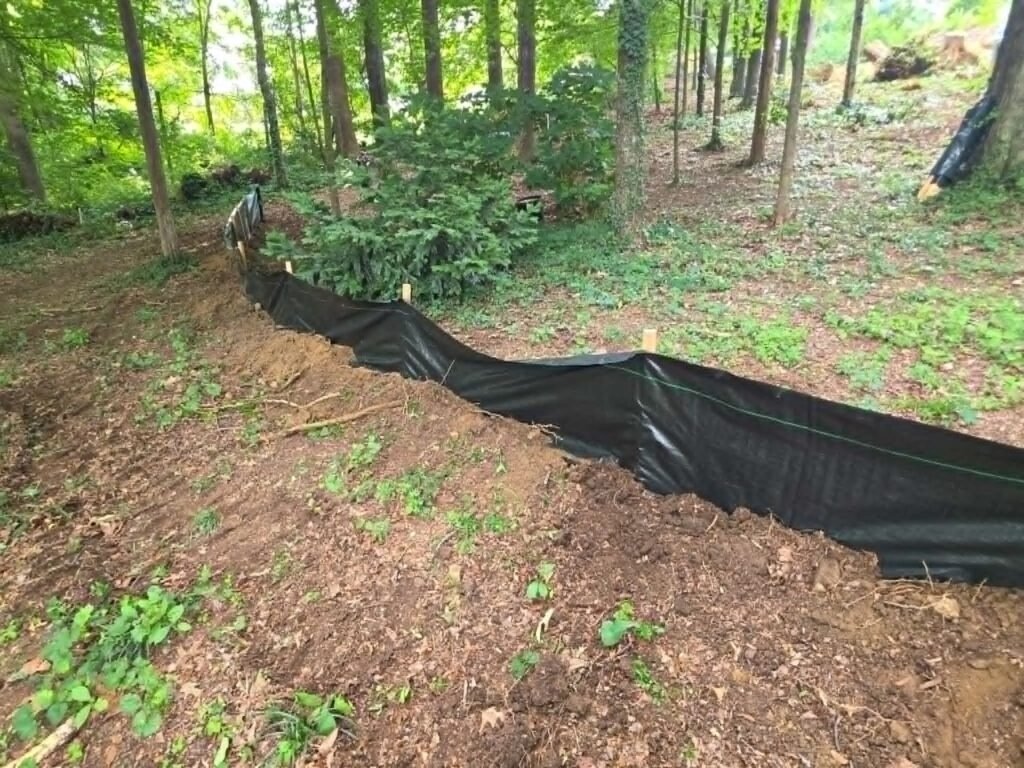
- Silt fencing along the downhill edge of disturbed areas
- Stabilized construction entrances to keep mud off public roads
- Sediment basins or traps on larger sites
- Drainage protection around inlets and conveyances
- Temporary stabilization on any area that will sit exposed
City of Knoxville Tree Removal Rules vs Knox County Lot Clearing Regulations
One of the most common mistakes is assuming city and county rules are identical. They are not, and the difference is significant.
Inside the City Limits
Even for basic backyard work, it pays to understand the city of Knoxville tree removal rules before firing up a saw. For most standard residential lots, a dedicated tree removal permit is not required when you are simply taking down trees on your own private property. The rules tighten considerably for commercial properties, multi-family developments, and parcels sitting in historic overlays or special zoning districts, where stricter landscaping, buffer, and tree preservation requirements apply.
Projects inside the city are overseen by the City of Knoxville Plans Review and Inspections Office and Development Services.
Unincorporated Knox County
If your lot sits outside the city, in areas like Powell, Halls, or Corryton, the Knox County lot clearing regulations apply instead, administered through Knox County Codes Administration. Private residential tree removal is largely unrestricted out here. The exceptions are subdivisions with recorded covenants and properties already subject to state or county stormwater plans, which carry their own additional requirements.
Which Offices Review What
Depending on your jurisdiction and project type, different offices may review zoning, engineering, stormwater, and building permits separately. Always verify which jurisdiction governs your property before beginning work. A parcel can also fall inside another municipality entirely, which changes the answer again.
The Knoxville Tree Ordinance and Protected Trees
The Knoxville tree ordinance is where the line between tree work and land disturbance gets blurry, so it deserves its own section. For development projects where no building permit is being sought, the city’s site development guidance places limits on tree removal measured over a rolling five-year period. Vegetation removal itself may require a Site Development Permit depending on the project and any applicable exemptions.
The ordinance often requires a Tree Protection Plan when trees will be removed, and it can obligate you to preserve or replant a certain number of trees based on the existing canopy.
Heritage and Landmark Trees
The city maintains a registry of protected heritage and landmark trees. These are mature, historically significant, or rare specimens, and removing one requires municipal review. Large hardwoods, or trees tied to an approved subdivision landscape plan, may face similar restrictions.
If you have an unusually large or old tree on the property, confirm its status through the City of Knoxville Urban Forestry program before scheduling any removal.
The Public Right-of-Way
The strip of land between the sidewalk and the street is almost always public right-of-way owned by the city or state. Removing or pruning trees in that zone without authorization from Urban Forestry or the Tennessee Department of Transportation can result in fines and mandatory replacement plantings.
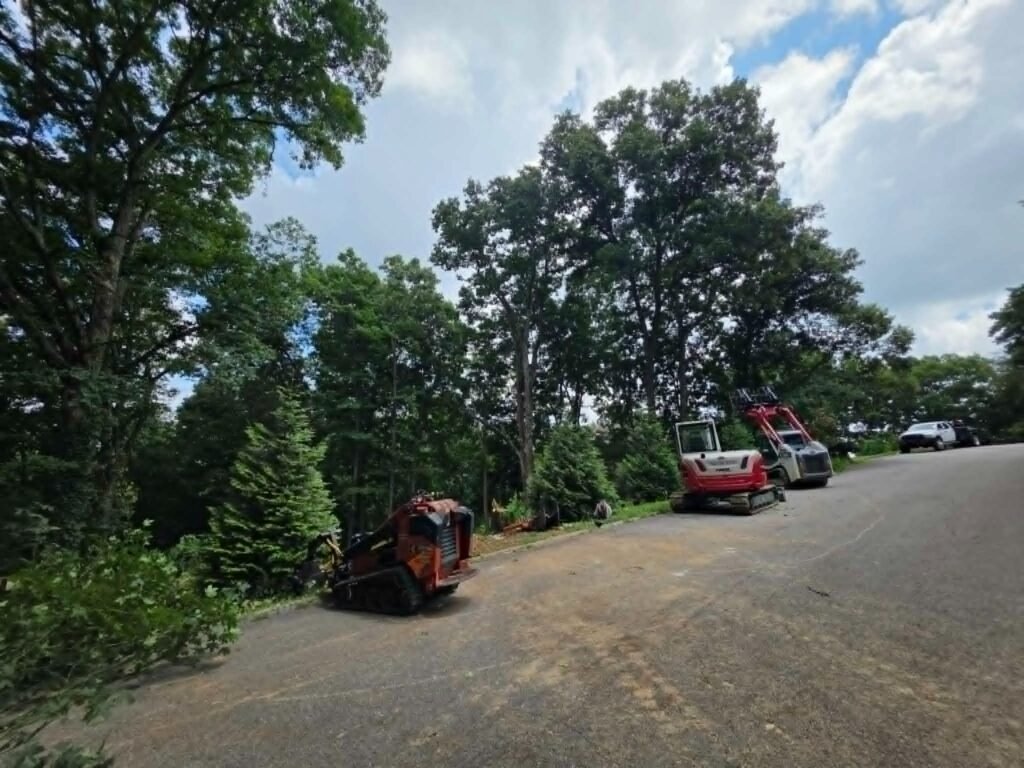
If a street tree is dead or hazardous, report it through the city’s 311 line and let the city handle it. For trees on your own property that need attention after a storm, a licensed crew handling lot clearing near Knoxville can assess what falls inside your boundary and what belongs to the city before anything gets cut.
When Land Clearing Permits in East Tennessee Get More Complicated
Certain site conditions trigger stricter oversight regardless of how much acreage you are touching.
Stream Buffers and Waterways
If your lot touches a stream, river, or wetland, Tennessee Department of Environment and Conservation regulations and local buffer rules apply. Clearing right up to the water’s edge is one of the fastest ways to trigger severe fines plus a mandated restoration order.
The City of Knoxville Stormwater Engineering division enforces buffer zones near streams, rivers, and floodplains.
Floodplain Restrictions
Special permits are required if any portion of the property lies within a designated flood zone. Check the Knoxville-Knox County GIS mapping tools to confirm your parcel’s status before planning any work.
Wetlands
Federal and state regulations limit disturbance of wetland areas. If there is standing water on part of your parcel through most of the year, get it evaluated before assuming you can clear it.
Additional Approvals That May Apply
- Building permits, if clearing is the first phase of construction
- TDOT entrance permits, if the project accesses a state highway
- Traffic impact studies, for larger developments
- Drainage and stormwater approvals
- Utility and easement reviews
Hillside and Ridgetop Protection Areas
If your property falls within Knoxville’s Hillside and Ridgetop Protection Overlay, part of the city’s zoning code, you are subject to rigorous grading restrictions.
Tree removal and mass grading in these areas are heavily regulated to prevent soil erosion and preserve the visual character of the ridges. Depending on the scope, you may need specific authorization from the Knoxville-Knox County Planning Commission before work begins.
This is worth checking early. Discovering a ridgetop overlay after you have already scheduled equipment is an expensive surprise, and it is the kind of thing that shows up clearly on GIS mapping if you look for it.
Utility Easements and KUB Coordination
Most residential lots carry utility easements, usually along property lines or the rear boundary, held by Knoxville Utilities Board for power, water, and gas infrastructure.
Two rules here, and both are absolute.
First: never attempt to clear vegetation near primary power lines yourself. Contact KUB to coordinate safe line clearance. They have a vegetation management program and often handle line-adjacent work at no cost to the property owner.
Second: check your recorded plat or deed before clearing anywhere near a utility corridor. Unauthorized clearing inside an easement can cause service interruptions and creates legal liability that lands on you, not the contractor.
Burning and Debris Disposal Rules
What happens to the material after clearing is regulated separately, and the rules are stricter than most people expect.
Open Burning Inside the City
Burning organic waste on site is illegal inside Knoxville city limits without a strict burn permit from the Knoxville Fire Department. Open burning of construction debris is prohibited outright with no exemption available.
Hauling to Authorized Facilities
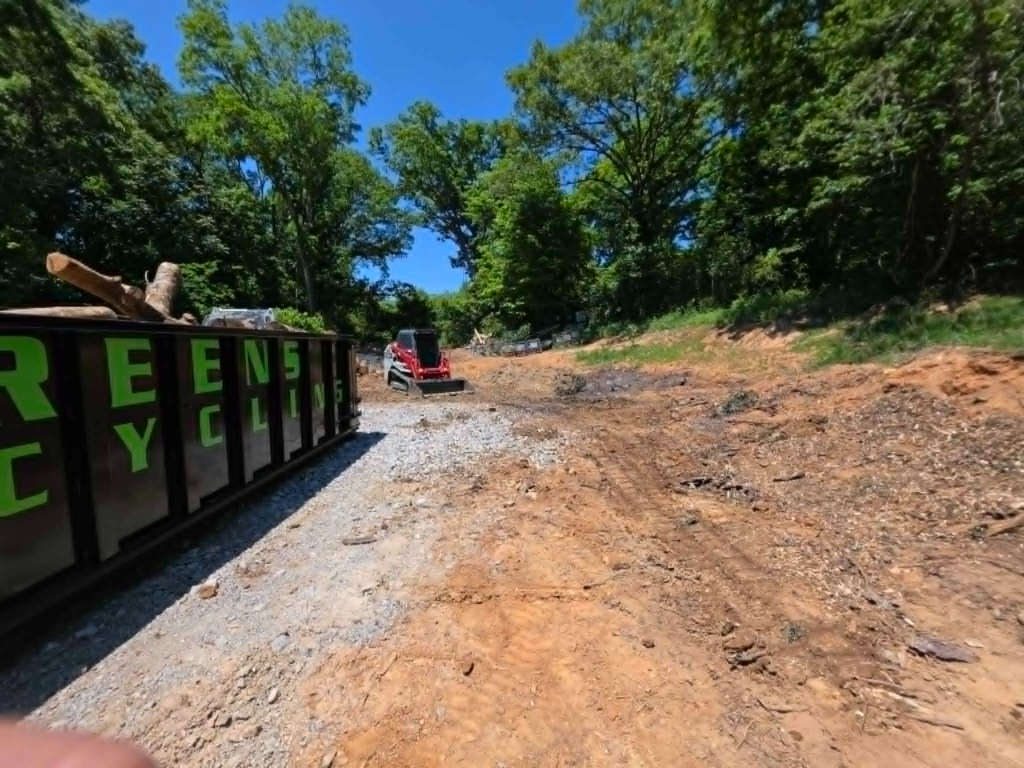
If you plan to haul away brush and timber, it has to go to authorized facilities such as the Knoxville Solid Waste Management sites. That is a real line item on a clearing budget, not an afterthought.
The Contractor Debris Detail
This one surprises homeowners regularly. City crews will not collect brush, trees, or branches left behind by a contractor providing tree services. Contractors are responsible for removing all materials from the owner’s property.
The city also will not pick up stumps or branches larger than twelve inches in diameter, even from homeowner-generated piles. Confirm in writing who is hauling the debris before work starts, or you inherit a pile nobody will collect.
What Happens If You Clear Without a Permit
Enforcement is more active than the rumor mill suggests. The Department of Engineering and the Stormwater Management Division conduct regular inspections of land-clearing sites to verify work matches approved plans and permit conditions.
| Consequences of Unpermitted Clearing Civil penalties ranging from $500 to $10,000 or more, plus the cost of after-the-fact permits.Stop-work orders that freeze the project until you achieve compliance.Required restoration work, which frequently exceeds the original clearing cost.Construction delays that ripple through your entire build schedule.Additional inspection costs.Difficulty obtaining future permits on the same parcel.Legal action in cases involving erosion control or tree protection violations. |
Correcting violations after clearing is almost always more expensive than obtaining permits beforehand. That is the whole calculation in one sentence.
The Overgrown Lot Angle
There is a related enforcement issue worth knowing. If your lot becomes what the city classifies as dirty or overgrown, meaning trash accumulation or grass and underbrush over twelve inches, Neighborhood Codes Enforcement can order correction and bill you for city cleanup, with possible Municipal Court penalties attached.
A clearing job that stalls halfway because of a permit problem can put you in exactly that position. Finish what you start, or phase the work so no area sits half-done through a growing season.
Property Lines and Tennessee Timber Trespass Law
This risk has nothing to do with permits and everything to do with money.
Cutting across property lines, even by accident, carries heavy legal liability under Tennessee timber trespass laws. You can be held accountable for the full appraised value of mature hardwoods, and the statute allows for treble damages in cases where the cutting was knowing. On mature timber, that number climbs fast.
Trees growing directly on a boundary line are considered co-owned. Neither neighbor can remove them without the other’s agreement.
How to Protect Yourself
- Get a current property survey before any large-scale clearing
- Locate corner pins physically and mark them with flagging tape
- Flag the clearing boundary in bright ribbon so operators can see it from inside the machine
- Tag the keeper trees you want preserved before work starts
- If a boundary is genuinely unclear, pay for a professional survey
On wooded rural parcels where nobody has walked the line in decades, this is not an optional expense.
Documents You Will Need for a Permit Application
Most applications require the same core package. Having these ready shortens your review time.
- Property address and parcel number
- Site plan showing the work area
- Property survey
- Written description of the work
- Estimated disturbed area in square feet or acres
- Grading plan, if applicable
- Drainage information
- Contractor information
- SWPPP, for projects at or above one acre
You begin by submitting plans for review through the city’s online permits portal. Land disturbance with no building construction has its own application type. Once approved, you obtain the permits and proceed through inspections as work progresses.
Questions to Ask Before Hiring a Lot Clearing Contractor
The right contractor makes permitting easier. The wrong one leaves you holding a violation.
- Are you licensed and insured, and can you provide a certificate directly from your carrier?
- Will you obtain the required permits, or is that my responsibility?
- Have you worked inside Knoxville before, and can you name recent jobs?
- Do you handle erosion control installation?
- Will you remove debris or mulch it on site, and is that included in the price?
- Can you identify protected areas, easements, and stream buffers before clearing?
- Will you coordinate with engineers if the project needs a SWPPP?
- Is your bid itemized so I can see permits, mobilization, clearing, disposal, and grading separately?
Experienced local contractors understand the permitting process and environmental rules, and they help you avoid mistakes that cost real money. The single biggest red flag is a contractor willing to start before permits are in hand. That decision transfers all the regulatory risk to you.
Best Practices Before You Clear
Work through this list before scheduling equipment. Each item prevents a specific problem we have watched happen on real Knoxville projects.
- Verify property boundaries with a current survey
- Confirm zoning requirements and check for overlays
- Check your recorded plat for easements
- Determine which permit tier applies to your disturbance size
- Locate underground utilities by calling 811 at least three business days ahead
- Identify drainage concerns and where water leaves your property
- Protect valuable trees by tagging them before work begins
- Establish erosion controls before stripping any topsoil, not after
- Hire an experienced local contractor familiar with Knoxville requirements
- Schedule inspections if required
- Keep copies of approved permits on site throughout the project
Do not clear first and ask permission later. Unpermitted disturbance, especially over one acre or near drainage ways, is the fastest route to a stop-work order.
Frequently Asked Questions
Do you need a permit to clear land in TN?
Yes, once soil disturbance reaches a meaningful scale. Cutting a single tree on a residential lot is usually exempt, but grading, stripping vegetation, or preparing a site for construction triggers local permits. At one acre of disturbance, state stormwater requirements apply statewide.
Do I need a tree removal permit in Knoxville, TN just to cut trees in my yard?
For most standard residential lots inside the city or in unincorporated Knox County, no. A dedicated tree removal permit in Knoxville, TN is generally not required when you are taking down trees on your own private property. Exceptions apply for right-of-way trees, heritage trees, historic overlays, and properties with recorded covenants.
How much land can I clear without a permit?
Inside the city, disturbance under 10,000 square feet with no infrastructure falls under the lighter rough grading tier. At 10,000 square feet or more, or with infrastructure involved, you move into site development. At one acre, stormwater requirements apply regardless of jurisdiction.
Is forestry mulching considered land disturbance?
Forestry mulching by itself typically falls below the grading permit threshold because it grinds vegetation without scraping or tilling topsoil. If mulching is part of a larger land-disturbance project, permitting requirements for the overall project still apply.
What is the difference between Rough Grading and Site Development?
Rough grading covers disturbance under 10,000 square feet with no infrastructure. Site development covers disturbance of 10,000 square feet or more, or any project involving driveways, utilities, or drainage structures. Site development requires a more substantial submission package.
What do the Knoxville tree ordinance rules require during development?
The Knoxville tree ordinance can require a Tree Protection Plan when trees are being removed, and it may obligate you to preserve or replant a certain number of trees based on existing canopy. For projects without a building permit, limits apply to removal measured over a rolling five-year period.
How do Knox County lot clearing regulations differ from the city?
Knox County lot clearing regulations are lighter for individual residential owners, and private tree removal is largely unrestricted. The exceptions are subdivisions with recorded covenants and properties already under state or county stormwater plans. Larger disturbance still triggers grading permit requirements.
Who pulls the permit, the contractor or the property owner?
It depends entirely on your agreement, so get it in writing. Some owners handle permitting themselves, and many experienced contractors pull permits on the owner’s behalf as part of the scope. Assuming the other party is handling it is how projects end up with no permit at all.
How long does the permitting process usually take?
Simple plans often clear in five to ten business days. Engineered submissions and projects requiring multiple department reviews take longer. Larger projects may require a pre-construction conference before work can begin.
Who to Contact and How to Apply
The City of Knoxville Plans Review and Inspections office is your main contact for confirming zoning, safety, and permitting needs. They can tell you exactly which permits and plans apply to your lot and project.
| Knoxville and Knox County Contacts City of Knoxville 311 or (865) 215-4311 for city propertiesCity of Knoxville Plans Review and Permits, for applications and plan submissionKnox County Codes Administration, for county lotsKUB, for easement and power line inquiriesTN 811, required at least three business days before excavationWhites Tree Services, for a free property walkthrough: (423) 519-7484 |
For readers who want to verify requirements directly, the City of Knoxville Land Development Manual and the Stormwater Ordinance in Chapter 22.5 provide the current permit requirements, application processes, checklists, and engineering guidance.
The single best move before any clearing project is a short conversation with the reviewing office. Describe your lot, your acreage, and your end goal, then ask which permit applies. Engineering staff are generally helpful, and a ten-minute call has saved Knoxville property owners thousands in avoidable penalties.
If you would rather have someone walk the property with you and sort out what applies, our crew handles land clearing across Knoxville, Knox County, Loudon County, and Blount County. We flag the constraints, identify what needs protecting, and give you an honest read on the project. For pricing context on the tree work portion, our guide to tree removal cost Knoxville TN breaks down what drives per-tree pricing in this market.
Call (423) 519-7484 to schedule a free on-site assessment with a Knoxville tree service that has worked this area since 2014. Clearing a lot here is not complicated once you know which rules apply to your specific parcel. It only gets expensive when you find out afterward.