Stump Grinding After Tree Removal: What It Removes, What It Leaves Behind, and When It Makes Sense
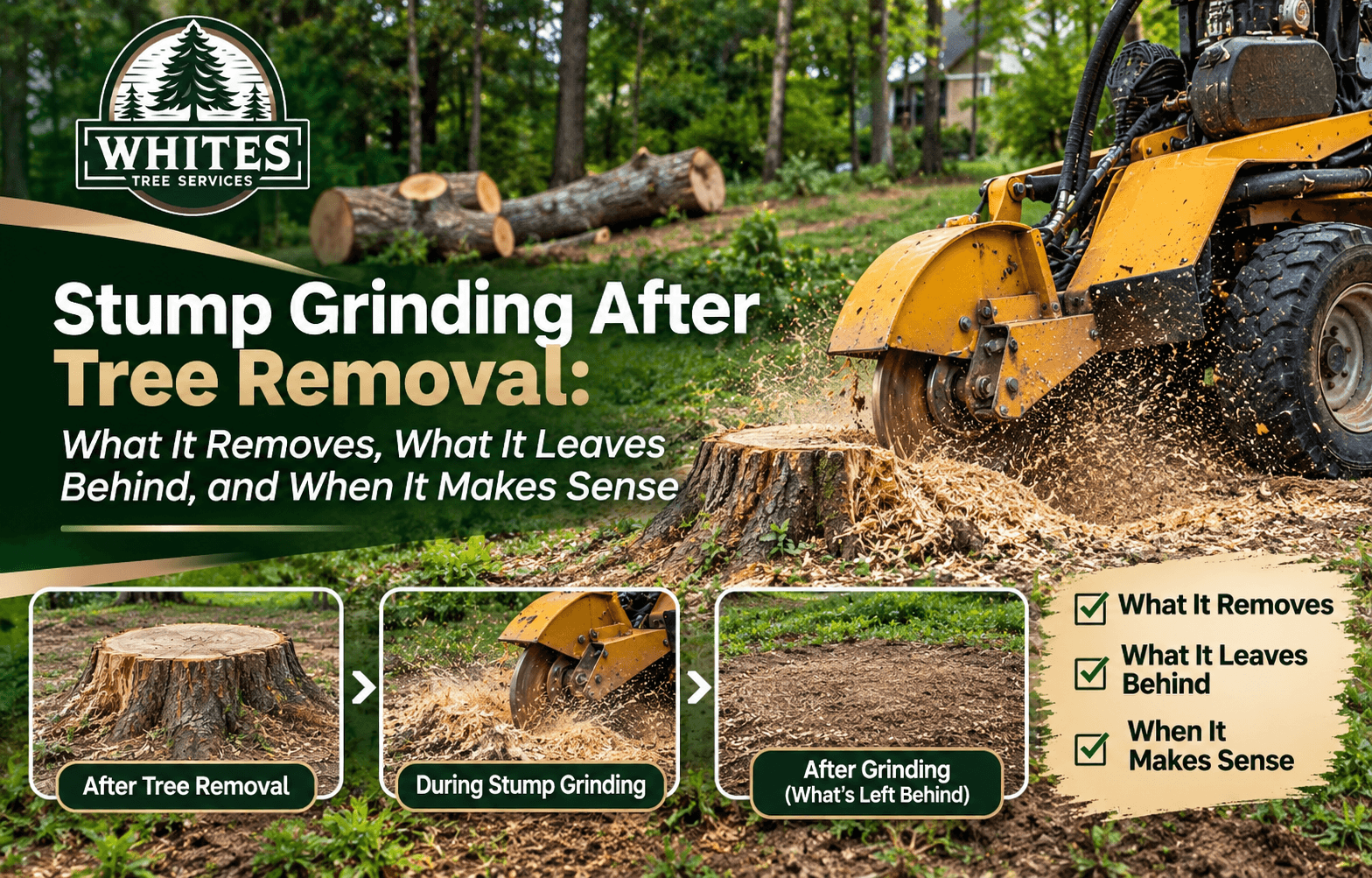
Stump Grinding After Tree Removal: What It Removes, What It Leaves Behind, and When It Makes Sense
The tree is gone, but the stump is still sitting in your yard. Stump grinding after tree removal clears that obstacle below the surface, yet it leaves more underground than most homeowners expect. Here is what grinding takes, what stays, and how to decide whether it fits your plans.
Most Knoxville homeowners make this call in a hurry, usually while the crew is loading the truck or the estimate is still on the kitchen table. The right answer depends less on the stump and more on what you want that patch of ground to become.
If you are still comparing tree removal services in Knoxville, raise the stump question before anyone starts climbing. Taking a tree down and grinding what is left are two separate pieces of work, and any professional tree service in Knoxville should be able to tell you, in plain words, exactly what will remain in the ground once the truck pulls away.
Stump Grinding After Tree Removal: The Short Answer
Stump grinding uses a machine with a spinning, carbide-toothed cutting wheel to chew the stump into chips, usually from a few inches to about a foot below the soil line. It removes the visible trunk, the flared base, and the thick roots right at the center. It does not remove the root system, which stays in the ground and breaks down over a period of years.
For a lawn, a garden bed, or a yard you simply want to mow straight across, stump grinding after tree removal is usually all you need. For a foundation, a patio slab, a driveway, or a new tree planted in the exact same hole, the roots left behind start to matter, and the plan has to change.
| Part of the tree | Does grinding remove it? | What to expect |
|---|---|---|
| Visible stump above the ground | Yes | Reduced to chips and leveled |
| Root flare and core just below grade | Yes, to the depth ground | Commonly 4 to 12 inches down, deeper on request |
| Surface roots crossing the lawn | Only if included in the scope | Usually a separate line item, so confirm it |
| Large lateral roots | No | Stay in place and decay over years |
| Deep anchoring roots | No | Stay in place and decay slowly |
| Wood chips and soil | Created by the work | Often 2 to 3 times the volume of the original stump |
Is Stump Grinding Necessary After Tree Removal?
Strictly speaking, no. A tree is fully removed once it is on the ground and hauled away, and grinding is a separate service you are free to skip. Whether you should skip it depends on where the stump sits and what you want from that part of the yard.
What to Do With a Stump After Cutting Down a Tree
You have more choices than a simple yes or no at the end of the job:
- Leave it. It costs nothing today, but a hardwood stump commonly takes seven years or longer to rot, and dense species like oak, black locust, and eastern red cedar can last well past a decade. In the meantime it can attract termites, carpenter ants, and wood-decay fungi.
- Ask for a flush cut. Cutting as low as safely possible lets a mower pass over it, though it still rots slowly and can still sprout.
- Grind it below grade. The stump becomes chips in place, the surrounding lawn stays largely intact, and you get a level spot to fill and seed.
- Dig it out. Heavy equipment pulls the stump and its main root mass, which clears the ground but leaves a large hole and costs considerably more.
- Speed up the rot. Drilling the stump and adding a commercial stump remover works over months to years. Burning is a poor fit for residential neighborhoods because of fire risk, smoldering roots, and local burn restrictions.
- Make it a feature. A sound stump can serve as a planter or seat for a while, but it is still decaying underneath.
When It Is Reasonable to Skip Grinding
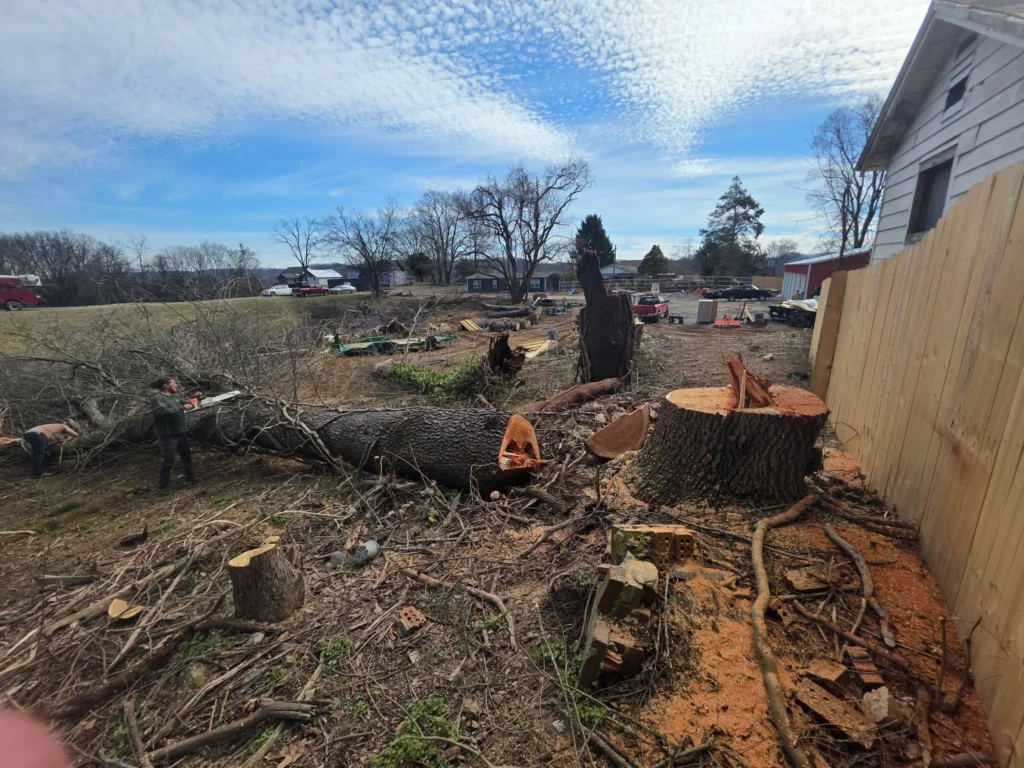
- The stump sits in a wooded area, natural buffer, or back corner you never mow.
- It is cut flush and the species is not prone to sprouting.
- It is on a steep bank where the old roots are helping hold the soil.
When Leaving It Usually Costs More Later
- It is in a lawn you mow every week, where hidden stumps bend mower blades and trip guests.
- It is near the house, deck, or shed, where wood-boring insects are a concern.
- You plan to replant, add a bed, or put in a walkway nearby.
- The species is known for aggressive root sprouts.
For most homeowners in a typical Knoxville neighborhood, the answer leans toward scheduling stump grinding after tree removal. The stump is not dangerous on day one, but it rarely gets easier to live with as the years go by.
How Much Does Stump Grinding Cost in Knoxville, TN?
There is no honest flat price for a stump nobody has seen. Two stumps of the same width can take very different amounts of time depending on species, rock, and access, which is why reputable companies measure in person rather than quoting from a photo.
Stump grinding is usually priced per stump, and it often appears as its own line on a removal estimate. Here is what moves the number up or down:
- Diameter at the root flare. Stumps are measured at their widest point near the soil, not across the cut top, and wider stumps take substantially more grinding passes and machine time.
- Wood species and hardness. Dense hardwoods like oak, hickory, and locust wear down teeth and take longer to grind than softer species such as pine, poplar, or willow.
- Number of stumps. Grinding several stumps during one visit usually lowers the cost per stump, because setup, travel, and equipment time are shared across the whole job.
- Access to the stump. Narrow gates, fences, steep slopes, retaining walls, and soft ground can limit which machine fits, which often slows the work down considerably.
- Rock and soil conditions. Limestone, chert, and roots wrapped around buried rock can damage cutting teeth and slow progress, which is common across parts of Knox and Blount counties.
- Depth and surface roots. Grinding deeper than standard or chasing roots across the lawn adds real time to the job, so it should be clearly priced as part of the scope.
- Cleanup and backfill. Leaving chips in a neat pile costs less than hauling them away, filling the hole with topsoil, or seeding the spot afterward.
- Nearby structures and utilities. Stumps beside foundations, fences, or marked utility lines require slower, more careful work and extra protective screening to keep debris contained safely.
These are the same forces that shape how tree removal is priced across Knoxville, which is why a stump quoted over the phone rarely matches the one measured in person. Timing matters too: grinding during the same visit as the removal avoids paying for the crew and equipment to come back later.
Is Stump Grinding Worth It?
For a stump in an active yard, it usually is. The one-time cost has to be weighed against years of mowing and string-trimming around an obstacle, the risk of a damaged mower, a trip hazard for guests, possible insect problems, and a yard that looks unfinished to anyone viewing the house.
If you plan to use, mow, or replant that part of the yard, the answer is almost always yes. If the stump sits in an untouched wooded corner, you can reasonably let nature handle it.
Planning to remove a tree in Knoxville?
Before the work begins, ask about stump grinding, grinding depth, chip cleanup, and the condition the ground will be left in. An estimate that spells out each of those saves surprises later.
What Stump Grinding Actually Removes
A stump grinder sweeps a heavy cutting wheel side to side across the stump, lowering it a little with each pass. The carbide teeth shave the wood into chips until the operator reaches the target depth. Machines range from compact walk-behind units that fit through a standard 36-inch backyard gate to larger towable or tracked machines for big hardwood stumps in open yards.
When the job is done well, these parts are gone:
- The trunk above grade. The tripping hazard, the mowing obstacle, and the eyesore disappear.
- The root flare. The widest part of the base, where the trunk spreads into the main roots, is ground out with the stump.
- The core below the surface. The solid center is reduced to chips down to the depth agreed on for the job.
- Surface roots, when requested. Roots that snake across the lawn can be ground out to a set distance, but that is extra work and belongs in the written scope.
What grinding does not leave you with is a root-free patch of ground, and that is where most of the confusion starts.
What Happens to Roots After Stump Grinding?
The part most guides gloss over is what stump grinding after tree removal leaves in the soil. Understanding it explains the settling, the occasional sprout, and the limits on what you can build or plant on the spot.
How Far the Roots Reach
Tree roots spread much farther than most people picture. Colorado State University Extension estimates that a root system commonly spreads two to three times the tree’s height or canopy width, and that in compacted, clay soils the fine absorbing roots sit in roughly the top four inches. A grinder working a few feet around the trunk touches only a small fraction of that network.
The thick lateral roots under your lawn stay where they are, and so do the anchoring roots below the main stump. With no living tree to feed them, they die in most species and begin to break down.
How Long Decay Takes
Fungi, bacteria, and insects do the work of turning those roots back into soil. Smaller roots go within a few years, while the large ones can take a decade or more. Knoxville’s long, humid summers help that process along, but heavy, waterlogged clay slows it because the organisms involved need oxygen. Species matters too: poplar and pine break down faster than oak, black locust, or cedar.
What You Will Notice at the Surface
- A pile of chips and soil. Solid wood expands as it is shredded, so the pile often ends up two to three times the volume of the original stump. It is a mix of chips, sawdust, soil, and sometimes small rocks, not the clean mulch sold by the bag.
- A shallow depression. Once the grindings are raked out, a bowl-shaped dip remains, as deep as the grinder went.
- Settling over time. As buried roots soften and collapse, the filled spot can sink slightly. Expect to add a little topsoil after the first few months and possibly again the following year.
- Mushrooms after rain. These are a normal sign that decay is underway, not a problem to solve.
How Deep Should a Stump Be Ground?
There is no single standard depth for stump grinding after tree removal. Many homeowners hear “six inches” as if it were a rule, but the right depth depends on what will happen on that spot next.
| What you plan for the spot | Depth to ask for | Notes |
|---|---|---|
| Grass seed or sod | About 6 to 8 inches below grade | Leaves room for a solid layer of topsoil |
| Mulched bed or perennials | About 6 to 10 inches | Shallow-rooted plants work around the old roots |
| Shrubs near the old spot | About 10 to 12 inches | Ask for nearby surface roots to be ground too |
| Paver walk, edging, or fence posts | 12 inches or more | Have roots in the path ground as well |
| Concrete slab, footing, or driveway | Grinding alone is usually not enough | Decaying roots can cause settling and cracking |
Depth has practical limits. Buried rock, utility lines, and the reach of the machine all cap how far down a grinder can safely go, and deeper grinding takes more time and produces more chips. Knowing how deep stump grinding goes for your specific plan is the single most useful thing to settle before the work starts, so tell the crew whether you want grass, a bed, a walkway, or a fence on that spot.
Stump Grinding vs Complete Stump Removal
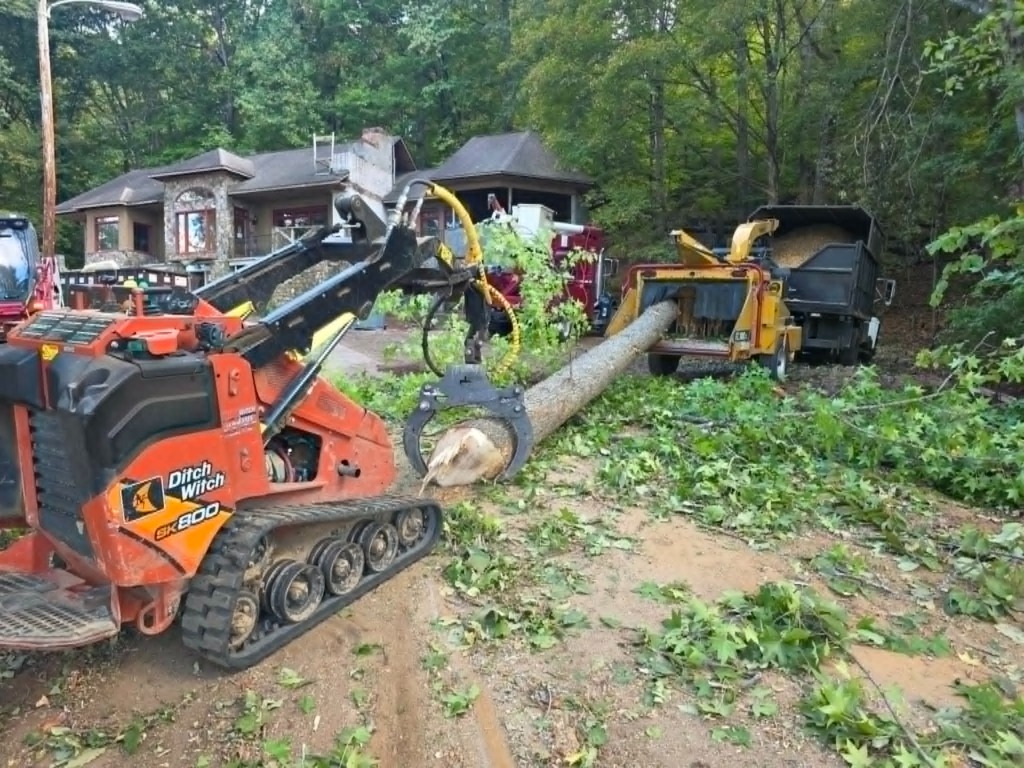
Grinding shreds the stump in place. Removal pulls the stump and its main root mass out of the ground entirely.
| Factor | Stump grinding | Full stump removal |
|---|---|---|
| How it works | Cutting wheel shreds the stump in place | Excavator or backhoe digs out the stump and root ball |
| What stays in the ground | Most of the root system | Smaller roots beyond the dig area |
| Ground disturbance | Limited to the stump area and access path | Wide hole, heavy tire tracks, displaced soil |
| Leftover material | Chips and soil that can be reused on site | Root ball and soil that usually need hauling away |
| Typical time | Under an hour for many small stumps, longer for large ones | Several hours or more per stump |
| Relative cost | Lower | Considerably higher |
| Best for | Lawns, beds, and general yard use | Building, slabs, or planting in the exact same spot |
On a mature stump, full removal means a hole several feet across and often several feet deep. In Knoxville’s clay, which turns slick when wet and brick-hard when dry, that work is heavily weather dependent and tends to damage nearby lawn, irrigation, and plantings.
Homeowners often use “tree stump removal” to mean either job, so ask which one is being quoted. That is why the stump grinding vs stump removal decision almost always comes down to your plans for the space. If you want a usable, level yard, grinding gets you there for less money and less mess. If you are building on the spot, the extra cost of removal can be justified.
Can You Grind a Stump Yourself?
Equipment rental stores in the Knoxville area rent stump grinders by the day, and for a single small, soft stump in an open yard, some handy homeowners take that route. Before you do, it helps to know what the job really involves.
- The machines are heavy and powerful. Even a rental unit weighs several hundred pounds, throws chips and rocks at high speed, and needs safety glasses, hearing protection, sturdy boots, and long pants.
- The utility rules still apply. Tennessee 811 offers a homeowner ticket for people digging on their own property, and you need the lines marked before the wheel goes below grade.
- Rental units are smaller. They work slowly on large hardwood stumps, struggle in rocky soil, and wear teeth quickly when they hit chert or limestone.
- Hidden costs add up. Transport, fuel, replacement teeth, and a full day of hard work often close most of the price gap with hiring the job out.
For one modest stump with easy access, a rental can make sense. For a large oak, a stump near the house, a slope, or several stumps at once, a crew with the right machine usually finishes faster, cleaner, and more safely.
Can a Stump Regrow After Grinding?
The stump itself cannot regrow once it has been ground below grade. The roots of certain species, however, can push up new shoots called suckers after the trunk is gone.
Around East Tennessee, the usual offenders include tree-of-heaven, black locust, sassafras, sweetgum, Callery pear, and willows. Oaks, most maples, and conifers rarely cause trouble once the flare has been ground out. Grinding removes the stump tissue that would fuel the most vigorous sprouts, so regrowth drops considerably even for stubborn species.
If sprouts appear, clip or mow them every time they show up. Each new shoot spends stored energy, and steady removal usually exhausts the roots within a season or two.
Tree-of-heaven is the exception that needs planning before the saw comes out. Penn State Extension reports that its root suckers can emerge as far as 50 feet from the parent tree and that cutting or mowing alone does not control it. Rutgers Cooperative Extension recommends a systemic herbicide treatment between mid-July and mid-October, then waiting at least 30 days before the tree is cut. If you have one, mention it when you schedule the removal.
When Is Stump Grinding Not Enough?
Grinding solves the problem for most yards. A few situations call for a different plan or a bigger scope.
Building Over the Spot
A slab, footing, driveway, or patio poured over decaying roots can settle and crack as those roots break down. If something permanent is going on that spot, tell everyone involved early, because the ground usually needs more preparation than a standard grind provides.
Planting a New Tree in the Same Hole
A young tree’s root ball struggles to establish in a pocket of chips surrounded by old roots, and fresh wood mixed into soil ties up nitrogen as it decomposes. Shifting the new tree several feet away into undisturbed soil is the simpler and healthier choice.
Root Disease
Some trees die from Armillaria root rot, a fungus that survives in buried wood. University of Minnesota Extension notes that its shoestring-like fungal strands can spread up to 10 feet from an infected tree or stump into healthy roots, and it recommends removing the stumps and as many roots as possible from infected trees. If a tree is declining and you suspect trouble at the roots, have someone evaluate the tree before it comes down, because the cause of decline decides what should happen to the stump, roots, and chips.
Septic Systems and Drain Fields
Many properties outside the Knoxville city limits rely on septic systems, and roots near drain lines are a common reason trees come down. Grinding near a drain field needs care, and roots already inside a line are a job for a septic professional.
Preparing a Lot for Something New
On a wooded residential lot headed for a new house, a garage, or a fence line, the conversation changes. In those cases, stump grinding as part of lot clearing is planned around where pads, trenches, and posts will land, so the depth and coverage match the work that follows.
Knoxville Soil, Rock, and Access Considerations
Stump grinding after tree removal in East Tennessee comes with a few local wrinkles that national guides tend to skip.
- Red clay. Much of Knox County sits on dense clay that drains slowly. Wet clay makes grindings heavy and sticky, and compacted clay in a filled hole keeps settling longer, so mix quality topsoil into the hole instead of packing raw clay back in.
- Rock in the root zone. Limestone and chert are common across the Ridge and Valley region, and roots love to wrap around them. When a grinder hits stone, teeth chip, progress slows, and the safe depth may be limited.
- Slopes and ridges. Plenty of Knoxville homes sit on hillsides. Steep ground limits which machines can work safely, and a stump on a bank may be holding soil, so grinding to grade can be the smarter call for erosion control.
- Tight backyards. Older neighborhoods like Fountain City, Bearden, and North Knoxville often have fenced yards with narrow gates. Compact grinders handle these spaces well, but the crew needs the gate width and the route ahead of time.
- Lakefront properties. Homes along Fort Loudoun, Tellico, and Melton Hill lakes sit on TVA-managed shoreline, where disturbing vegetation near the water can require approval. Old roots also help stabilize banks, so check the shoreline rules first.
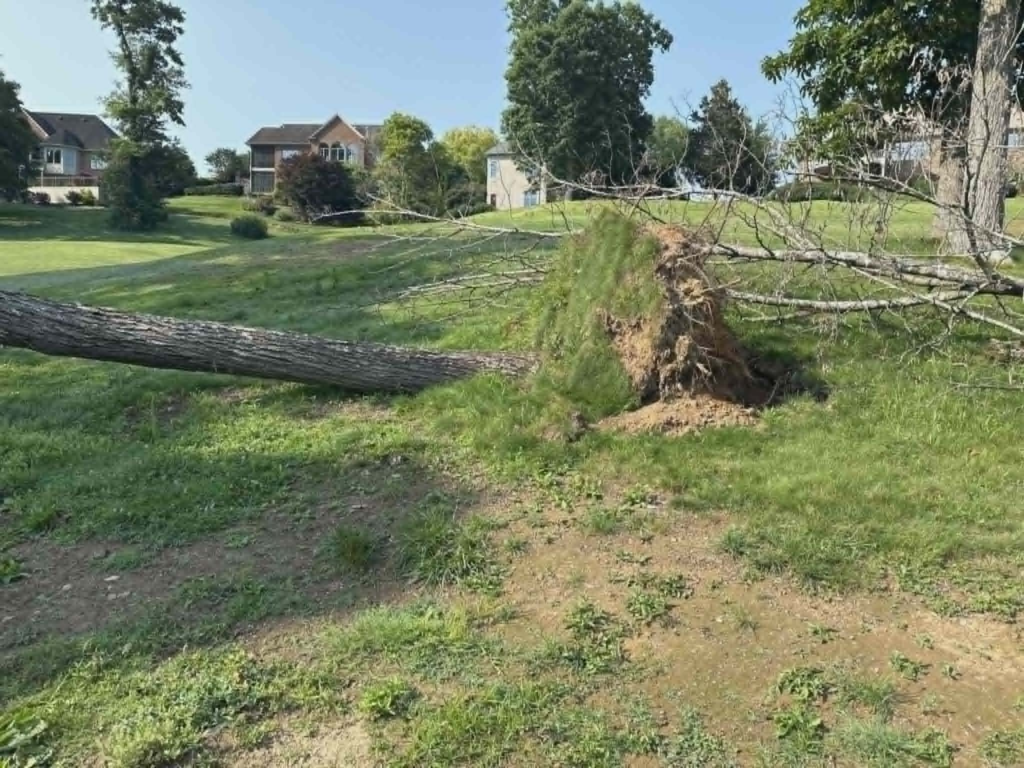
- Storm-toppled trees. When wind uproots a tree rather than snapping it, the root plate tips out of the ground. Crews handling emergency tree service often cut the trunk free so the root plate can settle back, then grind what remains at grade once the ground is stable.
Tennessee 811 and Underground Utility Safety
Stump grinding after tree removal happens below the surface, and so do gas lines, water lines, electric service, and communication cables. Striking one is dangerous, expensive, and preventable.
According to the Tennessee Public Utility Commission, anyone planning an excavation must notify Tennessee 811 at least three and no more than ten working days before the work begins. Tennessee 811 also makes clear that when a homeowner hires a contractor, the contractor needs a locate ticket in its own name, so the company doing the grinding should place the request. Once lines are marked, extra care is required inside the tolerance zone, which Tennessee 811 defines as the width of the buried line plus 24 inches on each side.
There is an important gap many homeowners miss. Tennessee 811 explains that electric and gas lines are typically marked only up to the meter, and that private lines on your property are the owner’s responsibility to have located.
Tell your crew about any private lines you know of, such as:
- Irrigation lines and sprinkler heads
- Invisible pet fencing
- Landscape and path lighting
- Power to a detached garage, shed, barn, or pool heater
- Gas lines to a grill, fire pit, or generator
- Propane, septic, and well lines
If you are not sure what runs where, Tennessee 811 keeps a list of private locating companies that can mark customer-owned lines for a fee.
What Happens to the Wood Chips?
The pile left behind by stump grinding after tree removal is often bigger than homeowners expect, and it is useful material if you handle it well.
Good uses: spread 2 to 3 inches deep in beds and borders, use it for garden paths, add it to compost with leaves or grass clippings, or fill low spots in wooded areas.
A few cautions:
- Keep chips several inches away from tree trunks, plant stems, and your foundation. Mulch against siding or a slab holds moisture and gives termites an easy bridge.
- Use fresh chips on top of the soil, not mixed into it, since buried wood ties up nitrogen while it decomposes.
- If the tree died from a disease or serious pest problem, do not spread its chips around your other trees. Have them hauled away or composted well away from susceptible plants.
Some sources claim all fresh grindings must be hauled away because they will poison other plants. That is overstated for most species, but black walnut, common across East Tennessee, is a real exception. University of Wisconsin Extension lists tomatoes, peppers, potatoes, eggplant, and asparagus among the most sensitive plants, advises against using walnut chips as mulch, and notes that the compound responsible can persist in the wood until the roots decompose, which can take five years or more. Plan any vegetable garden well away from an old walnut site.
Restoring Your Lawn After Stump Grinding
A few weeks of attention now saves years of patching a sunken, weedy circle in the yard.
Bringing Back Grass
- Rake out most of the grindings so new grass roots into real soil, not a bed of wood.
- Fill with screened topsoil, mounded slightly above the surrounding grade to allow for settling.
- Firm and water it, then add more soil if it sinks below grade.
- Seed at the right time. Tall fescue, the most common lawn grass around Knoxville, does best seeded in early fall. NC State University’s turf specialists note that spring-seeded tall fescue is more vulnerable to drought, heat, disease, and weeds.
- Feed it. A starter fertilizer offsets nitrogen tied up by leftover wood in the soil.
- Top it off later, after a few months and again the following year if the spot has settled.
Bermuda and zoysia lawns are the reverse. Those warm-season grasses establish best from sod or plugs in late spring and early summer.
Creating a Planting Bed
A ground stump site makes a natural home for groundcovers or shallow-rooted perennials. Remove excess grindings, add a few inches of good soil or compost, and expect to work around an old root now and then.
Planting a New Tree
Place the replacement several feet away from the old stump, farther still if the previous tree was large, and choose a species that suits the light, soil, and space at full size. In East Tennessee, fall through early spring is the best planting window, with fall generally preferred.
Building a Walk, Patio, or Fence
Plan these before the grinding, not after. Show the crew where the path or posts will go so they can grind deeper and chase roots in that area, and talk with your contractor about anything poured in concrete.
Questions to Ask Before Hiring a Contractor
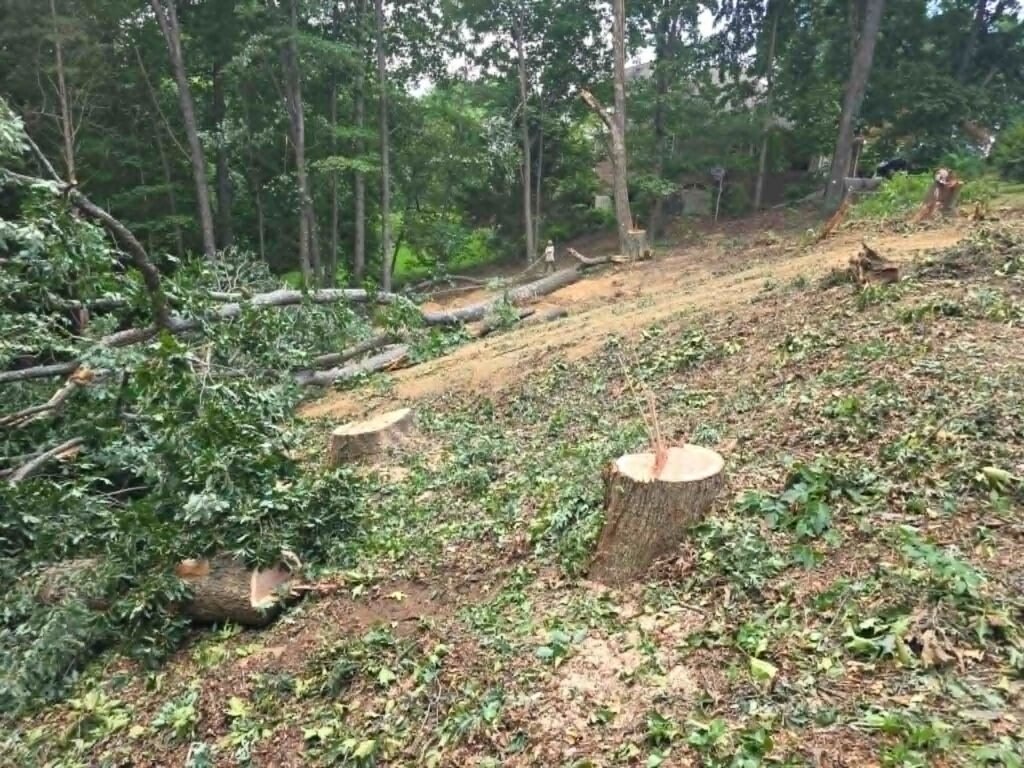
Before you sign anything, it helps to know what a written tree-removal scope should specify, and the stump line deserves the closest read of all. Use these questions so everyone pictures the same result:
- Is grinding included, or listed separately? Do not assume it comes with the removal.
- How deep will the stump be ground? Get a number that matches your plans for the spot.
- Are surface roots included, and how far out from the trunk?
- Who places the Tennessee 811 locate request? It should be the company doing the grinding.
- What happens to the chips? Left in a pile, raked into the hole, spread in beds, or hauled away.
- Is backfill or seeding part of the job?
- What route will the equipment take, and how will lawn, beds, and hardscape be protected?
- Can other old stumps on the property be ground during the same visit?
- Was the tree diseased, and if so, should the chips be removed rather than reused?
Frequently Asked Questions
How long does stump grinding take?
Many small, easy-to-reach stumps take under an hour. A large hardwood stump, a stump in rocky soil, or one behind a narrow gate can take several hours, plus a little time for setup and cleanup.
Can I plant grass right after a stump is ground?
Yes, once most of the chips are raked out and the hole is filled with topsoil. Grass seeded directly into wood chips struggles, and in the Knoxville area early fall gives tall fescue the best start.
Should I schedule grinding at the same time as the tree removal?
Booking stump grinding after tree removal as part of the same visit is usually the most efficient choice. One visit means one setup, and you avoid paying for a return trip. Make sure grinding is clearly listed in the estimate.
Does stump grinding remove the roots?
No. It removes the stump, the root flare, and the thick roots right at the base. The rest of the root system stays underground and decays naturally over several years, which is why the spot may settle slightly over time.
Can an old stump be ground years after the tree came down?
Yes. Partly decayed wood often grinds faster than fresh wood, and handling several leftover stumps in one visit keeps the cost per stump down.
Does stump grinding leave a hole?
It leaves a shallow depression rather than a true hole. Once the chips are raked out, the dip is about as deep as the grinder went, and a few bags or a small load of topsoil usually fills it.
Finishing the Job With Confidence
A stump is the last piece of a tree removal, and it is easy to treat it as an afterthought. For most Knoxville yards, stump grinding after tree removal is the right finish: it clears the hazard, keeps the lawn intact, and leaves you free to seed, plant, or build a bed, as long as you remember the roots are still down there doing their slow work.
If you have a stump to deal with, or a tree that will soon leave one behind, Whites Tree Services can walk the property with you, explain exactly what grinding will and will not accomplish, and put the full scope in writing before any work begins. We serve homeowners across Knoxville and nearby communities, including Farragut, Maryville, and Lenoir City.